Introduction
Digital marketing is no longer optional in today’s fast-paced online world. Whether you’re just starting out or already an experienced professional, the right digital marketing tools can completely transform your strategy and boost your results. Without reliable tools, you risk wasting time, missing key insights, and losing chances to engage with your audience effectively. With so many platforms available, it can be overwhelming to choose what truly adds value to your workflow and budget. This guide makes it easier by helping you discover the most essential tools to grow your business faster, smarter, and with confidence.
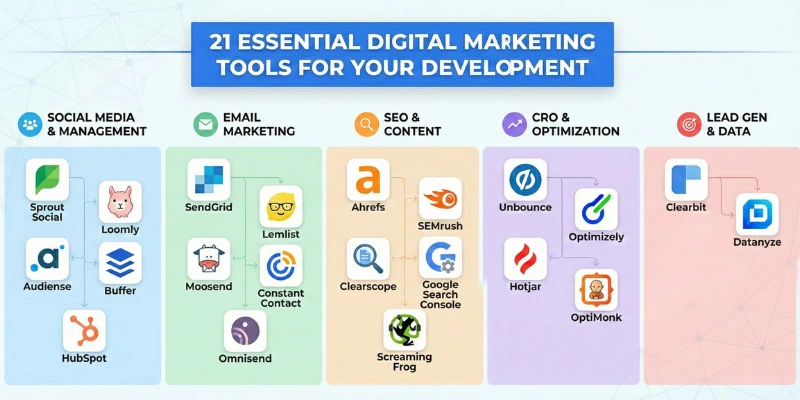
21 Essential Digital Marketing Tools
Sprout Social
Sprout Social helps you manage all your social media platforms from one place. You can schedule posts, reply to messages, and track brand mentions easily. It also shows detailed analytics to help you understand what content works best. The tool is perfect for improving customer engagement. It’s trusted by brands that want to stay active and organized online.
Loomly
Loomly is a great tool for planning and creating social media content. It offers content ideas, workflows, and approval features for teams. You can manage your entire posting schedule without confusion. Its clean interface makes it easy for beginners and teams to collaborate. Loomly helps keep your content consistent and on time.
Audiense
Audiense makes it easier to understand your audience on a deeper level. It segments users based on interests, behaviors, and demographics. This helps you generate more focused and effective campaigns. Marketers use it to discover niche audiences and trends. It’s ideal for brands that want to reach the right people with the right message.
Buffer
Buffer is a simple tool for scheduling social media posts across multiple channels. You can plan content in advance and keep your feeds active. It also gives simple analytics to track performance. Small teams and beginners love Buffer for its clean and easy design. It helps save time while maintaining consistency.
HubSpot
HubSpot brings email marketing, CRM, and automation into one platform. It helps you track leads and manage customer interactions smoothly. You can build landing pages, send campaigns, and monitor results easily. The tool is perfect for small to large businesses wanting an all-in-one solution. HubSpot is known for helping brands grow smarter and faster.
SendGrid
SendGrid is popular for reliable email delivery and marketing. It ensures your emails reach inboxes instead of spam folders. You can design emails using templates and track real-time performance. Developers and marketers both enjoy its flexibility. For companies with huge email lists, it’s perfect.
Lemlist
Lemlist focuses on personalized email outreach. It lets you add images, dynamic text, and unique elements to increase responses. The tool automates follow-ups to save time. Sales teams use it to book more meetings and warm up leads. Lemlist helps your emails stand out in crowded inboxes.
Moosend
Moosend offers affordable email marketing with automation features. You can set up campaigns, segment audiences, and monitor performance easily. Its drag-and-drop editor is beginner-friendly. Small businesses prefer it for its budget-friendly pricing. Moosend is great for boosting engagement without heavy costs.
Constant Contact
Constant Contact is known for its easy email marketing tools. It provides possibilities for automation, list management, and configurable templates. The platform is beginner-friendly and quick to set up. It also includes event management and social posting features. It’s ideal for businesses wanting simple yet effective email marketing.
Omnisend
Omnisend helps ecommerce brands automate email and SMS campaigns. It includes prebuilt workflows for abandoned carts, welcome offers, and product recommendations. The application connects effectively with major ecommerce platforms. It boosts customer engagement through personalized messages. Omnisend is great for increasing online sales.
Ahrefs
Ahrefs is a potent SEO tool for competitor analysis and keyword research. You can explore backlinks, check rankings, and audit your site. Marketers use it to uncover content opportunities and fix SEO issues. It provides accurate data and deep insights. Ahrefs helps you grow organic traffic effectively.
SEMrush
SEMrush offers tools for SEO, advertising, content planning, and competitor insights. You can track keywords, analyze rivals, and optimize your strategy. It also offers writing assistance and social media tools. Businesses rely on SEMrush for complete digital marketing analytics. It’s one of the most versatile marketing platforms available.
Clearscope
Clearscope helps you create SEO-friendly content that ranks higher. It analyzes top-performing pages and suggests keywords. Writers use it to improve content quality and relevance. The tool is simple and makes optimization easy. Clearscope boosts the chances of ranking on the first page.
Google Search Console
Google Search Console shows how your website performs in search results. It highlights indexing issues, ranking keywords, and errors to fix. The tool is completely free and essential for SEO. It helps you understand what Google sees on your website. GSC is a must-have for monitoring site health.
Screaming Frog
Screaming Frog scans your website for technical SEO issues. It checks broken links, redirects, duplicate content, and more. The tool helps you fix errors quickly. SEO experts use it for deep, accurate website audits. It’s one of the best tools for improving site structure.
Unbounce
Unbounce helps you build high-converting landing pages without coding. It offers hundreds of templates and A/B testing tools. You can customize layouts easily and capture more leads. Marketers use it to boost conversions from ads and campaigns. Unbounce is perfect for quick, professional landing page creation.
Optimizely
Optimizely is designed for A/B testing and improving website performance. It helps you test headlines, layouts, and calls to action. The platform provides clear data so you can make informed decisions. It’s used by brands focused on continuous improvement. Optimizely ensures every change leads to better results.
Hotjar
Hotjar shows how visitors interact with your website through heatmaps and recordings. You can see what users click, scroll, and ignore. This helps you understand behavior and fix problems. It also includes feedback tools like surveys. Hotjar is great for improving user experience.
Clearbit
Clearbit enriches your leads with detailed data like industry, size, and job role. It helps you qualify prospects faster. Sales and marketing teams use it for targeted campaigns. The tool updates contact details automatically. Clearbit boosts accuracy and personalization.
Datanyze
Datanyze offers B2B intelligence for finding and qualifying leads. It shows what technologies companies use and gives verified contact info. Sales teams use it for outreach and prospecting. The tool helps you reach the right decision-makers. Datanyze speeds up lead generation.
OptiMonk
OptiMonk helps you convert visitors using smart pop-ups and on-site messages. It lets you show personalized offers based on behavior. The tool is easy to set up and works with many platforms. Ecommerce sites use it to reduce cart abandonment. OptiMonk increases conversions with well-timed messages.
Why the Right Digital Marketing Tools Are Key to Success
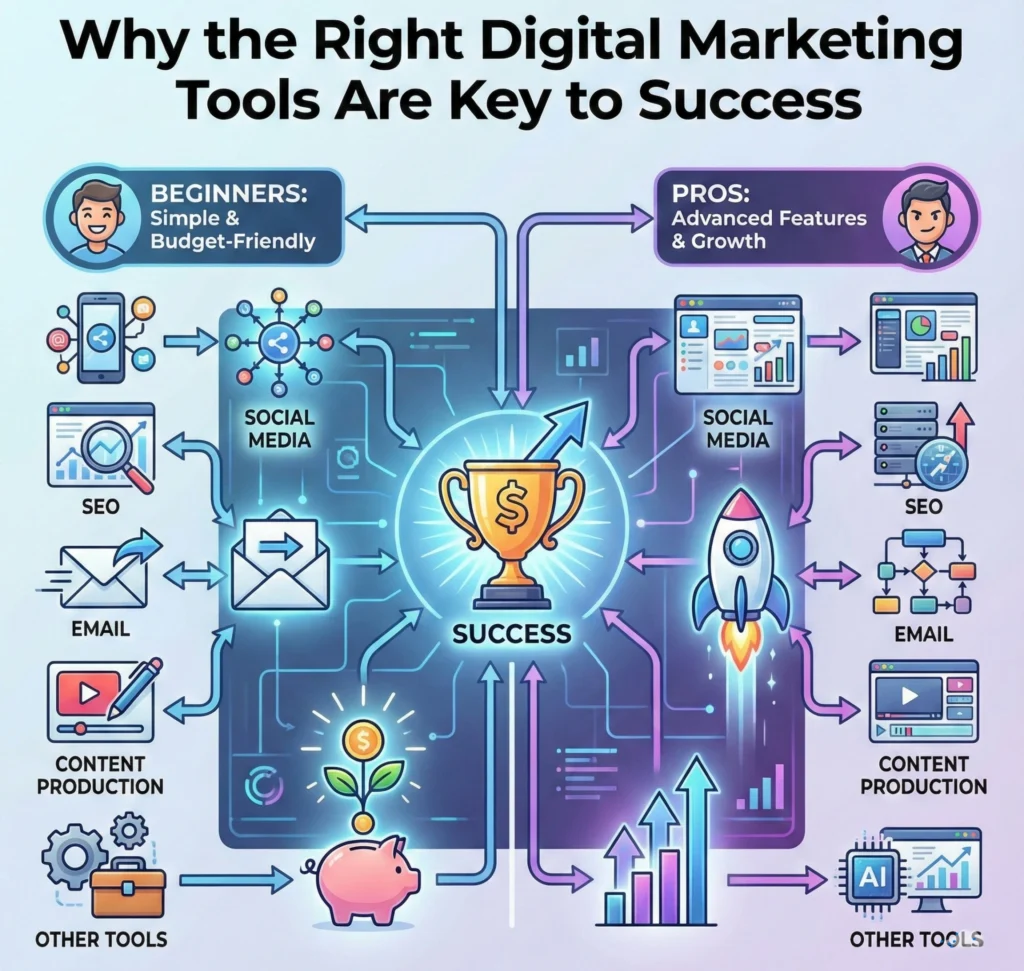
In today’s competitive market, mastering the right tools means mastering your growth. Beginners need simple, budget-friendly solutions that deliver results, while pros look for advanced features to refine their strategies. We discuss social media, SEO, email, content production, and other tools in this post. Each category offers proven solutions trusted by businesses worldwide. Let’s dive in and discover your next marketing powerhouse.
Digital Marketing Tools by Strategy
Choosing tools by strategy ensures you cover every step of your marketing plan. From reaching new audiences to converting leads, every stage needs the right platform. Social media, SEO, email, and conversion tools work best when combined strategically. This helps you create a smooth, connected experience for your audience. Below are top picks for every marketing goal.
Social Media Marketing Tools
Social media connects brands with billions of users daily. Sprout Social helps manage multiple platforms, schedule posts, and analyze engagement. For collaborative teams planning and approving content, Loomly is perfect. For focused campaigns, Audiense provides you with comprehensive audience insights. Buffer remains a reliable choice for simple scheduling and publishing.
To maximize social media results, use tools that offer analytics and post optimization. These features help you publish content when your audience is most active. Consistency and timing are key to boosting engagement. Social tools also make it easier to test different content types and measure results. This data-driven approach ensures steady growth.
Email Marketing Tools
Email marketing still gives one of the greatest ROIs. HubSpot provides CRM connectivity and robust automation. SendGrid is renowned for its comprehensive analytics and great deliverability. Lemlist tailors advertising to increase response rates. Moosend provides small enterprises with reasonably priced automation. Omnisend and Constant Contact work well for campaigns that are centered on e-commerce.
List segmentation, automation, and templates are features of the best email programs. Drag-and-drop editors and pre-made workflows are helpful for novices. Experts value detailed analytics and A/B testing for improving campaigns. Email is still a good way to nurture prospects and increase recurring business. Selecting tools that work well with your other marketing platforms is important.
SEO (Search Engine Optimization) Tools
Your audience might never locate your website if SEO isn’t used. Ahrefs is excellent for backlink analysis and keyword research. SEMrush offers competitive analysis and content planning. Clearscope optimizes content for better rankings. Google Search Console monitors performance directly from Google. Screaming Frog helps with in-depth site audits.
SEO tools guide you in choosing the right keywords and fixing technical issues. They support ranking tracking, gap analysis, and site performance enhancement. Beginners should start with tools offering clear dashboards. Professionals can dive deep into data to refine complex strategies. Strong SEO tools are essential for long-term traffic growth.
Conversion Optimization Tools
Every visitor is a potential customer. Unbounce helps create high-converting landing pages without coding. optimizes page performance using A/B testing. Hotjar provides heatmaps and user behavior insights. These tools work together to increase conversions from your traffic.
Conversion tools identify what works and what doesn’t on your site. They help you test headlines, pictures, and calls-to-action. Even small changes can boost results. Beginners can focus on templates and simple analytics. Pros can run advanced experiments for ongoing improvement.
Lead Enrichment Tools
Quality leads are more valuable than quantity. Clearbit adds rich data to your leads for better targeting. Datanyze helps with prospecting and B2B data. These tools reveal company size, industry, and key decision-makers. That means smarter outreach and higher conversions.
Lead enrichment saves time by focusing only on high-potential prospects. Beginners can use these tools to qualify leads faster. Pros benefit from advanced filters and CRM integration. This data improves personalization in campaigns. Better leads mean better results.
Landing Page & Lead Capture Tools
On your landing page, this is where interest turns into action. OptiMonk boosts conversions with pop-ups and personalized messages. Typeform creates interactive forms and surveys. MailMunch helps capture leads via forms and landing pages. OptinMonster with WPForms give your website strong lead generation capabilities.
Strong landing pages focus on clarity and conversion. These tools offer templates, integrations, and testing features. Beginners can launch pages quickly without coding. Professionals can create tailored experiences for each audience segment. Converting clicks into consumers is the aim.
Graphic Creation Tools
Visual content boosts engagement across all channels. Creatopy designs ads and banners with ease. Visme is perfect for infographics and presentations. Venngage focuses on customizable infographic templates. Canva remains the go-to for all-purpose graphic design.
Graphics make your brand stand out and grab attention. These tools are beginner-friendly but also offer pro-level features. Templates save time, while customization ensures originality. Consistent visuals improve brand recognition. Great graphics help your message connect instantly.
Content Marketing & Research Tools
Content marketing needs research and trend awareness. Google Keyword Planner helps find the right keywords for your audience. Exploding Topics spots rising trends before they become popular. ChatGPT supports idea generation and content drafts.
The right research tools make your content more relevant. They help you target what people are searching for now and in the future. Beginners can use keyword basics to start ranking. Pros can combine keyword and trend data for a content edge. Staying ahead means staying visible.
How to Choose the Right Digital Marketing Tools
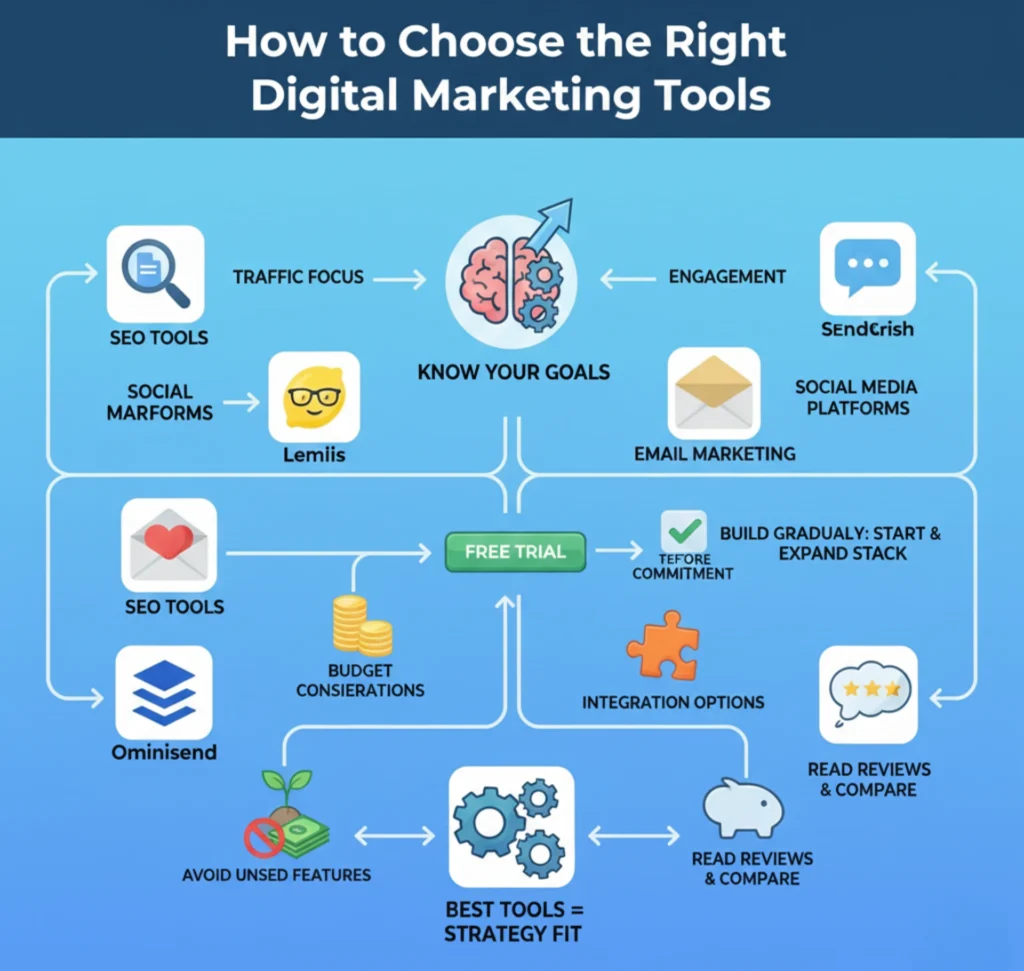
Choosing the correct tools starts with knowing your goals. If your focus is traffic, start with SEO tools. For engagement, invest in social and email marketing platforms. Budget and integration options matter too. Always test before committing to paid versions.
A smart approach is to build your tool stack gradually. Start with essentials and expand as your needs grow. Avoid paying for features you don’t use. Read reviews and compare features carefully. The best tools are those that fit your strategy perfectly.
Boost Your Brand with Mugenz
Explore Mugenz’s Digital Solutions for Healthcare, Real Estate, and NGOs. Your success starts with the right tools and the right partner. At Mugenz, we provide cutting-edge digital solutions tailored for three high-impact sectors:
- Healthcare: Build trust and reach more patients with targeted digital strategies.
- Real Estate: Showcase properties and generate high-quality leads online.
- NGOs : Expand your reach and increase donations with powerful online campaigns.
Click here to explore our services and grow with Mugenz today.
Conclusion
The right digital marketing tools save time, improve results, and help you grow faster. From social media to SEO, email to content creation, each category plays a role in your success. Beginners should start simple and focus on mastering a few tools. Pros can explore advanced platforms for deeper insights and automation. The right stack will support your growth every step of the way.
FAQs
Q1: What is the most essential digital marketing tool for beginners?
For beginners, the most essential tools are social media schedulers and a basic SEO platform. Social media tools like Buffer or Loomly help you post consistently without spending hours online. They also show engagement insights that help you understand what your audience likes. For SEO, tools like Google Search Console or Ubersuggest guide beginners in tracking keywords and fixing website issues. Together, these tools build a strong foundation for learning and growing in digital marketing.
Q2: Are free digital marketing tools effective?
Yes, free digital marketing tools can be very effective, especially when you’re starting out. Many popular platforms offer free plans that include essential features like keyword tracking, social scheduling, and email marketing. These tools help you experiment, learn strategies, and launch small campaigns without spending money. As your audience grows, you can upgrade to advanced features if needed. Free tools are perfect for beginners who want to learn before investing.
Q3: Which tool is best for managing several social media accounts?
Sprout Social and Buffer are two of the best tools for managing multiple social media profiles. Sprout Social offers advanced analytics, content scheduling, team collaboration, and social listening features. Buffer is simpler and budget-friendly while still offering scheduling, analytics, and multi-account management. Both tools save time by allowing you to plan and publish content from one dashboard. They make social media much easier, especially for businesses handling many platforms.
Q4: How often should I update my marketing stack?
You should review your digital marketing tools every 6–12 months to ensure they still align with your goals. The digital landscape changes fast, and new features or better tools appear frequently. Regular reviews help you avoid paying for tools you no longer need or missing out on better alternatives. During the review, check whether each tool is helping improve your traffic, conversions, or workflow. Updating your stack keeps you competitive and efficient.
Q5: Can AI tools replace human marketers?
AI tools can automate tasks, analyze data, and speed up your workflow, but they cannot replace human creativity and strategy. Artificial intelligence is great for repetitive tasks like scheduling, generating reports, or suggesting content ideas. However, effective marketing requires emotional understanding, storytelling, brand voice, and audience awareness skills only humans provide. AI is most effective when used as a supplement rather than a substitute. Together, AI and human marketers create stronger and smarter campaigns.