Nowadays, marketing encompasses more than just product sales. It’s about guiding your audience from the moment they discover you to the moment they trust you enough to buy. The Digital Marketing Funnel is the name of this trip. It helps brands understand their customers and build stronger relationships at every stage. In this blog, we’ll break down the funnel step by step, so you know exactly how to create strategies that convert.
Why Understanding the Digital Marketing Funnel Is Crucial for Your Business
Whether you’re a marketer, entrepreneur, or small business owner, understanding this funnel can be your secret weapon. If you’re struggling with poor leads or low conversions, you’re not alone. Many brands pour money into ads without knowing what stage their audience is in. That’s like trying to sell to someone who doesn’t even know they need your product. Let’s dive into the full breakdown of the digital marketing funnel and how you can make it work for your business.
Why the Funnel Still Matters in 2025
The digital landscape has changed, but the Digital Marketing Funnel remains the foundation of every successful strategy. With more channels and distractions than ever before, businesses need a clear path to guide potential customers. Funnels help segment audiences based on behavior and intent. From first click to final sale, every stage plays a role in building trust and prompting action. Ignoring the funnel means missing key conversion opportunities.
In 2025, consumer expectations are high. People want personalized, relevant experiences, not random ads. The funnel helps you share the right message at the right moment when it’s most needed. It aintains the effectiveness of your campaigns and the focus of your plan. Whether you’re nurturing leads or re-engaging lost visitors, funnel-based planning improves results. That’s why top brands still swear by it and why your business should too.
Common Funnel Mistakes Marketers Make
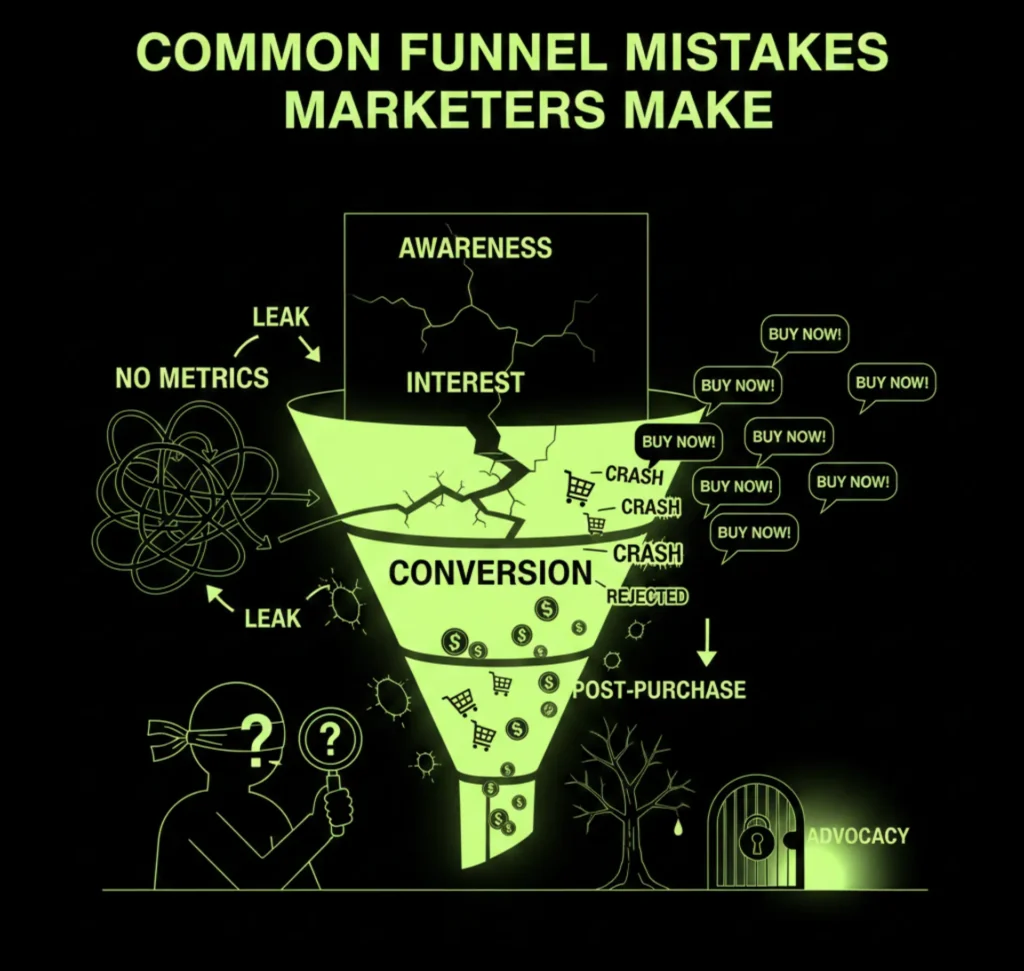
Many businesses invest heavily in digital campaigns without mapping out their marketing funnel properly. A common mistake is focusing only on conversions while ignoring awareness or interest stages. This creates a disconnect with users who aren’t ready to buy yet. Another error is using the same message across all funnel stages. The user’s goal must be aligned with the content.
Neglecting post-purchase engagement is another missed opportunity. Happy customers can become brand advocates, but only if you nurture them. Also, failing to track metrics at each stage means you’re flying blind. You must understand where leads drop off to fix leaks in your funnel. Avoiding these mistakes ensures smoother transitions from prospect to customer.
Integrating Automation with Your Funnel
Marketing automation tools help streamline and optimize every stage of the Digital Marketing Funnel. From welcome emails to retargeting ads, automation ensures consistent messaging. It saves time and increases efficiency while boosting personalization. Platforms like Mailchimp, HubSpot, or ActiveCampaign can trigger actions based on user behavior. This raises conversion rates and increases lead nurturing.
Imagine a user signs up for your newsletter. Automation can send a welcome series, guide them through your offerings, and push them toward a purchase all without manual work. This allows your team to focus on strategy while the system handles execution. Automation also helps track funnel performance in real-time, revealing which messages work and where improvements are needed.
Measuring Funnel Success: Key Metrics
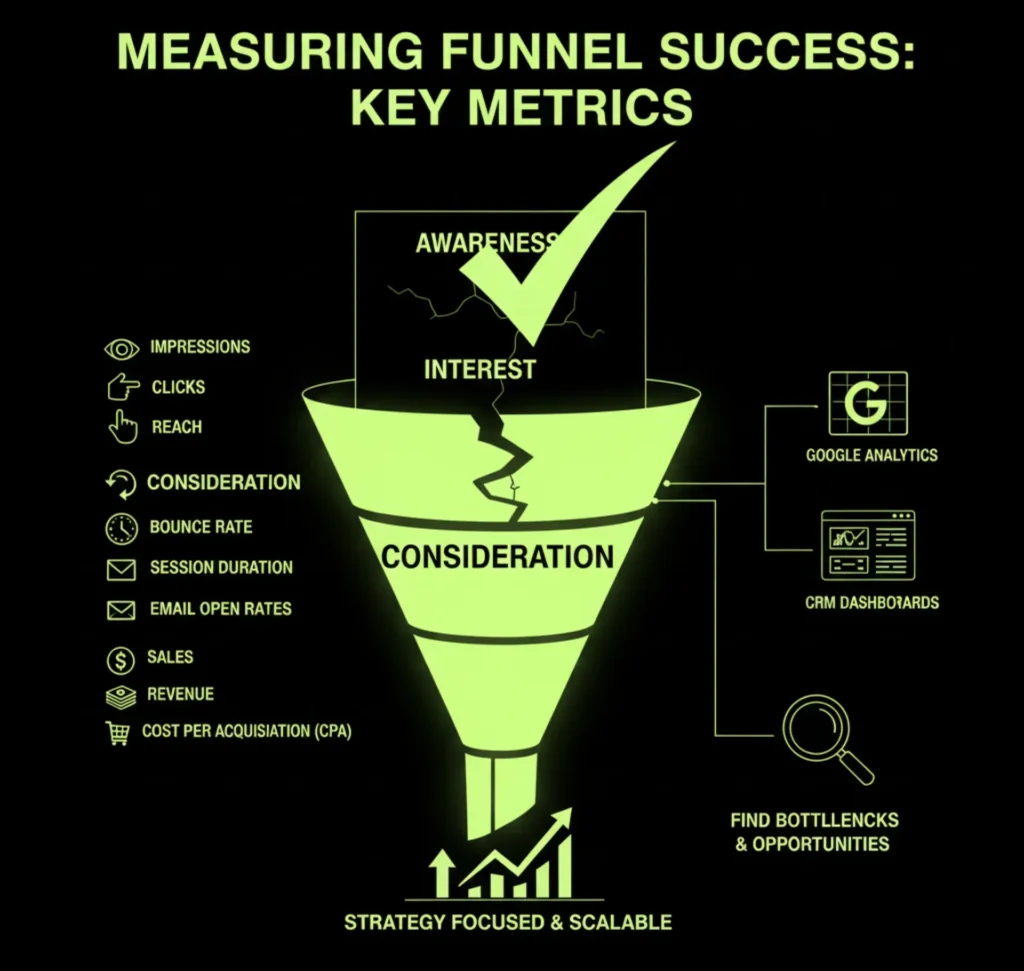
The effectiveness of your marketing funnel can only be ascertained by tracking the right data. Key performance indicators (KPIs) differ by funnel stage. For awareness, track impressions, clicks, and reach. During interest and consideration, look at bounce rate, session duration, and email open rates. For conversion, focus on sales, revenue, and cost per acquisition.
Tools like Google Analytics, Hotjar, and CRM dashboards help visualize your funnel’s performance. Finding bottlenecks and opportunities for improvement is made easier by routinely reviewing these figures. If a lot of users drop off after showing interest, your messaging or offers may need refining. Tracking success keeps your strategy focused and scalable. Without metrics, you’re guessing not growing.
Future-Proofing Your Funnel Strategy
Digital marketing is always evolving, and so should your funnel strategy. New platforms, consumer behavior shifts, and emerging tech like AI or voice search are changing how users interact with brands. Regularly evaluate your funnel and make data-driven changes to remain ahead of the competition. Last year’s strategies might not work this year. Adaptation is key.
Also, invest in learning. Attend webinars, follow industry blogs, and test new tools. Diversify your funnel tactics don’t rely solely on email or Facebook ads. To keep things interesting, include influencer marketing, chatbots, or SMS. The brands that succeed long-term are the ones that evolve. As your audience and business expand, so should your funnel.
What Is the Digital Marketing Funnel?
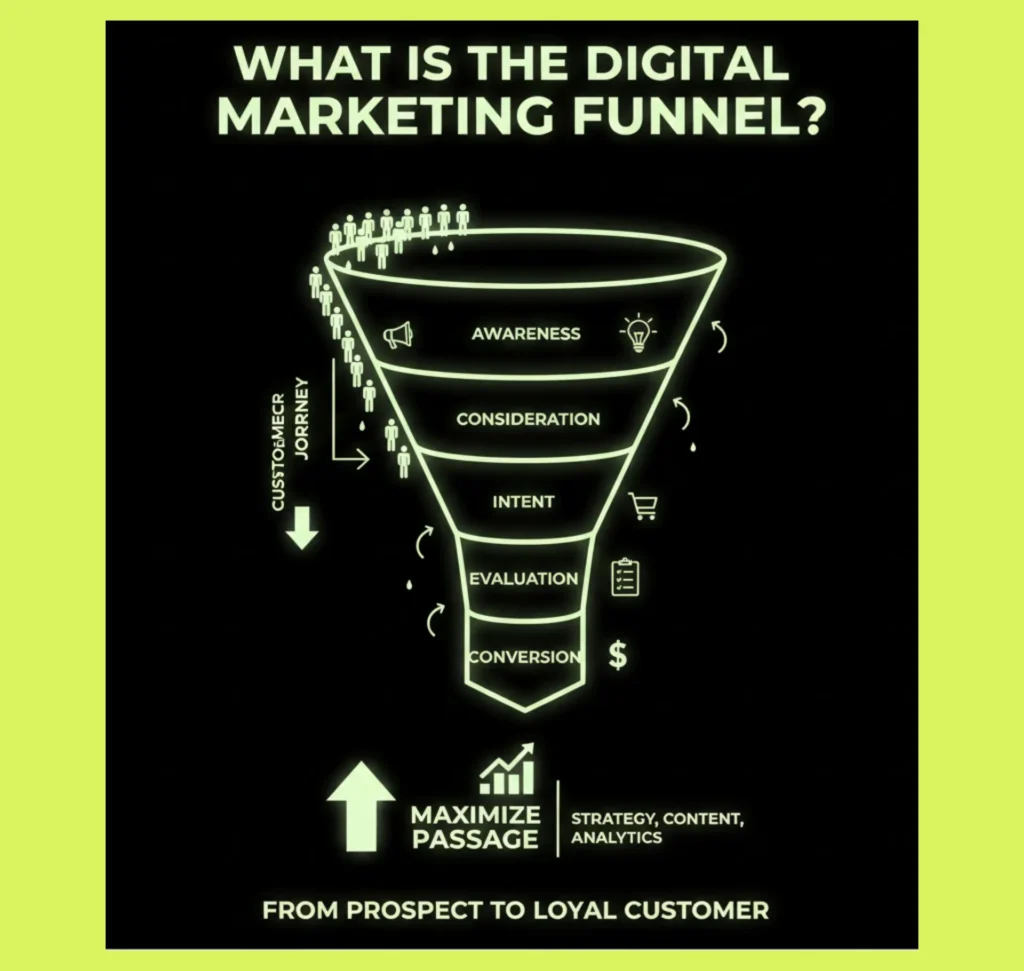
The digital marketing funnel is a visual model that shows how a customer moves from first hearing about your brand to making a purchase. It includes several stages like awareness, interest, consideration, intent, evaluation, and conversion. Each stage reflects the mindset of your potential customer. Knowing where your audience is in the funnel helps you create the right content at the right time. The ultimate goal is to guide users through each step until they become loyal customers.
As consumers get closer to making a decision, the funnel gets smaller.It starts large and ends little, which is why it is called a funnel. Not everyone who enters the funnel will buy, and that’s okay. The key is to maximize how many people move through. This requires smart strategy, content, and analytics.
Stage 1: Discovery (Top of the Funnel – TOFU)
At this stage, your audience doesn’t know about you yet. They are searching for knowledge, answers, or solutions. This is your chance to grab attention. Content like blog posts, infographics, YouTube videos, and social media posts work well here. Your goal is to educate, not sell.
Build trust by showing up where your audience is searching. Pay attention to SEO terms associated with issues that your target audience is attempting to resolve. Don’t pitch your product too early it may scare them away. To determine what people are looking for, use resources like AnswerThePublic and Google Trends. Here are good content types for the discovery stage:
- Educational blog posts
- How-to videos
- Beginner guides
- Explainer infographics
Stage 2: Interest
Now your audience knows who you are. They are starting to explore your brand and learn more. This is the time to show value. Share what makes you unique, and how your product or service solves their problems. Keep educating, but make your messaging more focused.
Use email newsletters, gated content, case studies, or free downloads. Give them something of value in exchange for their contact details. That way, you can follow up and build the relationship. Keep the tone helpful and professional. Avoid sounding too salesy at this point.
Stage 3: Appraisal (Middle of the Funnel – MOFU)
Here, potential customers are comparing their options. “Is this the right fit for me?” they question.” They may be reading reviews, watching product demos, or checking your pricing page. You need to present proof and earn their trust.
Create comparison guides, FAQs, webinars, and customer testimonials. To stay at the forefront, use retargeting advertisements. If someone has visited your site before, remind them with helpful ads. Email sequences can also be used to respond to concerns. Keep answering their questions clearly and honestly.
Comparison Table: Competitor vs Your Brand
| Feature | Competitor A | Your Brand |
| Price | $$$ | $$ |
| Custom Support | No | Yes |
| Free Demo | No | Yes |
| Trustpilot Reviews | 3.5 Stars | 4.7 Stars |
| Integration Options | Limited | Flexible |
Stage 4: Confirmation
This is the decision-making moment. Your audience is almost ready to buy. They simply need one last prod; they’ve done the study. Make this step simple and reassuring. Remove any friction that might hold them back.
Offer discounts, testimonials, or limited-time offers. Use short and clear CTAs (Call to Action). Let them know what will happen after the purchase. Will they get onboarding help? Can they talk to a real person? Be available to answer final questions fast.
Stage 5: Conversion (Bottom of the Funnel, BOFU)
This is where your prospect turns into a paying customer. But your work doesn’t stop here. Deliver a great experience and guide them through the next steps. Clear onboarding and support are essential.
Send welcome emails, offer tutorials, and give them ways to get help. Ask for feedback and reviews. Make them feel proud of their decision. Happy customers become brand ambassadors. They may even refer others if the experience is smooth.
Stage 6: Retention (Keeping Customers Happy)
After conversion, the next goal is to retain customers and prevent churn. Retention focuses on keeping your customers engaged, satisfied, and supported so they continue to do business with you. This is more cost-effective than acquiring new ones. Use email newsletters, loyalty programs, and personalized follow-ups to keep your brand top-of-mind.
Offer ongoing value whether through product updates, helpful content, or exclusive offers. Keep an eye on how happy your customers are by using surveys or NPS (Net Promoter Score). A great retention strategy builds long-term relationships. Happy customers don’t just stick around they spend more and complain less.
Stage 7: Advocacy (Turning Customers into Promoters)
Advocacy is where loyal customers become brand promoters. They recommend your products to friends, leave glowing reviews, and post about you online. This stage helps build trust with new prospects faster than ads ever could. Here, word-of-mouth and user-generated content are effective instruments.
Encourage advocacy through referral programs, testimonial requests, and influencer outreach. Share customer success stories and engage with loyal fans publicly. A brand backed by its own community builds credibility and influence. The stronger your advocates, the easier it becomes to attract new customers.
Stage 8: Upsell & Cross-Sell Opportunities
This stage is all about increasing the average order value from existing customers. After gaining trust and delivering value, you can offer upgrades, premium features, or complementary products. Cross-selling and upselling have to come across as beneficial recommendations rather than obtrusive sales pitches.
Use behavioral data to tailor offers based on user activity or purchase history. Product bundles, loyalty discounts, or personalized recommendations work well here. Make the experience seamless and relevant. It not only boosts revenue but shows customers that you understand their needs.
Stage 9: Re-Engagement (Reviving Inactive Users)
Some customers may go quiet or stop engaging with your brand. That’s normal but don’t let them disappear without trying to reconnect. The re-engagement stage focuses on waking up inactive subscribers or past customers through targeted campaigns.
Use reactivation emails, surveys, limited-time offers, or even personal outreach. Remind them of your worth and provide incentives for them to come back. This also helps clean your list and improve deliverability. Even if only a small portion reactivates, it’s worth the effort it’s cheaper than acquiring new users.
Stage 10: Community Building (Creating Brand Belonging)
Creating a community around your brand is the last step. This goes beyond transactions—it creates belonging, loyalty, and culture. Whether it’s through private groups, forums, live events, or social media engagement, community helps you stay connected to your audience at scale.
A strong community amplifies all previous funnel stages. It increases retention, fuels advocacy, and creates ongoing value. Without your request, members take on the roles of marketers, support representatives, and content producers. Make your customers feel seen, heard, and part of something bigger. That’s how brands last for decades.
Optimizing Your Digital Marketing Funnel
Improving your funnel starts with data. Use tools like Google Analytics, Hotjar, or HubSpot to see where users drop off. Are people bouncing from your landing pages? Are they opening your emails but not clicking? Dig into the numbers.
A/B test your ads, landing pages, and emails. Try different CTAs, colors, headlines, or copy styles. Optimization is never-ending. What is effective now could not be effective tomorrow. Keep testing and refining.
Key Metrics to Track by Funnel Stage:
| Funnel Stage | Key Metrics |
| Discovery | Website traffic, bounce rate |
| Interest | Email signups, time on page |
| Appraisal | Demo requests, resource downloads |
| Confirmation | Cart abandonment rate, clicks |
| Conversion | Sales, customer satisfaction score |
Common Mistakes to Avoid
Even smart marketers make mistakes. One of the biggest is skipping the middle of the funnel. If you go from awareness to asking for a sale, you’ll lose people. Nurturing is key. Meet your audience where they are.
Other mistakes include:
- Not segmenting your email list
- Using the same CTA for every stage
- Ignoring mobile optimization
- Not tracking KPIs
- Forgetting about post-purchase engagement
Final Thoughts
Understanding the digital marketing funnel can transform how you do business. It gives you a roadmap for turning strangers into loyal customers. Each stage matters. Tailor your content and strategy to guide people smoothly through the journey.
The brands that succeed in 2025 will be those that combine data, creativity, and empathy. Now is the time to invest in a strategy that aligns with your audience’s mindset.
Ready to Turn Clicks into Clients? Let Mugenz Build Your Funnel Right
Whether you’re in healthcare, real estate, or the nonprofit sector, your audience deserves a digital journey that converts.
With Mugenz’s AI-powered strategies, we craft funnels that don’t just attract they retain, engage, and grow your impact.
[Book Your Free Strategy Session with Mugenz]
Custom insights. Smart funnels. Measurable success built just for your industry.
Let’s start transforming your digital presence today.
FAQs
Q: What is the main purpose of a digital marketing funnel?
The funnel helps guide potential customers from discovery to purchase by delivering the right content at each stage.
Q: Can a funnel be different for each business?
Yes, depending on the product, industry, and customer journey, funnels can be customized.
Q: What is the duration required for an individual to pass through the funnel?
It varies. Some journeys are quick, while others take weeks or months depending on the price and complexity.
Q: What content works best in the interest stage?
Email newsletters, blog posts, and lead magnets like eBooks work well.
Q: What tools help manage the funnel?
Use tools like HubSpot, Mailchimp, Google Analytics, or ClickFunnels.