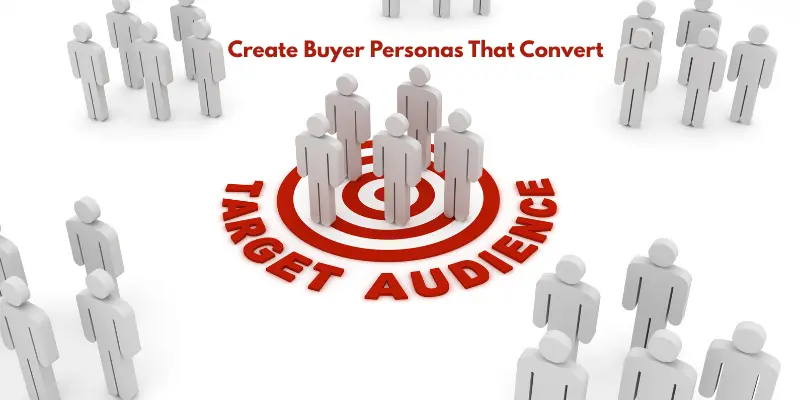
Creating content that connects with the right people isn’t guesswork it’s strategy. If you’ve ever struggled to attract the right customers, it’s likely because you’re missing a critical step: understanding your audience. That’s where Target Audience Analysis comes in. It helps you uncover who your customers really are, what they need, and how you can serve them better. Keep reading to learn how to turn this insight into buyer personas that drive real results.
What is Target Audience Analysis?
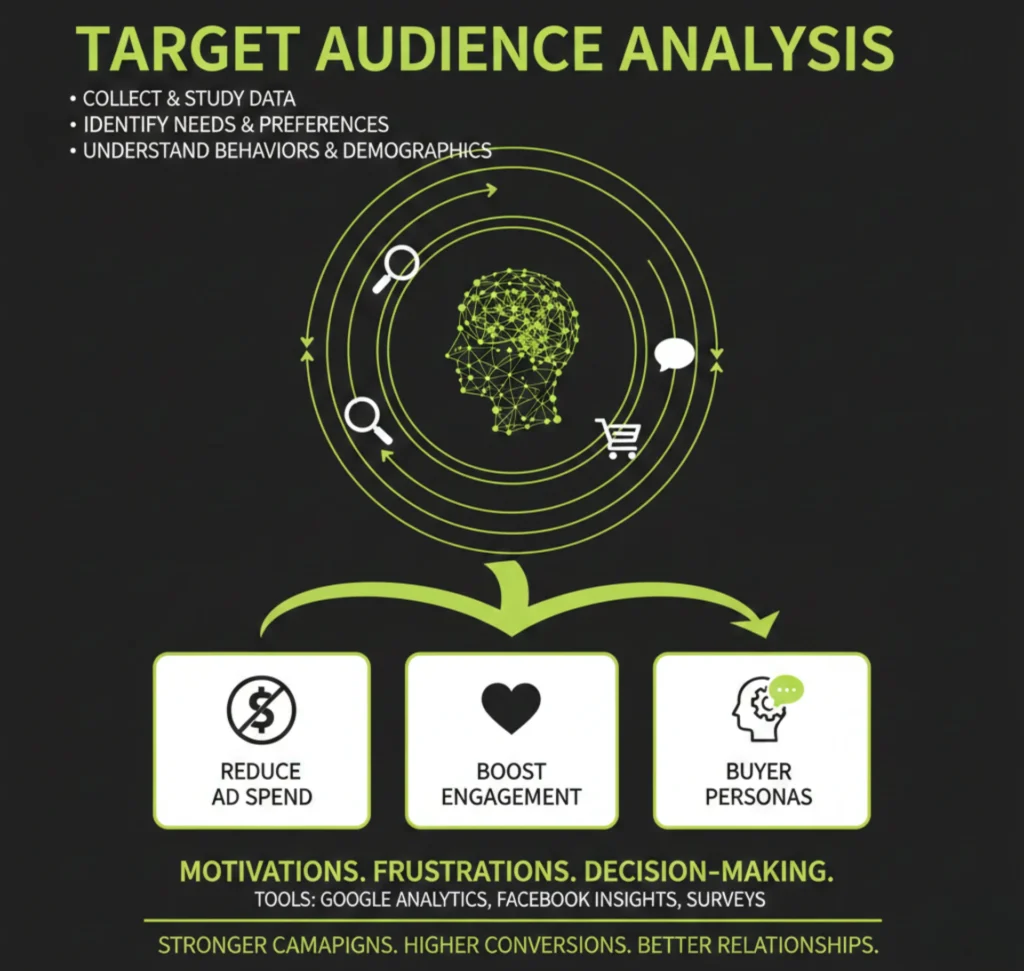
Target Audience Analysis is the process of collecting and studying data to understand your ideal customers. It involves identifying their needs, preferences, behaviors, and demographics. By doing this, you can create marketing strategies that speak directly to them. It saves time, reduces wasted ad spend, and boosts engagement. Above all, it establishes the foundation for the successful development of buyer personas.
This analysis goes beyond age and income. It dives into motivations, frustrations, and decision-making habits. You can use tools like Google Analytics, Facebook Insights, and surveys to gather information. Analyzing your target audience effectively reveals trends that enable you to communicate with them in their language. The result? Stronger campaigns, higher conversions, and better customer relationships.
Why Are Buyer Personas Important?
A buyer persona is a detailed, made-up account of your ideal customer. It helps you visualize who you’re targeting, making your messaging more personalized and effective. Think of it as a guide for all your marketing efforts. Without one, you’re just guessing. That can lead to poor engagement and wasted resources.
With well-crafted personas, your brand can:
- Share the right message with the right person at just the right moment.
- Improve product development with customer-focused insights.
- Provide individualized material that addresses actual problems.
- Increase conversions and reduce bounce rates.
- Strengthen your overall audience targeting strategy.
Benefits of Target Audience Analysis for Persona Development
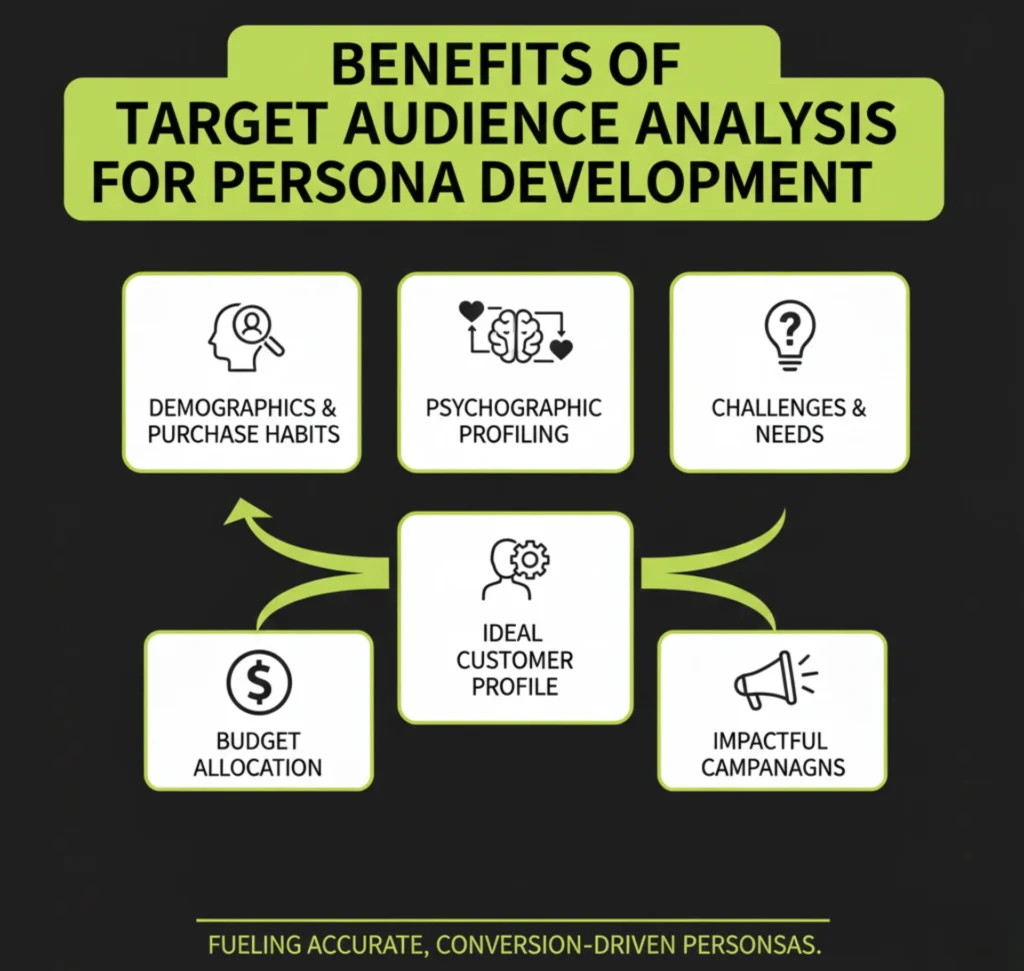
Target audience analysis fuels accurate, conversion-driven persona development. It reveals the “why” behind customer behavior. You gain insights into what motivates people to buy or bounce. It also helps uncover unmet needs and content gaps. This makes your marketing more precise and impactful.
Some key benefits include:
- Understanding customer demographics and purchase habits
- Applying psychographic profiling for deeper emotional insights
- Pinpointing customer challenges and needs
- Fine-tuning your ideal customer profile
- Guiding budget allocation for campaigns
How to Create a Buyer Persona (Step-by-Step Guide)
1. Conduct Target Audience Research
Research is the first step in gathering both quantitative and qualitative data. Use surveys, interviews, social media polls, and feedback forms. Analyze website traffic and heatmaps using marketing research tools. These insights reveal behavior trends, content interests, and conversion paths. The better your data, the more accurate your persona.
Popular tools include:
- Google Analytics for behavior metrics
- Meta (Facebook) Audience Insights for demographics
- Hotjar for website interaction tracking
- HubSpot or CRMs for customer segmentation
- Typeform or Google Forms for custom surveys
2. Segment Your Audience
Once you gather data, the next step is audience segmentation. Group your audience by shared traits like age, location, job title, and interests. This lets you create specific personas that align with each segment. The more focused your segments, the more targeted your messaging. That leads to better ROI.
Use these segmentation categories:
- Demographic (age, gender, income)
- Geographic (location, region)
- Behavioral (purchase behavior, website visits)
- Psychographic (values, lifestyle, interests)
- Firmographic (company size, industry for B2B)
3. Apply Psychographic Profiling
Psychographic profiling explores attitudes, opinions, and emotional triggers. Unlike demographics, it focuses on the “why” behind decisions. Are they driven by status, convenience, or price? Understanding this helps you frame content that resonates deeply. It’s essential for emotional branding and loyalty.
Ways to gather psychographic data:
- Social media behavior (what content they like/share)
- Interview questions about goals and frustrations
- Community discussions and product reviews
- Forums like Reddit or Quora for real opinions
- Net Promoter Score (NPS) surveys
4. Identify Your Target Market
Now, choose your target market by combining psychographic and demographic information. These are the clients who are most likely to interact and become customers. You should know what they want, where they hang out, and how they talk. This is where your content strategy starts taking shape. Focus only on those who bring long-term value.
Your target market might include:
- Working moms needing fast meal solutions
- SaaS startup founders looking for automation tools
- Students searching for budget laptops
- Health-conscious millennials
- Freelancers needing time-management apps
5. Create a Detailed Persona Profile
Now it’s time for buyer persona creation. Use all your research to build fictional profiles that feel real. Include names, job roles, goals, pain points, favorite platforms, and preferred content types. The more specific you are, the better your campaigns will perform. Think of it as creating a character in a story.
Sample Persona:
| Persona Element | Description |
| Name | Marketing Mary |
| Job Title | Digital Marketing Manager |
| Goal | Improve lead quality |
| Challenge | Wasting budget on low-converting ads |
| Preferred Platforms | LinkedIn, Industry Blogs, YouTube |
6. Use a Buyer Persona Template:
A buyer persona template helps you organize data clearly and consistently. It ensures no detail is missed. Templates also make it easier to share personas across your team. Many tools offer free downloadable templates you can customize. Consistency boosts efficiency in all marketing departments.
Key sections to include:
- Personal background and job info
- Goals and motivations
- Pain points and objections
- Content preferences
- Preferred communication channels
7. Keep Your Personas Up-to-Date
Just like your audience evolves, your buyer personas should grow and adapt too. Revisit and update them at least every 6-12 months. Review changes in behavior, new tools they use, or trends in your industry. Staying current ensures your content stays relevant. And relevance is key to conversion.
Check and update based on:
- Website analytics trends
- CRM and sales team feedback
- Market changes or new competitors
- Social listening tools
- Survey responses
Why Real Data Matters in Buyer Persona Development
Real data is the foundation of a buyer persona that actually converts. When you rely on surveys, analytics, customer interviews, and purchase behavior, you uncover patterns that reveal what your audience truly wants not what you assume they want. These insights help you identify their motivations, frustrations, expectations, and preferences with accuracy. Data-driven personas also prevent you from wasting time on broad, general messages that fail to connect. Instead, they help you deliver targeted marketing campaigns where every piece of content, every ad, and every email speaks directly to the customer’s real journey.
How Emotional Drivers Shape High-Converting Personas
Emotions play a major role in how people make decisions, and understanding these emotional triggers helps you build stronger, more persuasive buyer personas. Whether your audience seeks safety, convenience, recognition, affordability, or inspiration, these drivers influence how they interact with your brand. By identifying these emotional factors, you can craft messaging that feels personal and relatable instead of generic. This approach helps your brand stand out because customers feel understood and valued. When your content reflects their emotional needs, trust increases and trust is the foundation of higher conversions.
Using Buyer Personas to Optimize Your Content Strategy
Buyer personas allow you to create a targeted content strategy that eliminates guesswork and improves performance across all channels. Once you understand each persona’s habits, challenges, goals, and preferred platforms, you can design content that meets them exactly where they are. For example, analytical audiences may respond best to detailed guides, reports, and comparison posts, while fast-paced audiences prefer short videos or carousel posts. Persona-driven content ensures you choose the right tone, format, and messaging for maximum impact. As you refine your strategy based on persona insights, your engagement, traffic, and conversions grow steadily and sustainably.
Tips for Using Buyer Personas in Marketing
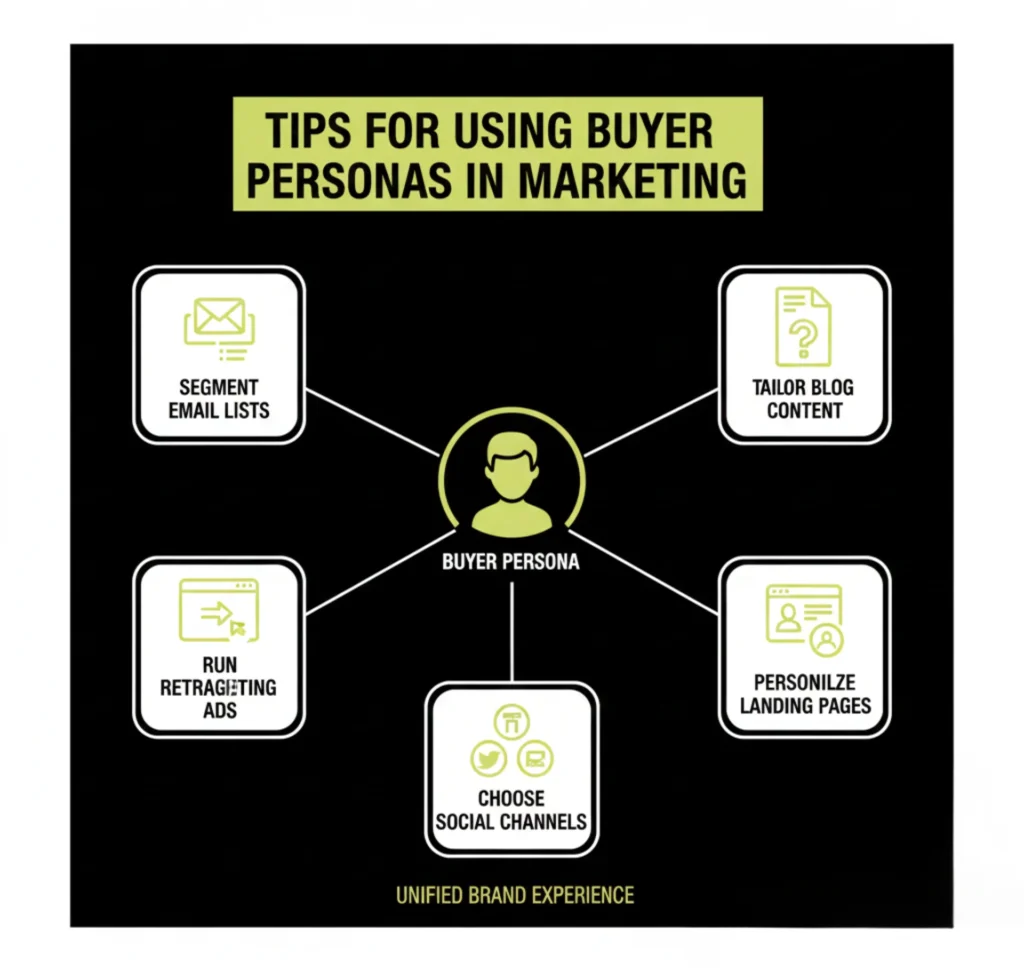
Once created, put your buyer personas to work. Use them to plan content, run ads, write email sequences, and improve product messaging. Distribute them to your customer service and sales departments. Make sure all departments use the same terminology when communicating with customers. That leads to a unified brand experience.
Here’s how to apply them:
- Segment email lists by persona types
- Tailor blog content to persona challenges
- Run retargeting ads based on persona behavior
- Personalize product landing pages
- Choose the right social channels for promotion
How Buyer Personas Improve Your Advertising Strategy
Buyer personas help you plan smarter, more efficient advertising campaigns by showing you exactly who to target and what message will resonate. Instead of wasting ad spend on broad audiences, personas guide you to focus on people who are already likely to convert. They reveal the platforms your audience uses, the keywords they search for, and the offers that motivate them. This allows you to present hyper-relevant ads that drive better click-through rates and lower acquisition costs. With persona-based targeting, your ads feel more personal, more timely, and far more persuasive.
How buyer personas strengthen ad performance:
- Identify the right interests and demographic filters for ad targeting
- Create tailored ad copy that matches user behavior and needs
- Build audience segments for retargeting campaigns
- Improve ad relevance score and reduce wasted spend
- Match ad creatives to each persona’s motivations and pain points
Using Buyer Personas to Enhance Website UX and Navigation
A well-designed website is only effective when it aligns with your visitors’ needs, and buyer personas help you shape a user-friendly digital experience. Personas show you how users behave online, what information they look for first, and what barriers may stop them from taking action. With this insight, you can structure your website to guide each persona smoothly through your pages. Clear navigation, relevant CTAs, and intuitive layouts all become easier to design when you know who you’re designing for. This results in higher engagement, longer site visits, and increased conversions.
UX improvements informed by personas include:
- Custom landing pages tailored to specific pain points
- Navigation menus that highlight high-priority content
- Personalized recommendations and dynamic content
- Optimized mobile experience for on-the-go personas
- Strategic placement of CTAs based on user intent
How Buyer Personas Support Stronger Email Marketing Campaigns
Email marketing becomes far more powerful when guided by well-researched buyer personas. Personas help you understand what content each segment values most, how often they want communication, and which tones or offers they respond to. Instead of sending one generic newsletter to everyone, you can design a customized experience that speaks directly to each persona’s goals and challenges. This approach boosts open rates, increases click-throughs, and helps nurture leads more effectively. Over time, persona-driven emails build trust and keep your brand top-of-mind for every type of customer.
Ways personas make email campaigns more effective:
- Segment lists by interests, behavior, or lifecycle stage
- Write personalized subject lines that match persona motivations
- Recommend products based on past behavior and needs
- Automate workflows tailored to each persona’s journey
- Deliver educational or promotional content based on persona goals
Align Personas with the Customer Journey
Your buyer personas should guide customers seamlessly through the sales funnel. Map each persona to a specific stage: awareness, consideration, or decision. Create top-of-funnel content that educates, mid-funnel assets that build trust, and bottom-funnel offers that drive conversions. For example, a persona in the awareness stage might need blog posts or explainer videos, while someone in the decision phase may respond better to demos or case studies. Aligning your marketing efforts with each persona’s journey ensures the right message hits at the right time boosting engagement, retention, and overall conversion rates.
Use Buyer Personas to Improve Customer Retention
Personas aren’t just for attracting new leads they’re powerful tools for keeping existing customers engaged. Use them to create loyalty campaigns, personalized newsletters, and value-packed updates tailored to each segment’s needs. By consistently delivering relevant content, you increase customer satisfaction and reduce churn. You can even gather feedback based on persona types to refine your offerings. Over time, this targeted communication builds stronger relationships and turns one-time buyers into brand advocates making your marketing not just persuasive, but profitable.
Common Mistakes to Avoid
Avoid creating personas without target audience analysis. Ignoring this stage results in resource waste and guessing. Don’t rely only on demographics; psychographics matter too. Avoid creating too many personas or ones that are too generic. And never treat them as “set it and forget it.”
Biggest mistakes include:
- Outdated or incomplete data
- Ignoring actual customer feedback
- Not involving multiple teams in persona development
- Using industry jargon instead of customer language
- Forgetting to measure persona effectiveness
Ready to Connect with the Right Audience in Healthcare, Real Estate, or NGOs?
At Mugenz, we help brands grow smarter with data-backed target audience analysis and powerful buyer persona development. Whether you’re a healthcare provider striving to build trust, a real estate company aiming to attract high-quality leads, or an NGO looking to engage mission-driven supporters, we create solutions tailored to your goals. Our strategies are built to help you reach the right people, deliver the right message, and drive meaningful results. Let’s craft the perfect audience blueprint for your brand and turn insights into real growth.
Contact Us to Get Started | Explore Sector-Specific Solutions | Subscribe for Growth Insights
Conclusion
Every effective marketing approach starts with a thorough understanding of your target audience. When you use target audience analysis to build strong buyer personas, every message becomes more accurate and impactful. These personas shape your advertising, content, product decisions, and customer experience. When people feel understood, they trust faster, engage more, and convert at higher rates. Start building data-driven personas today and you’ll never create content blindly again.
FAQs
Q. What is the difference between a buyer persona and a target audience?
A target audience is the broader group you want to reach, while a buyer persona is a detailed fictional character created to represent a specific segment within that audience.
Q. How frequently should my buyer personas be updated?
Update them every 6 to 12 months. Customer behaviors, trends, and digital platforms evolve quickly, so regular updates keep your strategies effective.
Q. Do small businesses need buyer personas?
Yes. Buyer personas help small businesses use their budgets wisely by targeting the right people with the right message.
Q. Can I create more than one buyer persona?
Absolutely. Most brands have multiple personas to represent different customer segments. Just ensure each persona is clear, meaningful, and actionable.
Q. What are the best tools to build effective buyer personas?
Tools like Google Analytics, HubSpot’s Make My Persona, Facebook Insights, surveys, CRM data, and template-based worksheets help create accurate, research-backed personas.