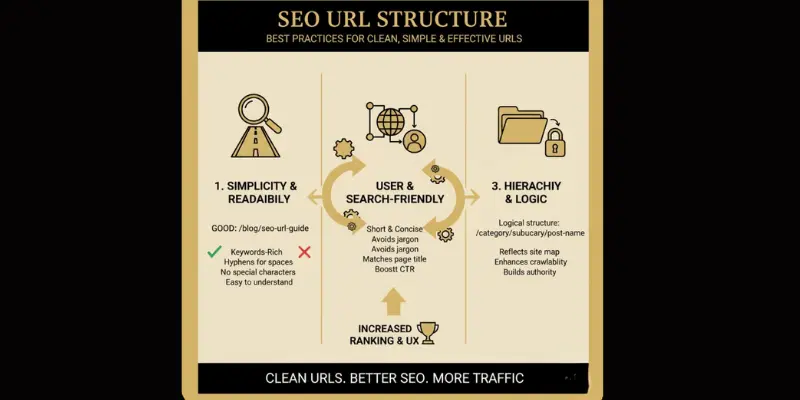
A strong SEO strategy often starts with something overlooked your URL. Many website owners focus on content and backlinks but forget that URLs are one of the first things search engines and users notice. A clean and simple URL is not just a link; it signals relevance, builds trust, and impacts click-through rates. In 2025, with AI-driven search and smarter algorithms, optimizing your URL structure is more important than ever. This guide will help you understand the best URL practices for SEO, boost your rankings, and enhance user experience.
Why URL Structure Matters
URLs are like digital addresses for your content. A clear URL communicates exactly what your page is about to both Google and your audience. Proper URL structures improve crawlability, indexing, and overall SEO performance. Messy or long URLs can confuse search engines and users, leading to lost ranking opportunities. Understanding the importance of clean URLs is the first step to creating a site that performs.
A good URL structure also improves user trust and click-through rates. Users are more likely to click a URL that is easy to read and understand. It also makes sharing links on social media or email newsletters more effective. Clear URLs reduce bounce rates and increase engagement. This is why focusing on the best URL structure for SEO is a smart long-term strategy.
Key Features of the Best URL Structure for SEO
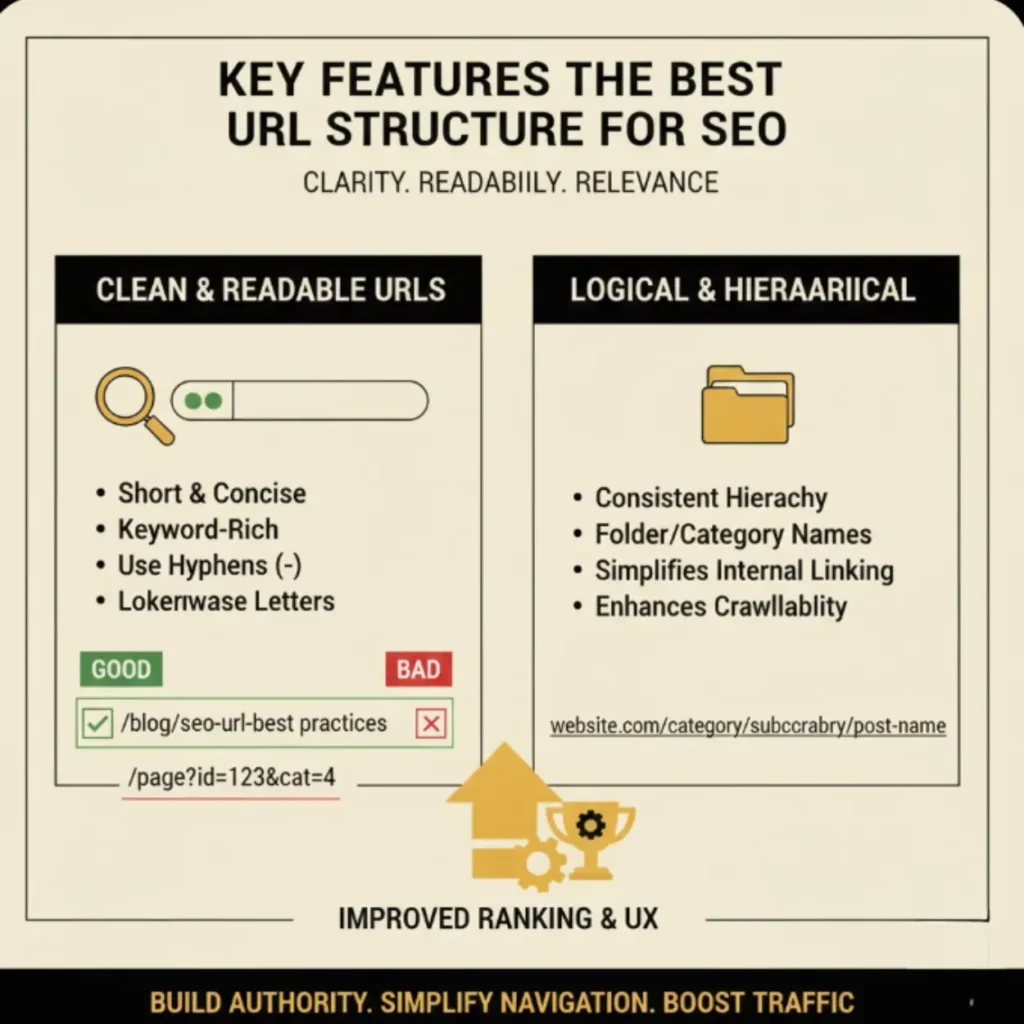
The best URL structure for SEO combines clarity, readability, and relevance. URLs should be short, include relevant keywords, and avoid unnecessary characters. Using lowercase letters and a consistent hierarchy enhances crawlability. Clean URLs make navigation easier for both users and search engines.
In addition, clean URLs simplify internal linking and site organization. They provide a roadmap for search engines to understand your website structure. Avoid using dynamic parameters or long strings of numbers. Logical folder and category names also strengthen topical relevance. Together, these features form the foundation of an SEO-friendly website.
Keep URLs Short, Simple, and Clear
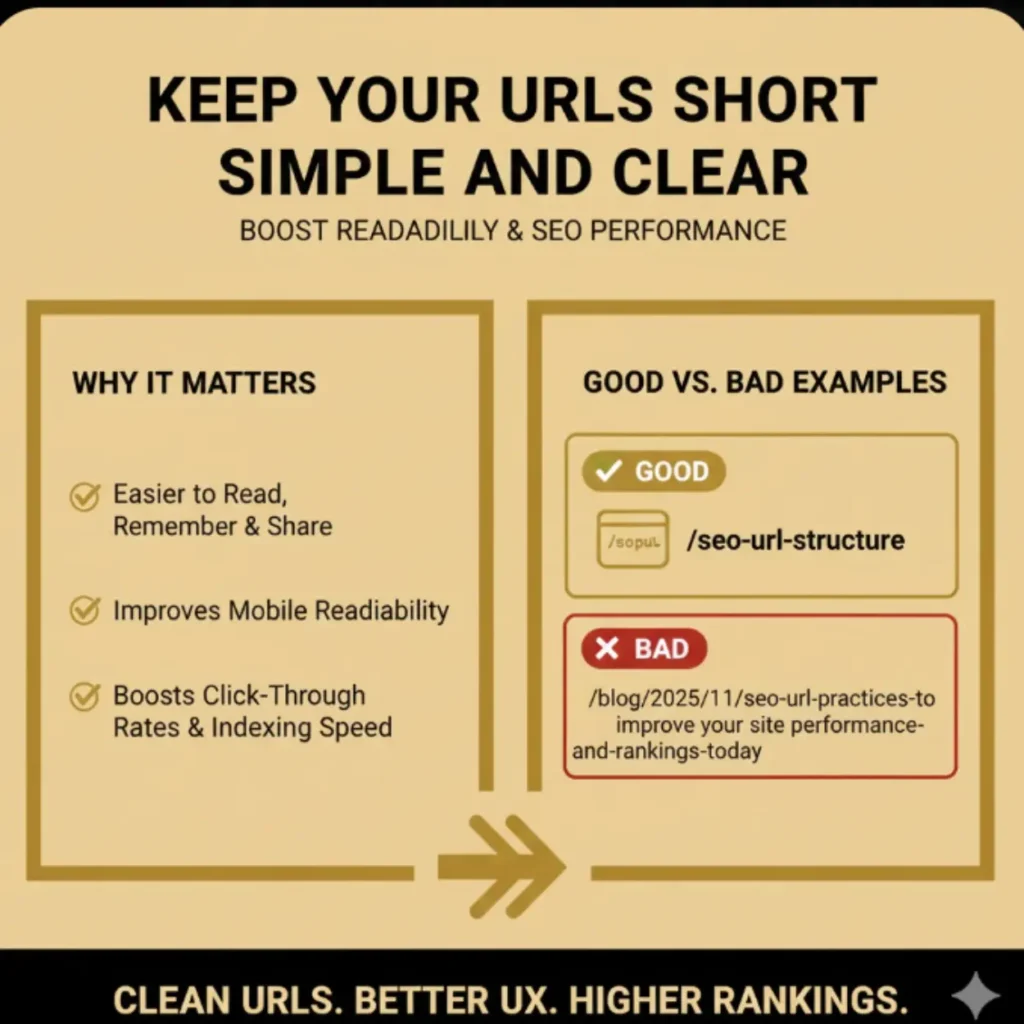
Short URLs are easier to read, remember, and share. A concise URL improves mobile readability and enhances click-through rates. For example:
- ✅ Good: /seo-url-structure
- ❌ Bad: /blog/2025/11/seo-url-practices-to-improve-your-site-performance-and-rankings-today
Short URLs also boost indexing speed, making it easier for Google to crawl your pages. Clean and simple URLs are essential for the best URL structure for SEO.
Include Keywords Naturally in URLs
Including keywords also improves click-through rates, as users see relevant terms in the link. It strengthens topical authority when combined with keyword-rich titles and headings. Naturally integrating keywords is a key step in building the best URL structure for SEO.
Use Hyphens Instead of Underscores
Hyphens separate words clearly and make URLs readable. Underscores merge words, making them difficult for both users and search engines. For example:
| Symbol | Example URL | How Google Reads It |
| Hyphen – | seo-url-structure | SEO URL Structure |
| Underscore _ | seo_url_structure | seourlstructure |
Using hyphens improves readability and helps search engines interpret your page correctly. It’s a simple adjustment that enhances the best URL structure for SEO.
Keep All Characters Lowercase
Uppercase letters can create duplicate URLs on some servers. For example, /SEO-URL-Structure might be treated differently from /seo-url-structure. Lowercase URLs avoid these technical issues. They improve consistency and prevent indexing problems.
Lowercase URLs are also easier to read and share. This small adjustment contributes to better UX and search engine trust. Consistency in URL casing is a cornerstone of the best URL structure for SEO.
Remove Stop Words and Unnecessary Words
Stop words like “and,” “the,” or “for” rarely add SEO value. Removing them makes URLs cleaner and more readable. For example:
- ❌ /the-best-tips-for-url-structure-in-seo
- ✅ /best-url-structure-seo
Clean URLs are easier to share and remember. This practice enhances click-through rates and strengthens the best URL structure for SEO.
Avoid Dates, Numbers, and Special Characters
Including dates or random numbers makes URLs look outdated and cluttered. Special characters like ?, &, or % reduce readability and user trust. For example:
- ❌ /seo-tips-2021
- ✅ /best-url-structure-for-seo
Clean, evergreen URLs improve long-term SEO performance. This approach ensures your content remains relevant and shareable over time.
Build a Logical URL Hierarchy
A clear hierarchy organizes your website efficiently. Each segment should represent a category or subcategory. Example: /blog/seo/url-structure
- blog → section
- seo → category
- url-structure → page topic
Logical hierarchies enhance internal linking, navigation, and crawlability.
Prefer Static URLs Over Dynamic URLs
Static URLs are clean, descriptive, and easy to index. Dynamic URLs with parameters like /page?id=2929&category=seo&ref=user-888 are messy and less readable. Static URLs improve speed, user experience, and SEO.
Implement 301 Redirects When Updating URLs
When you change a URL, always set a 301 redirect from the old URL to the new one. This preserves link equity, page authority, and ranking power. Without proper redirects, you risk losing years of SEO value. 301 redirects ensure both users and search engines land on the correct page. Proper redirect management is essential for maintaining the best URL structure for SEO.
Match URLs With Page Titles and H1
Consistency between your URL, page title, and H1 signals relevance to search engines. For example:
- Title: SEO URL Structure Best Practices
- H1: SEO URL Structure Best Practices
- URL: /seo-url-structure-best-practices
This alignment boosts trust and improves ranking opportunities. Users also benefit from predictable URLs that match what they see on-page. Maintaining this consistency is a key feature of the best URL structure for SEO.
Use Canonical Tags to Prevent Duplication
Canonical tags indicate the primary version of a page to search engines. They prevent duplicate content issues and consolidate SEO value. For example, if two pages have similar content, a canonical tag tells Google which page to index. Using canonical tags ensures that link equity is not split. Proper canonicalization is vital for sites aiming for the best URL structure for SEO.
Keep Folder and Category Names Simple
Avoid long folder or category names that clutter URLs. Short, descriptive folders improve readability and crawl efficiency. For example:
- ✅ /blog/seo-tips
- ❌ /blog/seo/tips/advanced-guides/articles/2025
Simple folder names also help users navigate your site logically. Clean folder structures strengthen the best URL structure for SEO.
Use Breadcrumbs to Support URL Navigation
Breadcrumbs provide users and search engines with a clear path to content. Example: Home > Blog > SEO > URL Structure. They enhance navigation, internal linking, and user experience. Breadcrumbs also reinforce hierarchy for Google’s understanding. Including breadcrumbs is a subtle yet powerful strategy for the best URL structure for SEO.
Regularly Audit URLs for Broken Links
Broken or outdated URLs harm SEO performance. Regular audits using tools like Ahrefs, SEMrush, or Screaming Frog help detect issues. Fixing broken links improves crawlability and preserves link equity. Auditing also ensures your URL structure remains clean and consistent. A proactive audit schedule is crucial for maintaining the best URL structure for SEO.
Avoid Common URL Mistakes
Common mistakes include:
- Auto-generated CMS URLs
- Long product URLs
- Including dates in blogs
- Forgetting 301 redirects
- Keyword stuffing
Avoiding these errors ensures your website maintains clarity and SEO performance. Correcting mistakes is key to achieving the best URL structure for SEO.
Benefits of a Clean URL Structure
Clean URLs offer multiple advantages:
- Improved CTR in search results
- Increased user trust
- Faster crawl speed
- Strengthened internal linking
- Better mobile experience
These benefits lead to higher rankings, more traffic, and a smoother user experience. Clean URLs are the backbone of the best URL structure for SEO.
Real-Life Examples of SEO-Friendly URLs
| Industry | Example URL | Why It Works |
| Healthcare | /healthcare-patient-portal | Short & descriptive |
| Real Estate | /real-estate-apartment-listings | Easy to read & rank |
| NGOs | /ngo-donation-guide | Clear & shareable |
These examples illustrate how clarity and simplicity boost performance. They reflect principles of the best URL structure for SEO.
Tools to Optimize URL Structure
SEO tools simplify URL management:
- Ahrefs: Detect broken URLs and track performance
- SEMrush: Audit URL structures for SEO
- Screaming Frog: Identify duplicate or long URLs
- Yoast SEO: Optimize URLs in WordPress
Using these tools ensures your website follows these Urls.
Measuring Success of Your URL Strategy
Track key performance indicators to assess URL optimization:
- Organic traffic per URL
- CTR in search results
- Indexing speed
- Bounce rate
- Link equity distribution
Analyzing these metrics helps refine your strategy. Well-structured URLs deliver measurable SEO results and improved user engagement.
Advanced Tips for Large Websites
For large websites, consistency is critical:
- Use uniform folder names
- Apply canonical tags to duplicates
- Avoid nesting deeper than three levels
- Review old URLs during site migrations
Following these tips ensures your enterprise site maintains these Url
Mobile SEO & URL Optimization
Mobile users need concise, readable URLs. Short URLs fit smaller screens better. Hyphens improve word separation and readability. Logical structures make navigation smoother on mobile devices. Optimizing URLs for mobile enhances these url and boosts rankings in mobile-first indexing.
Optimize URLs for Voice Search
Voice search requires natural, conversational URLs. Users speak queries differently from typed ones. Short, keyword-rich, and understandable URLs improve chances of featuring in voice results. For example: /how-to-optimize-urls-for-seo is preferable. Voice-optimized URLs support the best URL structure for SEO in modern search trends.
International & Multilingual URL Structures
Global websites benefit from language-specific URLs. Examples:
- /en/products → English
- /es/productos → Spanish
Clear international URL structures signal relevance to Google. They also improve local rankings for regional audiences. International SEO practices reinforce the best URL structure for SEO.
URL Structure and Internal Linking
Logical URL hierarchy supports internal linking. Clear structures allow search engines to distribute link equity efficiently. They also help users navigate related content. Example: /blog/seo/url-structure linking to /blog/seo/internal-linking. Strong internal linking improves the best URL structure for SEO and site authority.
Optimizing Product URLs for E-commerce
E-commerce URLs should be descriptive, readable, and keyword-rich:
- /real-estate/apartment-for-sale-karachi
- /healthcare/patient-portal-registration
Avoid unnecessary IDs or parameters. Consistent product URLs improve ranking, usability, and conversion. Clean product URLs reflect the best URL structure for SEO in online stores.
URL Structure and Content Clusters
Creating content clusters strengthens site authority. Logical URL hierarchies allow Google to understand relationships between pages. Example: /blog/seo/url-structure linking to /blog/seo/internal-linking and /blog/seo/keyword-research. This improves topical relevance and helps achieve the best URL structure for SEO. Content clusters also guide users through related topics seamlessly.
Optimizing Blog Series URLs
If you run a blog series, URLs should be sequential and consistent. Example: /blog/seo/basics followed by /blog/seo/advanced-tips. This helps search engines index pages logically and boosts user navigation. Consistent URLs across a series contribute to the best URL structure for SEO. Series URLs also encourage users to explore multiple related posts.
URLs for Multimedia Content
Multimedia content like videos, podcasts, and infographics should have descriptive URLs. Example: /seo/video-url-optimization or /podcast/seo-tips-2025. Clear URLs allow search engines to categorize content effectively. Properly structured URLs ensure better indexing and visibility. Optimizing multimedia URLs supports the best URL structure for SEO.
Handling Pagination in URLs
Paginated content requires clean and clear URL structures. Example: /blog/seo-tips/page/2 is preferable to messy query strings like ?page=2&sort=asc. Clean pagination improves crawlability and prevents duplicate content issues. Proper pagination is essential for the best URL structure for SEO on large blogs. It also enhances user experience by keeping navigation intuitive.
Using URL Keywords for Featured Snippets
Targeting question-based or descriptive keywords in URLs can help achieve featured snippets. Example: /what-is-seo-url-structure or /how-to-optimize-urls-for-seo. These URLs signal relevance to Google for search intent queries. Using focused keywords improves CTR and visibility in search results. Implementing this tactic strengthens the best URL structure for SEO strategy.
E-commerce Product URL Optimization
For e-commerce websites, descriptive product URLs improve both SEO and conversions. Example: /real-estate/apartments-karachi/3-bed clearly identifies the product and location. Avoid long IDs or dynamic parameters that confuse users and search engines. Well-structured product URLs contribute to the best URL structure for SEO. Consistent URL practices improve indexation and ranking for product pages.
Local SEO and Geo-Targeted URLs
Incorporating location keywords boosts local SEO rankings. Example: /restaurant-lahore-best-biryani or /healthcare-karachi-clinic. Clear, descriptive, and location-specific URLs attract local traffic effectively. Local URL optimization is part of achieving the best URL structure for SEO for region-focused sites. It also improves visibility in Google Maps and local search results.
International and Multilingual URL Optimization
Global websites should include country or language codes in URLs. Example: /en/blog/seo-tips or /fr/blog/conseils-seo. This helps Google serve the right version to the appropriate audience. Clean international URLs support indexing and improve rankings across regions. Following this practice ensures the best URL structure for SEO for multilingual websites.
HTTPS and Secure URL Structures
HTTPS URLs are critical for SEO and user trust. Secure URLs improve click-through rates and site credibility. Transitioning to HTTPS while keeping URLs clean is key to the best URL structure for SEO. It also prevents mixed-content issues and aligns with Google’s ranking signals. Secure, clear URLs are essential for both search engines and users.
Voice Search-Friendly URLs
With voice search, users prefer short, conversational URLs. Example: /how-to-optimize-urls-for-seo mirrors natural speech queries. These URLs improve chances of appearing in voice search results. Optimizing URLs for natural language queries is part of the best URL structure for SEO strategy. Voice-friendly URLs also make navigation and sharing easier for mobile users.
AI Tools for URL Optimization
AI tools can analyze URLs and suggest improvements. They identify long, messy, or duplicate URLs, missing keywords, and structural issues. Using AI ensures your website maintains this approach efficiently. These tools save time and enhance performance while preserving SEO equity. AI-driven URL optimization is a forward-thinking approach for modern websites.
Upgrade Your Website With Mugenz
Optimize your healthcare, real estate, or NGO website with clean, SEO-friendly URL structures:
- Healthcare: Improve patient access and visibility
- Real Estate: Boost leads with rank-friendly URLs
- NGOs: Increase awareness, trust, and donations
Explore Mugenz Digital Solutions Today – Clean URLs. Strong SEO. Better results.
Conclusion
A small URL can have a huge impact. Clean, short, and keyword-focused URLs improve rankings, enhance click-through rates, and build trust. Following best practices hyphens, lowercase, logical hierarchy, static URLs, and avoiding unnecessary parameters ensures long-term SEO success. Regular audits and proper redirects preserve value over time. Implementing the best URL structure for SEO is essential for website growth, user engagement, and competitive visibility.
FAQs
What is the best structure for an SEO-friendly URL?
Short, simple, keyword-focused, and logically organized.
How many words should a URL have?
Ideally 3–5 relevant words.
Do keywords in URLs help SEO?
Yes, they improve clarity, relevance, and CTR.
Should I use hyphens or underscores?
Always use hyphens for readability.
Is it okay to change URLs?
Yes, but implement 301 redirects to preserve SEO value.
Should URLs include dates
No, they make content look outdated.
Are long URLs bad for SEO?
Yes, they reduce readability, CTR, and sharing potential.
Do uppercase URLs hurt ranking?
Yes, they can create duplicate content issues.