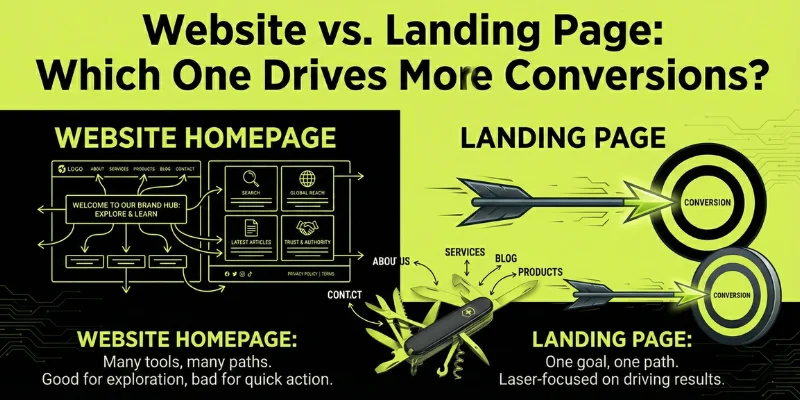
You’re not alone if you’re investing in advertisements but not seeing any returns. Many businesses spend money driving traffic but still struggle to turn visitors into customers. The real issue often lies in where that traffic is being sent. Should you direct people to your homepage or a focused landing page crafted for conversions? In this post, we’ll break down the key differences between a website vs. a landing page and help you choose the right one for higher conversions and better results.
A Quick Comparison That Matters: Website vs Landing Page
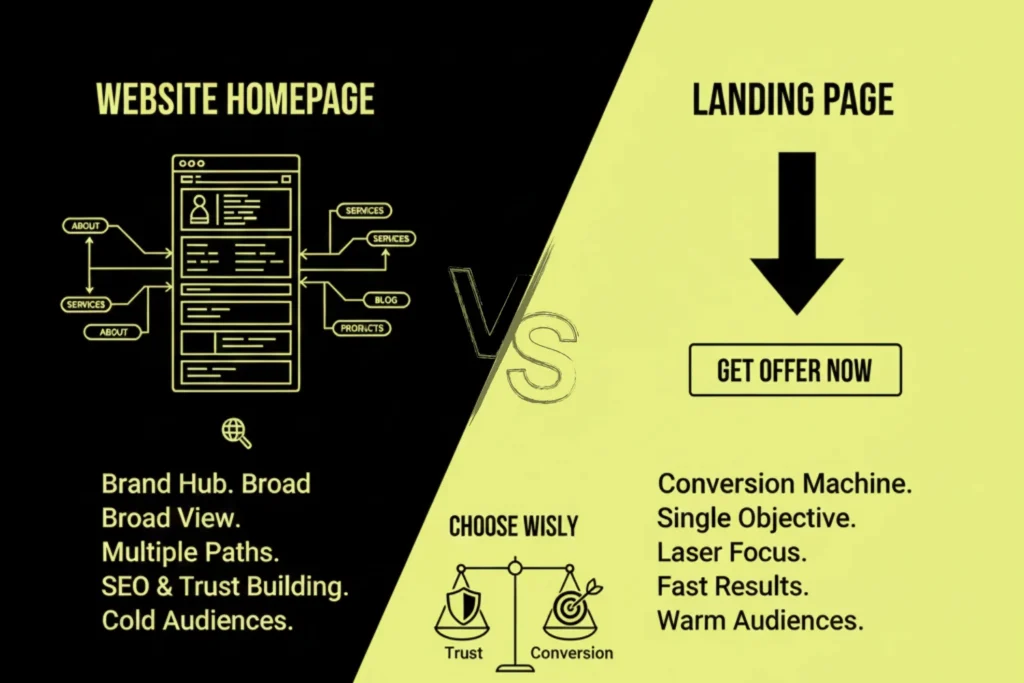
A website homepage offers a broad view of your brand with multiple paths to explore. It serves as a hub for different types of visitors, helping them learn more about your business. A landing page, on the other hand, is built for a single objective usually to drive conversions. While the homepage supports long-term SEO and brand recognition, the landing page is built for fast, measurable results. Knowing when to use each can dramatically improve your marketing performance.
A homepage helps build trust, authority, and brand visibility, making it ideal for cold audiences who are just discovering you. A landing page is perfect for campaigns where the visitor already showed interest like clicking an ad, email, or special offer. Combining both strategically creates a balanced funnel and boosts ROI across your marketing. For sustainable growth, use both but use each at the right moment. That’s the secret behind higher conversion rates and smarter marketing decisions.
Homepage = Brand Hub
Your homepage is the central place where visitors explore who you are, what you offer, and why it matters. It contains navigation menus, internal links, product categories, blogs, and other essential sections. This structure makes it useful for visitors who want to learn more or browse before taking action. It’s designed for a wide audience and supports SEO across many keywords, helping you attract traffic from search engines. Think of it as your digital storefront that gives people their first impression.
Because of its structure, a homepage is more about education, trust-building, and long-term engagement rather than immediate conversions. Visitors may take different paths based on what they need, which is useful but less focused. This broad approach means conversions may happen but only after the visitor explores and becomes comfortable with the brand. It’s perfect for showcasing business identity, brand story, and credibility elements like testimonials. Overall, the homepage strengthens your presence and positions your business as trustworthy.
Landing Page = Conversion Machine
Landing pages are designed for campaigns with a clear call to action. They remove distractions and highlight one single offer or message. This makes them ideal for PPC ads, email marketing, webinars, and time-sensitive promotions. Every element on the page is crafted to guide the user toward the desired action. The goal is simple: convert the visitor.
What sets landing pages apart is their laser focus. They don’t include menus, multiple links, or areas that pull attention away from the CTA. Because of this simplicity, conversion rates are often much higher than homepages. Marketers often rely on landing pages for fast results, lead generation, and direct response campaigns. If maximizing ROI is your goal, landing pages deliver faster and more consistently.
Website vs Landing Page: When to Choose
Use your homepage when you want to inform, educate, or build trust. It’s perfect for cold traffic from search engines or social media, where users may be researching or simply exploring. A homepage gives them the space to learn about your brand without pressure. If the visitor is not ready to take action, the homepage serves as a gentle introduction. It’s designed for discovery and first impressions.
Use a landing page when your audience is already warmed up or clicking from an ad. These users have intent, so a focused page increases the likelihood of conversion. Landing pages are ideal for special promotions, lead magnets, free trials, consultations, and product launches. The more precise your goal, the better the landing page works. Choosing wisely between the two can significantly improve your campaign results.
Optimize for Purpose
Don’t use a homepage as a landing page it can overwhelm or distract your visitors. With too many links, visitors can click away before converting. The lack of focus reduces your chances of capturing leads or making sales. Homepages are not built for campaigns that need a single, powerful CTA. They’re built for exploration, not conversions.
And don’t use a landing page as a homepage it lacks depth and structure. Landing pages don’t explain your business, showcase your products, or offer general information. They also don’t perform well for SEO because they’re often temporary. Each has a different job to do, and mixing them can lead to frustration and low results. By aligning the page type with your goal, you get better engagement and higher conversions.
User Experience Matters
The visitor journey on a homepage is exploratory. Users browse through menus, check services, read blogs, or look for pricing. They choose their own path based on what they want to learn. This open structure works well for people at the awareness stage. It’s flexible and informative, but not always conversion-driven.
On a landing page, the journey is guided from start to finish. Every section leads the visitor closer to clicking the CTA. The messaging is consistent, clear, and tailored specifically to the traffic source. This simplicity makes the experience much more conversion-friendly. Understanding these differences helps you design pages that deliver the results you want.
Traffic Type Shapes Strategy
Homepage traffic is usually cold or warm. These visitors come from organic search, direct visits, or referrals. Most of them are not ready to make immediate decisions because they’re discovering your brand for the first time. They want to understand your business before trusting it. That’s why the homepage needs depth and multiple sections.
Landing pages receive hot, intentional traffic. These visitors are coming from ads, email marketing, or targeted campaigns. They already showed interest by clicking, so they’re closer to converting. A landing page matches this intent by providing a direct offer. When the page and traffic align perfectly, conversions skyrocket.
The Power of A/B Testing
Because landing pages are focused, they are ideal for A/B testing. You can test different headlines, CTAs, colors, images, and layouts. Even small changes can lead to big improvements in conversion rates. This makes landing pages great for rapid optimization. The data you gather helps improve future campaigns too.
Homepages, on the other hand, are harder to test. They contain too many elements, links, and sections, making it difficult to isolate what impacts conversions. They also serve various user types, so results are mixed. While testing homepages is still possible, landing pages give clearer and faster insights. If you want immediate progress, start testing landing pages first.
Scalability for Campaigns
When launching new offers, courses, or seasonal promotions, landing pages offer speed and flexibility. You can create multiple versions for different audience segments. Each can have tailored messaging, visuals, and offers. This makes them essential for dynamic, fast-moving campaigns. Marketers rely on them for quick adaptations and targeted marketing.
Homepages are more static and long-term. They don’t change often and require careful planning when updated. A full homepage redesign can take months. Because of this, they’re not suitable for campaign-specific messaging. For agile marketing and time-bound promotions, landing pages always win.
What Is a Website Homepage?
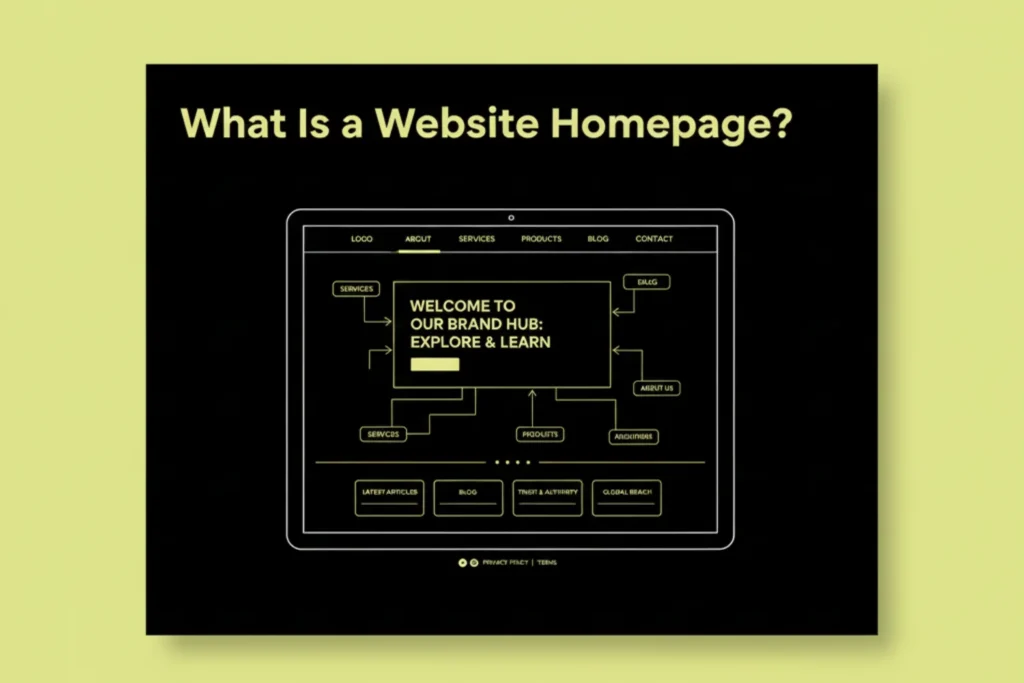
Your website’s homepage is the main gateway to your brand. It’s where visitors land when they search for your business or type in your URL. It showcases the overall structure of your site, including navigation menus, service pages, product sections, blogs, and company information. This layout helps visitors explore your business freely. A homepage is meant to inform, not push for immediate action.
It serves a wide audience and accommodates users at different stages of the buyer journey. Some may want to learn about your products; others may simply be researching. This makes a homepage less focused but more versatile. It helps build your credibility and gives people a full picture of who you are. It’s designed to guide users to the information they need.
Why Homepages Aren’t Built to Convert
Homepages help grow your search rankings and build trust over time. They are essential for SEO since they target branded keywords and include multiple internal links. But because they serve many purposes, they don’t drive immediate conversions. Visitors often get distracted by too many options. They may leave without completing any meaningful action.
Homepages are not focused enough for quick or campaign-based conversions. They spread attention across many sections products, blogs, contact pages, etc. This makes them great for awareness but not ideal for performance marketing. If your goal is speed, leads, or sales from paid traffic, a homepage isn’t the right choice. That’s where landing pages take the lead.
What Is a Landing Page?
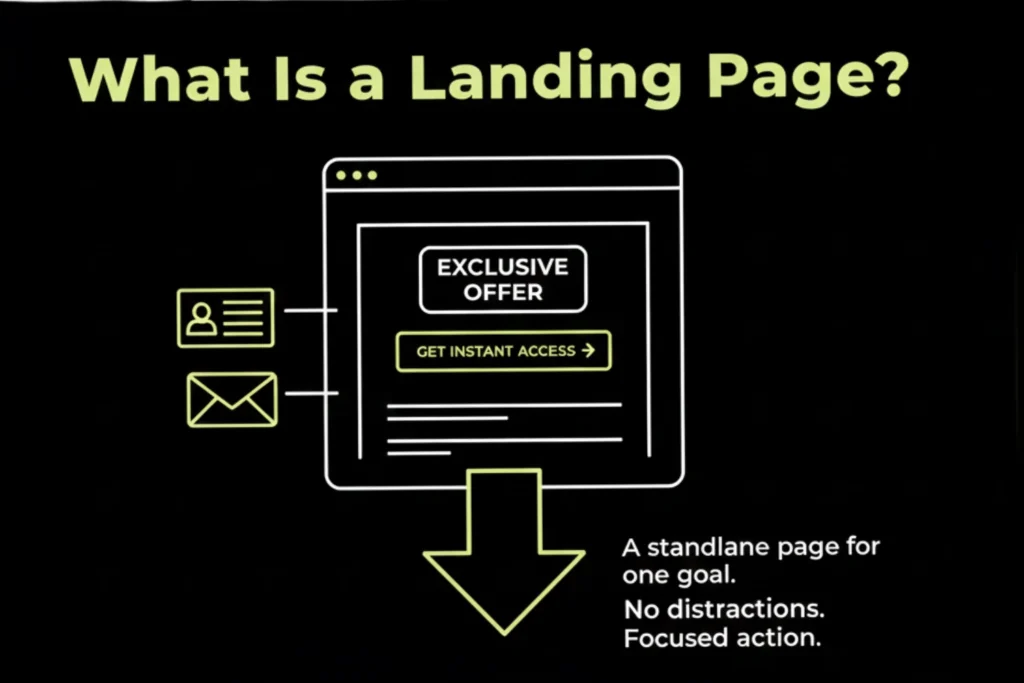
A landing page is a standalone web page built for a specific goal or campaign. Visitors land on it from ads, emails, social campaigns, or targeted links. Unlike a homepage, it removes distractions and focuses on a single action. The design, content, and structure support one message and one outcome. This clarity increases the chances of conversion.
Landing pages do not include menus or multiple navigation links. They highlight the offer, the value, and the call to action clearly. Everything on the page guides the visitor toward completing the desired step. Whether it’s signing up, booking a call, downloading a guide, or making a purchase, the page does one thing extremely well. That’s why landing pages outperform homepages for paid campaigns.
Benefits of Landing Pages
- Landing pages convert better because they’re focused on one goal. Visitors are not distracted by multiple choices or complex layouts.
- Each landing page can be created for a specific audience segment or ad campaign. This increases relevance and makes users feel understood.
- With one CTA and one goal, measuring success is simple and accurate. You know exactly what works and what doesn’t.
- Landing pages allow quick adjustments, making them perfect for improving performance rapidly. Small changes can lead to big improvements.
- Since ads require clarity and relevance, landing pages are the ideal destination. They match the intent and help recover ad spend through conversions.
Key Differences: Website vs Landing Page
Let’s break down the differences so you can choose the right page for your goals.
1. Purpose
A homepage introduces your business to a broad audience. It includes multiple sections such as About, Services, Products, Blog, and Contact pages. The goal is to help visitors explore your brand at their own pace.
A landing page focuses on one single objective. Its purpose is to convert whether through sign-ups, purchases, or bookings. The more specific the goal, the higher the conversion rate.
2. Traffic Source
Homepages attract organic or direct traffic. These visitors often find you through search engines or by typing your URL manually. They want information, not immediate action.
Landing pages attract hot traffic from ads, email campaigns, or social promotions. These users already have intent and are more likely to convert. That’s why landing pages skip broad descriptions and go straight to the offer.
3. Conversion Goals
Websites may have multiple goals like exploring services, reading blogs, or signing up for a newsletter. This spreads attention across many actions.
Landing pages have one direct conversion goal. Every element supports this goal, removing confusion and increasing results. When users have only one option, they are more likely to complete it.
4. Exit Links
A homepage contains many links menus, footers, product categories, blog links, and more. These navigation options reduce conversion rates because users can get lost or distracted.
Landing pages limit or completely remove exit links. The only clickable button is the CTA. This keeps attention focused and helps guide visitors to convert.
5. Messaging
Homepage messaging is broad because it aims to speak to many types of visitors. It highlights brand values, categories, and general information.
Landing page messaging is targeted and specific. It speaks to a single audience segment with a single purpose. Personalized messaging significantly boosts conversions and relevance.
6. Call to Action (CTA)
A homepage may have multiple CTAs spread across different sections. They’re often secondary and not urgent.
A landing page puts the CTA front and center. It is bold, clear, and repeated strategically across the page. This consistency increases motivation and encourages action.
7. Crawlability & SEO
Homepages are built for SEO. They rank for branded terms and help search engines understand your website structure.
Landing pages are often not indexed, especially if they’re used for short-term offers. Their purpose is conversion, not search ranking. They rely on ads and campaigns for traffic not SEO.
Comparison Table: Website vs. Landing Page
| Feature | Website Homepage | Landing Page |
| Main Goal | Brand awareness | Conversion (signup, sale, etc.) |
| Traffic Source | Organic, direct | Paid ads, emails, social |
| Navigation | Multiple links | Minimal or no links |
| Conversion Focus | General | Specific |
| Messaging Style | Broad | Targeted |
| SEO Indexing | Yes | Optional / No |
| Best Use Case | Branding & education | Campaigns & lead generation |
When to Use Each One
Use a Landing Page When:
- Running Google Ads or Facebook Ads
- Promoting a limited-time offer
- Launching a new product or feature
- Collecting leads from a webinar or ebook
- Testing messaging or layout through A/B tests
Use a Homepage When:
- Introducing your brand to new audiences
- Driving organic SEO traffic
- Offering a broad overview of your products/services
- Building trust and brand authority
- Supporting existing customers with resources
It Depends On:
- The prospect’s stage in your sales funnel
- Their role in the buying committee
- The average contract value (ACV) of your offer
- Your campaign goals and ad spend
- The complexity of your sales cycle
Website vs Landing Page: Common Mistakes to Avoid
Landing Pages:
- Mismatch between ad and page message
- Weak or missing CTA
- Cluttered layout or distractions
- Slow loading speed
- Not mobile-optimized
Websites:
- Trying to be everything for everyone
- Vague copy that lacks a clear message
- Confusing navigation
- No clear next steps for visitors
- No conversion tracking in place
Ready to Boost Your Conversions?
Join smart marketers who get the latest landing page tips, templates, and strategies sent straight to their inbox.
Make the best possible use of your next campaign by subscribing now!
Conclusion
In the debate of Website vs. Landing Page, there’s no one-size-fits-all winner. Long-term SEO and brand growth depend heavily on your homepage. But when it comes to running ads and driving quick conversions, a focused landing page works better. The trick is to use both but at the right time and place.
For maximum results, send cold traffic to landing pages, and let your homepage be the guide for organic users. Understanding the difference and knowing when to use each can make or break your digital marketing strategy. If conversions matter (and they should), invest time in building high-quality landing pages. Your ROI will thank you.
FAQs
Q: Why does a landing page have limited navigation?
The goal of landing pages is to maintain user focus on a single objective. Too many links create distractions and lower conversions.
Q: What metrics should I track to compare homepage vs. landing page performance?
Look at conversion rate, bounce rate, time on page, click-through rate (CTR), and cost-per-lead (CPL).
Q: Are landing pages good for SEO?
Not usually. Most landing pages are used for paid traffic and are not indexed.Nonetheless, it is possible to optimize long-form landing pages with evergreen content.
Q: Can I use both a landing page and homepage together?
Yes! Use landing pages for campaigns and drive general traffic to your homepage. Each has a unique purpose.