

Social Commerce Features: The Future of Shopping Starts Here
Social commerce is changing the way people discover, evaluate, and buy products online, and the shift is happening faster than ever. Every brand wants to understand the Social Commerce Features that truly drive conversions and customer engagement. In 2025, the most successful businesses will be those that master Social Commerce 2.0 and stay ahead of rising trends. If you want stronger visibility, better conversions, and higher customer trust, you must know which features actually matter. This blog will guide you through every essential trend so you can implement strategies that help you scale with confidence.
Businesses today cannot rely on traditional eCommerce alone because users now expect seamless experiences inside their favorite platforms. Social Commerce Features like live shopping, in-app checkout, and AI-powered personalization are shaping the new buying journey. These innovations reduce friction and create instant purchasing moments that increase revenue opportunities. Brands that embrace these features build deeper audience connections and higher retention. This guide explains how you can transform your social selling strategy using data, trends, and real examples.
Key Topics & Insights
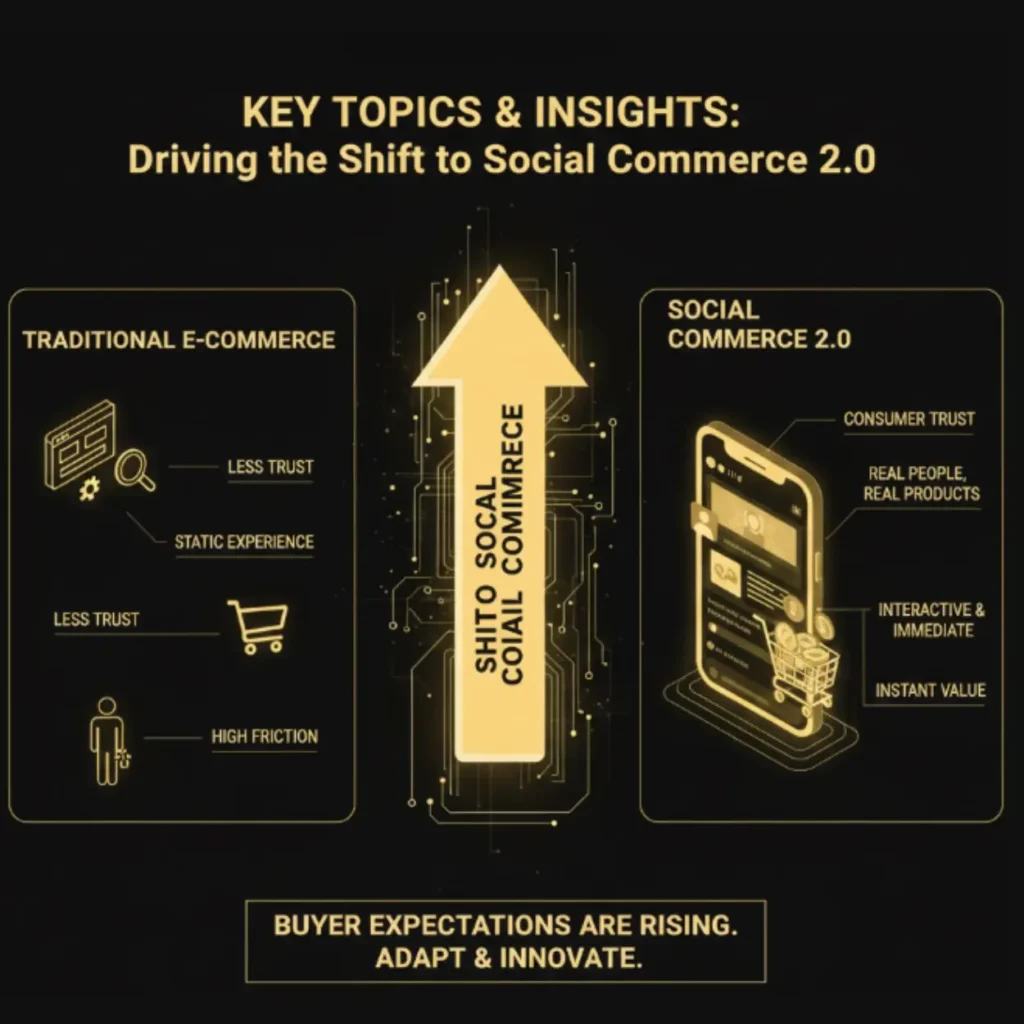
Before diving into specific Social Commerce Features, it’s important to understand what is driving the shift toward Social Commerce 2.0. Consumers trust social platforms more than traditional websites because they see real people using real products. This shift means brands must adapt quickly and show value through interactive and immediate experiences. As buyer expectations rise, companies must upgrade their strategies to stay relevant and competitive. These insights will help you navigate the transformation with a forward-thinking approach.
Social commerce is growing at double the speed of regular eCommerce due to its simplicity and convenience. Features like UGC, influencer posts, and personalized recommendations are becoming essential instead of optional. Brands that use these elements see higher engagement, stronger retention, and more organic reach. This shift proves that social platforms are no longer just marketing channels but complete shopping ecosystems. Understanding these insights allows you to make smarter implementation decisions.
Trending Social Commerce Features
| Feature | Purpose | Impact |
| In-app Checkout | Buy without leaving platform | Higher conversions |
| Shoppable Posts | Tag products directly | Faster discovery |
| Live Shopping | Real-time engagement | Boosts sales instantly |
| AI Personalization | Tailored experience | Increases relevance |
| UGC & Influencers | Builds trust | Higher credibility |
| Conversational Commerce | Chat-based buying | Better support |
| Omnichannel Sync | Unified journey | Smoother customer flow |
| Performance Analytics | Track success | Improves optimization |
Below is a table summarizing today’s most impactful features:
In-App Checkout & Seamless Payments

In-app checkout is one of the most powerful Social Commerce Features because it removes every barrier between discovery and purchase. Shoppers no longer want to jump between apps or websites to buy something they love. When brands offer secure in-platform checkout, conversions rise instantly. This experience feels natural, fast, and familiar, which increases user confidence. If you want quicker sales, in-app checkout is a must-have.
Platforms like Instagram, TikTok, and Facebook are all expanding their in-app shopping tools. These features reduce drop-offs and make it easier for customers to complete purchases within seconds. Brands that use integrated payments see more impulse buying and lower cart abandonment. This is especially helpful for small businesses trying to compete with larger retailers. By offering seamless payments, you create a frictionless path from interest to purchase.
Shoppable Posts, Stories & Product Tagging
Shoppable posts create instant buying moments by letting users tap on images, videos, or stories to view products. These Social Commerce Features blend content and commerce in a natural way that doesn’t feel like traditional advertising. Customers love discovering products organically and being able to shop immediately. This increases product visibility, engagement, and overall brand trust. For brands, it’s one of the simplest high-impact tactics to implement.
Product tagging also helps customers understand what they are seeing without asking questions or leaving the app. Whether it’s a dress in a video or a skincare product in a tutorial, tagging gives users all the information they need. Many brands see their conversion rates double simply by tagging products consistently. These tags work on images, short videos, and even live sessions. This makes shoppable content the perfect blend of browsing and buying.
Live Shopping & Real-Time Engagement
Live shopping is a game-changing Social Commerce Feature because it mixes entertainment with instant purchasing. Viewers feel connected to the host and trust the products more when they see them in real time. This trend has exploded in Asia and is now rapidly growing worldwide. People enjoy asking questions, receiving answers, and buying instantly during the session. For brands, live commerce creates urgency and boosts conversions dramatically.
Successful live shopping events often include influencer collaborations, giveaways, and limited-time offers. These strategies encourage high engagement and keep viewers watching longer. Brands that go live regularly see major increases in awareness and repeat customers. Live shopping also provides valuable insights into what your audience likes or dislikes. It’s one of the most interactive and profitable features of Social Commerce 2.0.
AI-Powered Personalization & Recommendations
AI personalization is one of the most advanced Social Commerce Features shaping the future. It helps platforms show users the exact products they’re likely to buy based on behavior, interests, and past activity. This leads to more relevant feeds and higher purchase intent. Personalized recommendations make customers feel understood and valued. As a result, they return more often and convert faster.
Brands using AI also get smarter insights into what works and what needs improvement. This includes product preferences, ideal posting times, and buying triggers. AI-driven ads improve targeting accuracy and reduce wasted spending. These recommendations help businesses run more efficient campaigns. If you want to scale quickly, personalization must be part of your strategy.
Social Proof: Reviews, UGC, Influencers
Social proof remains one of the strongest purchase drivers because people trust recommendations from real users. User-generated content like reviews, videos, and testimonials shows authentic product experiences. These Social Commerce Features increase trust and reduce hesitation. Customers feel more confident when they see relatable people using the product. This credibility is something that traditional ads cannot match.
Influencer marketing continues to grow because influencers already have loyal, engaged audiences. When influencers recommend products, followers feel inspired to try them. UGC also boosts organic reach and brings more traffic to product pages. Brands that consistently encourage and share UGC create a stronger community. With social proof, your brand becomes more relatable and trustworthy.
Conversational Commerce (DM Shopping & Chatbots)
Conversational commerce makes the shopping experience personal and supportive by using DMs, chatbots, and automated replies. Customers can ask questions, get instant help, and complete purchases in a chat window. These Social Commerce Features reduce confusion and make buying feel more comfortable. Many users prefer chatting before buying, especially for beauty, fashion, and tech products. This trend is rising fast because it feels human and convenient.
Chatbots also help brands provide 24/7 support without hiring large teams. They guide users through product recommendations, FAQs, and purchase steps. Automated replies increase response speed and prevent missed leads. This feature is perfect for businesses looking to improve response times and customer satisfaction. By using conversational commerce, you build trust and increase conversions.
Cross-Channel & Omnichannel Experience
Today’s customers move across multiple platforms before making a final purchase. This makes cross-channel Social Commerce Features extremely important for creating a smooth journey. A unified shopping experience ensures brand consistency and reduces confusion. When all channels are connected, customers feel more secure and informed. This strategy improves brand trust and retention.
Omnichannel integration also helps businesses collect better data from each touchpoint. This allows brands to personalize experiences and respond faster to user needs. It improves marketing accuracy and boosts overall sales. Customers appreciate seamless movement between social platforms, websites, and offline stores. With a strong omnichannel strategy, brands can stay competitive and future-ready.
Data-Driven Optimization & Measurement
Data is at the heart of every successful Social Commerce 2.0 strategy. Brands must track performance to understand what works, what converts, and what needs improvement. Analytics help identify user behavior, purchase triggers, and popular content formats. These insights guide smarter decisions that increase ROI. Without data, you’re only guessing.
Optimizing campaigns becomes easier when you have clear metrics. Brands can test different creatives, captions, and formats to see what improves results. Data-driven strategies reduce wasted spending and increase conversions. This makes your marketing more targeted and profitable. With performance analytics, growth becomes consistent and predictable.
Industry-Wide Learnings & Best Practices
Social commerce is evolving based on real industry insights and long-term digital behavior. Brands must adapt by focusing on proven Social Commerce Features and removing unnecessary steps from the buying journey. Simplicity always wins in social selling. Customers appreciate fast, interactive, and authentic experiences. These best practices help brands stay competitive even in crowded markets.
Businesses should also invest in stronger content strategies that align with buyer intent. This includes educational content, product demonstrations, and influencer collaborations. When brands understand the buyer journey, conversions improve naturally. Implementing these insights makes the shopping experience smoother and more engaging. The more value you provide, the stronger your results.
Platform Innovations & Tools
Social platforms continue introducing new tools that enhance shopping experiences. These innovations simplify product discovery and create engaging moments for users. Businesses must stay updated with these Social Commerce Features to remain relevant. Using new features early gives brands a competitive advantage. This agility helps companies grow faster than slower competitors.
Tools like automated workflows, advanced dashboards, and AI-powered recommendations help businesses scale. These tools save time, reduce errors, and improve efficiency. Platforms also provide better analytics for tracking performance. Brands that leverage these innovations see higher engagement and smoother operations. Staying updated with new tools is essential for long-term success.
Case Studies & Success Stories
Real-world case studies show how Social Commerce Features create measurable success. Brands like Hitachi, IKEA, and Cetaphil have achieved remarkable growth through smart social strategies. These examples prove that social commerce is more than a trend—it’s a long-term solution. Companies that adapt early gain major advantages. Learning from these success stories helps you build a stronger strategy.
Whether it’s reducing CPA, boosting conversions, or increasing reach, the results speak for themselves. Social commerce drives faster engagement and higher trust than traditional channels. Each case study highlights the power of interactive shopping. These stories offer real insights into what makes campaigns successful. Brands can use these lessons to optimize their own strategies.
Research & Market Insights
New studies show that social commerce outperforms multichannel strategies across key metrics. The reason is simple: social platforms keep users engaged for longer periods. This allows brands to influence buying decisions more effectively. These insights prove that adopting Social Commerce Features is essential for growth. With evolving technology, this trend will only get stronger.
The research also highlights upcoming trends that brands must prepare for. These include deeper personalization, immersive content formats, and AI-driven user journeys. Understanding these trends helps businesses stay ahead of the curve. Developers, marketers, and retailers all benefit from these insights. With strong research, your strategies become future-proof.
Regional Focus & Emerging Markets
Emerging markets like India are experiencing rapid growth in social commerce. Gaming, live streaming, and mobile-first content are driving new shopping behaviors. These markets offer huge opportunities for brands ready to adapt. Social Commerce Features resonate strongly with younger demographics in these regions. This makes them ideal environments for social-first strategies.
Brands targeting emerging markets should focus on simplicity and localized content. Consumers appreciate personalized experiences that reflect their culture. Live shopping and influencer partnerships perform extremely well here. These strategies increase awareness and customer loyalty. Understanding regional behavior helps brands scale faster.
Tools, Education & Resource
Businesses that want to excel in Social Commerce 2.0 must invest in education and training. Platforms now offer webinars, courses, and certifications in programmatic advertising. These resources help brands understand new tools and trends. Staying educated gives you a strong advantage in a competitive market. This knowledge leads to better strategy execution.
Brands can also use online resources to train teams and streamline workflows. These tools offer insights into audience behavior and campaign performance. Training improves team confidence and reduces mistakes. By investing in education, brands future-proof their social commerce strategy. Growth becomes easier when your team knows the right tools and tactics.
Grow Your Business Faster With Mugenz
If you want fast growth, real results, and expert support in implementing powerful Social Commerce Features, Mugenz is your all-in-one platform for SEO, website development, social media marketing, and business scaling. Mugenz helps brands grow smarter, rank faster, and convert better by providing advanced tools designed to boost visibility and drive more sales across all channels. Whether you’re a startup or a growing business, Mugenz simplifies digital selling, improves shopping experiences, and automates conversions without complexity. With data-driven insights and AI-enhanced workflows, you can optimize campaigns and track performance effortlessly. Start your transformation today with the tools built for modern commerce and stay ahead of the competition.
Mugenz also offers expert guidance to help you build high-performing campaigns tailored to your audience. Its intuitive platform saves time while providing actionable insights for measurable growth and higher ROI. By leveraging Mugenz, businesses can streamline operations, deliver exceptional shopping experiences, and implement Social Commerce Features effectively. Don’t wait for competitors to overtake you—take action now and scale faster than ever. Try Mugenz today and unlock your full digital potential while taking your business to the next level.
Conclusion
Social Commerce Features are no longer optional—they are essential for brands that want to stay competitive and grow in 2025 and beyond. By implementing in-app checkout, shoppable posts, live shopping, AI personalization, and other key features, businesses can create seamless, engaging, and profitable shopping experiences. Real-world case studies show that brands leveraging these tools achieve higher conversions, stronger engagement, and measurable growth. Platforms like Mugenz make it easier to implement these strategies, optimize campaigns, and scale effectively. Start adopting the right Social Commerce Features today, stay ahead of market trends, and position your brand for long-term success.
FAQs
Q1: What are Social Commerce Features?
Social Commerce Features are tools inside social platforms that let users discover and buy products without leaving the app.
Q2: Why is Social Commerce 2.0 important?
Because it makes buying easier, increases engagement, and improves conversions.
Q3: Which platforms offer the best social commerce tools?
Instagram, TikTok, Facebook, YouTube, and Pinterest.
Q4: Does social commerce help small businesses?
Yes, it reduces marketing costs and increases organic reach.
Q5: How can Mugenz help with social commerce?
Mugenz provides smart tools, automation, and analytics to improve visibility and sales.