Introduction
If your website isn’t showing up where it should in search results, the problem might be on the page itself. Search engines look for specific signals before deciding where to rank your content. By applying the right on-page SEO techniques, you can make your pages easier to find and more appealing to both search engines and visitors. The best part is that most of these changes are fully under your control. Let’s explore practical, proven steps that can lift your site higher in search results.
Mastering on-page SEO is about more than just keywords. It’s about creating a page that is well-structured, easy to read, and valuable to the user. The more your content meets user expectations, the better your chances of ranking. We’ll cover everything from keyword placement to improving site speed. Each step will help you align your content with both user needs and search engine algorithms.
What is On-Page SEO?
“On-page SEO” refers to the process of enhancing individual web pages to increase their search engine ranking. It emphasizes both the technical configuration of your page and the quality of the content. This is all about improving your website, as opposed to off-page SEO, which concentrates on external signals like backlinks. These modifications facilitate search engines’ ability to navigate and comprehend your website. Done right, it can boost visibility and attract more qualified traffic.
The difference between on-page, off-page, and technical SEO is important to know. On-page deals with page content and HTML elements. Off-page covers external links and brand mentions. Technical SEO ensures your site is fast, secure, and crawlable. Together, the three contribute to excellent SEO results.
Why On-Page SEO Matters
Search engines strive to provide users with the best and most pertinent results. If your content isn’t optimized, it may never be seen even if it’s valuable. Strong on-page SEO techniques help search engines understand your page’s topic and intent. This makes it easier to match your content with the right search queries. Better rankings and more organic traffic are the outcomes.
User experience is another reason on-page SEO is so important. Pages that load quickly, are easy to navigate, and provide clear information keep visitors engaged. A low bounce rate tells search engines that visitors find your site useful. In the long run, this leads to better visibility and higher conversions. Simply put, it’s a win-win for both you and your audience.
On-Page SEO Basics
Every optimization effort starts with the basics. These include using relevant keywords, optimizing meta tags, structuring content, and ensuring your page is mobile-friendly. Ignoring these core elements means missing out on easy wins. Even small adjustments can lead to noticeable ranking improvements. A well-optimized page sets the stage for long-term success.
Here’s a quick-start template:
- In the title and opening paragraph, use your primary keyword.
- Write unique meta descriptions under 160 characters.
- Structure content with headings and bullet points.
- Optimize images with descriptive alt text.
- Keep URLs short and descriptive.
Keyword Strategy
Keyword Research
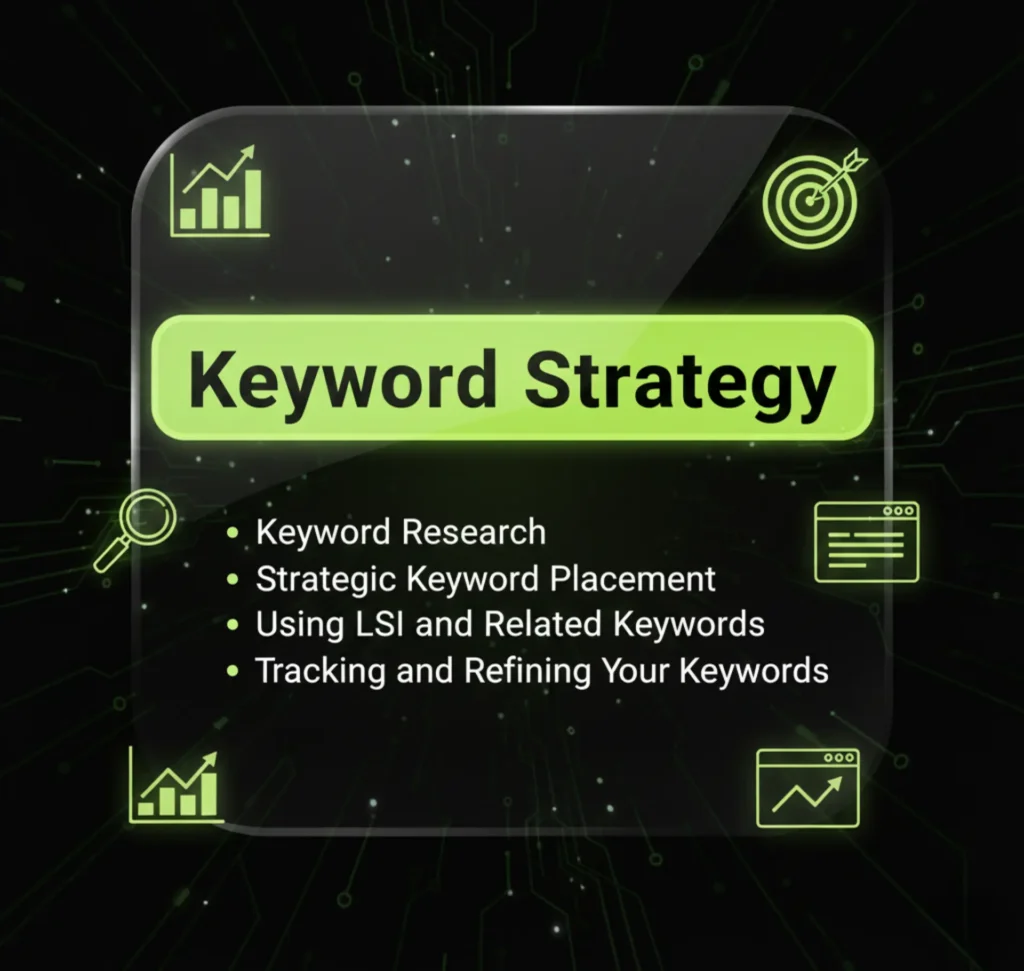
Good keyword research is the foundation of any effective SEO strategy. You must determine the exact search phrases your target audience is using to find information, products, or services. Tools like Semrush, Ahrefs, Ubersuggest, and Google Keyword Planner help you discover search volume, competition levels, and keyword difficulty. When choosing keywords, look for a healthy balance high search volume shows demand, while low competition increases your chances of ranking. Long-tail keywords, which are more specific phrases, often attract users who are ready to take action, making them ideal for boosting conversions.
Strategic Keyword Placement
Once you know your keywords, placement becomes crucial for ranking and readability. Always include your primary keyword within the first 100 words to signal relevance early to search engines. Use it naturally in headings, subheadings, the conclusion, and sprinkled throughout the main content. Avoid overusing keywords keyword stuffing can harm readability and lead to ranking penalties. Your goal is to integrate keywords smoothly so that the content remains valuable, natural, and easy to follow.
Using LSI and Related Keywords
Beyond your main keyword, adding LSI (Latent Semantic Indexing) and related keywords significantly strengthens your content. These are supportive terms that help search engines understand the full context of your topic. For example, if your primary keyword is “on-page SEO techniques,” relevant terms may include “title tag optimization,” “SEO content structure,” “internal links,” and “meta tags optimization.” Including these variations makes your article more comprehensive and increases its chances of ranking for multiple searches. It also helps readers by giving them complete information instead of narrowly focusing on one keyword.
Tracking and Refining Your Keywords
Your keyword strategy doesn’t end once your content goes live ongoing optimization is essential. Use tools like Google Search Console to monitor which keywords your page is ranking for, how many impressions it gets, and what the click-through rates look like. If certain keywords are performing poorly, update your content by adding new sections, improving clarity, or refining headings to better match search intent. You may also uncover new keyword opportunities that were not visible earlier. This continuous tracking and refinement ensures your content keeps up with algorithm changes, user behavior shifts, and growing competition.
Optimizing Title and Meta Descriptions
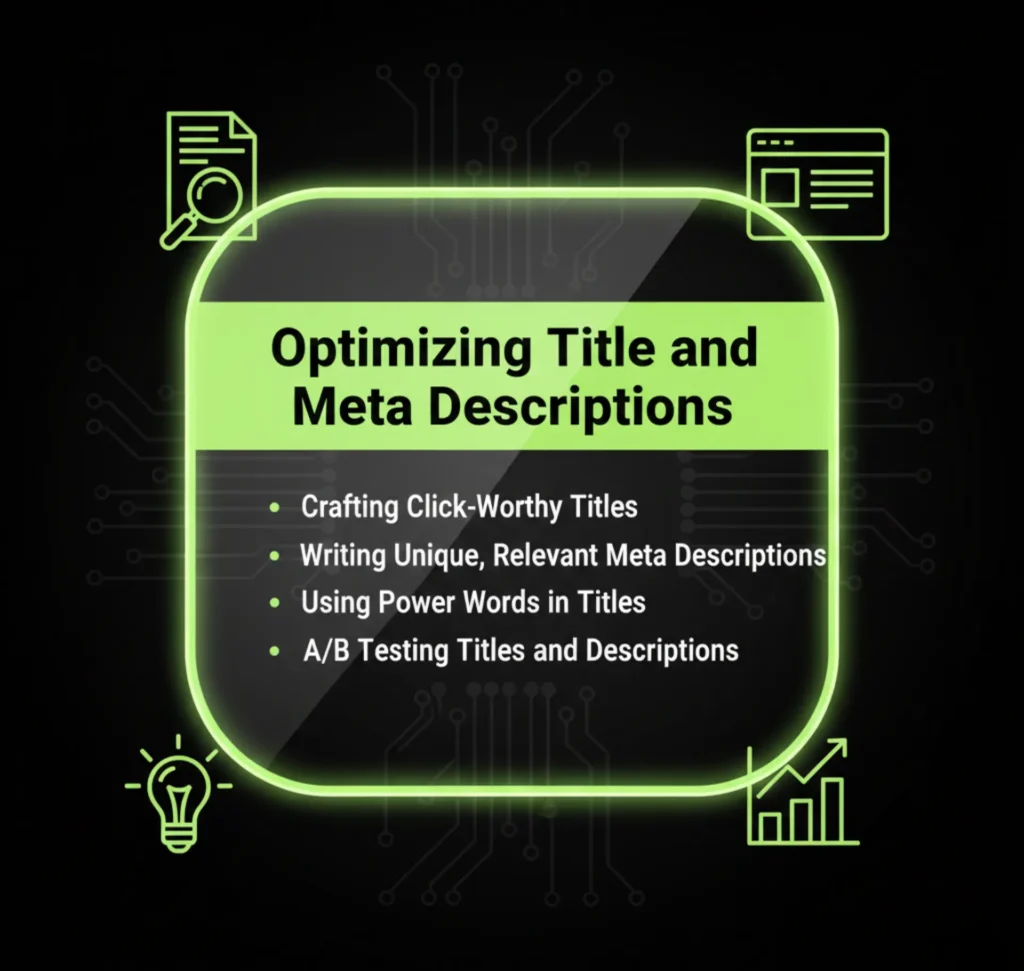
Crafting Click-Worthy Titles
Your title is the first thing people notice in search results, so it must capture attention instantly. Including your primary keyword helps search engines understand the topic, while a touch of curiosity encourages users to click. Adding elements like numbers, emotional triggers, or the current year can make your title more appealing and relevant. Keep your title under 60 characters to ensure it displays properly on all devices, especially mobile. Remember, a powerful, well-crafted title can significantly boost your click-through rate and improve overall SEO performance.
Writing Unique, Relevant Meta Descriptions
A meta description acts as your page’s mini-advertisement on search engine results pages. It should briefly explain what your content covers while making readers feel confident that clicking will help them find what they need. Naturally include your focus keyword to reinforce relevance without forcing it. Aim for under 160 characters to avoid truncation and make your description actionable by adding persuasive phrases like “discover,” “learn more,” or “explore.” A strong meta description not only improves click-through rates but also sets the right expectations for users before they land on your page.
Using Power Words in Titles
Power words strengthen your titles by adding emotional appeal, urgency, or authority. Terms like “proven,” “ultimate,” “essential,” “secret,” and “easy” draw attention and make your title more persuasive. When combined with your main keyword, these words help your content stand out against competitors in crowded search results. For example, “10 Essential On-Page SEO Tips You Must Use” provides clarity, keyword relevance, and motivation to click. Always ensure your titles stay honest misleading or exaggerated headlines can increase bounce rates and harm long-term credibility.
A/B Testing Titles and Descriptions
When you’re unsure which version of a title or meta description performs better, A/B testing can provide valuable insights. Create two variations and track metrics such as impressions, CTR, bounce rate, and time on page. Over time, you’ll identify patterns regarding which words, structures, or formats resonate most with your audience. You may discover that adding numbers, emotional trigger words, or specific years significantly boosts performance. Regular testing ensures you continually refine your SEO copy and present the strongest, most effective version in search results.
Creating High-Quality SEO Content
Satisfy Search Intent
Understanding search intent is one of the most important factors in creating high-ranking content. Users expect content that directly answers their queries, so providing the wrong type of information even if well-written will cause them to leave quickly. Always determine whether the user is looking for information, making a comparison, or ready to buy something. Align your headings, subheadings, examples, and overall structure with the exact need behind the keyword. This not only increases user satisfaction but also tells search engines that your content is the best match, improving your chances of ranking higher.
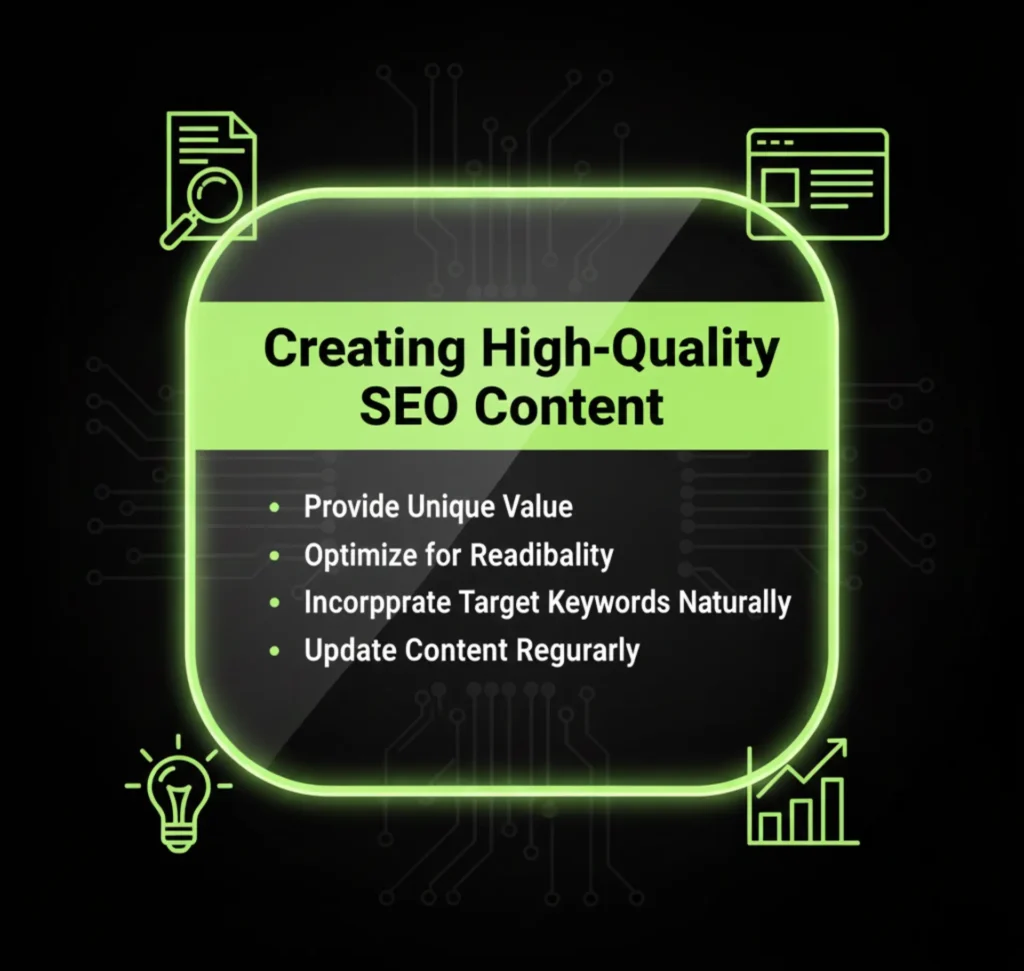
Provide Unique Value
With so much content available online, offering something fresh and original is essential for standing out. Instead of relying solely on generic information, include discussions, insights, or data that showcase your expertise or unique perspective. Adding case studies, personal experiences, expert opinions, or visual examples strengthens your authority and credibility. Search engines prefer content that provides real value and depth because it keeps readers engaged. When your content delivers something new and helpful, it’s more likely to earn backlinks, shares, and return visitors.
Optimize for Readability
Readability is a major ranking factor because it directly affects user experience. Long, complex paragraphs can overwhelm readers and cause them to leave before finishing the page. Use clear headings, short paragraphs, bullet points, visual elements, and simple language to make your content easy to digest. Adding images, infographics, or tables also helps break up text and maintain interest. When readers stay on your page longer and interact with your content, search engines interpret this as a positive engagement signal, boosting your SEO performance.
Incorporate Target Keywords Naturally
While keywords guide search engines toward understanding your content, they must be used thoughtfully. Insert your main keywords in strategic locations like titles, headings, introductions, and meta descriptions. Throughout the content, include synonyms, variations, and related terms to improve context and topical depth. Avoid forcing keywords into sentences where they don’t fit, as this harms readability and can lead to ranking penalties. Natural, meaningful keyword usage ensures your content appeals to both readers and search algorithms.
Update Content Regularly
Search engines reward content that is accurate, up-to-date, and relevant. Over time, statistics become outdated, links may break, and industry trends evolve so regular content maintenance is essential. Review your articles periodically to add new insights, refresh examples, and remove outdated material. Updating content can quickly improve rankings without needing to create an entirely new article. This continuous improvement approach helps your website stay competitive and maintain strong SEO performance over the long term.
On-Page Technical Factors
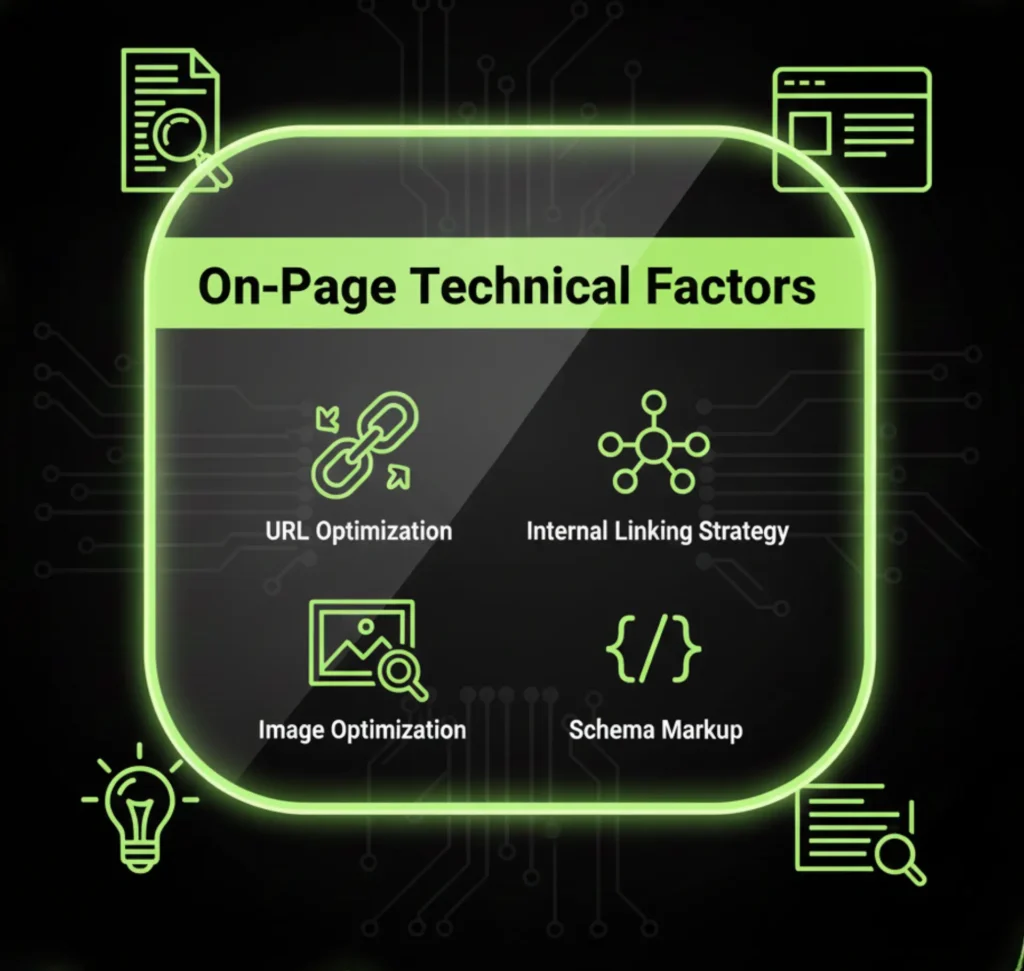
URL Optimization
A clean and well-structured URL helps both users and search engines understand what your page is about. Always include your main keyword in the URL to improve relevance and ranking potential. Avoid adding unnecessary numbers, special characters, or long strings that confuse readers and harm SEO. Short, readable URLs look more professional and increase trust, which can improve click-through rates. For example, example.com/on-page-seo-techniques is far more effective than example.com/1234-seo-page-xyz.
Internal Linking Strategy
Internal links help guide visitors to related content, improving their overall experience on your site. They also distribute link equity across your pages, helping weaker pages gain authority and rank better. Always use natural, descriptive anchor text such as “learn on-page SEO basics” instead of vague phrases like “click here.” Adding links within relevant sections of your content keeps users engaged longer, reducing bounce rates. This strategy also supports search engines in crawling and indexing your website more effectively.
Image Optimization
Images play a major role in user engagement, but they can slow down your website if not optimized correctly. Use descriptive alt text that includes keywords when appropriate to help search engines understand the image and support accessibility for visually-impaired users. Compressing your images reduces file size without compromising quality, improving page speed. Choose the right file format like WebP for lightweight performance or PNG for sharper graphics to improve loading time. Proper image optimization boosts both SEO performance and user satisfaction.
Schema Markup
Schema markup enhances your content by giving search engines additional context about your page. Adding structured data helps your site appear in rich results, such as FAQs, product ratings, breadcrumbs, or event details. These enhanced results make your listing stand out and increase credibility, ultimately boosting your click-through rate. You can implement structured data using JSON-LD, the recommended format by Google, or through Schema.org guidelines. While it’s a small technical step, it can significantly improve your visibility in search results.
Optimizing for Click-Through Rate (CTR)
Improving CTR begins with making your search result as attractive and relevant as possible. Start by crafting titles that stir emotion words like best, easy, ultimate, or proven can instantly grab attention. Include numbers, years, or specific promises because they give readers a clear idea of what to expect and create a sense of urgency. To boost visibility, target featured snippets by answering common questions with short, direct sentences that Google can easily pull into the snippet box. Even if your rankings remain the same, improving your CTR can bring significantly more traffic because more users choose your result over competitors.
On-Page UX Optimization
A strong user experience is essential because it keeps visitors engaged and encourages them to explore more pages. Place your most valuable content above the fold so users immediately see why they should stay. Break text into short paragraphs, use bullet points, and add descriptive headings to make scanning easier and reduce cognitive overload. Ensure your website is fully responsive so it displays perfectly across mobile, tablet, and desktop screens. Since most users browse on mobile devices, fast-loading, mobile-friendly pages improve engagement, reduce bounce rates, and increase your chances of ranking higher.
Regular Monitoring and Updates
SEO success doesn’t happen from one-time optimization it requires consistent monitoring and improvement. Use tools like Google Search Console, Semrush, or Ahrefs to track impressions, clicks, keyword positions, and page performance. Identify content that is losing traffic or ranking and update it with fresh information, new examples, or improved visuals. Refreshing content helps maintain relevance, especially for topics affected by trends or algorithm updates. By continually analyzing performance and making data-driven adjustments, you maintain strong rankings and stay ahead of the competition.
SEO Factors Table
| SEO Element | Description | Optimization Tip |
| Title Tag | Clickable headline in SERPs | Keep under 60 characters, add keyword |
| Meta Description | Summary in search results | Keep under 160 characters, make it engaging |
| URL Structure | Web address of the page | Short, descriptive, include keyword |
| Keyword Placement | Keyword usage in content | Add in first 100 words and headings |
| Internal Linking | Links to other site pages | Link to 3–5 relevant articles |
| Image Optimization | Improve image SEO | Use alt text, compress files |
| Schema Markup | Structured data | Use JSON-LD for rich snippets |
Conclusion
By mastering these on-page SEO techniques, you can dramatically enhance your website’s visibility, performance, and user trust. The secret lies in balancing user-friendly content with strong technical optimization so search engines can understand and rank your pages effectively. Make these improvements a consistent part of your website maintenance routine rather than a one-time task. As you refine your structure, content, and technical elements, you’ll begin to notice higher rankings, a steady rise in traffic, and stronger conversion rates. Remember, long-term SEO success begins with solid on-page foundations that deliver real value to your audience.
Use Mugenz to Boost Your Impact and Boost Your SEO
Take your digital presence to the next level with Mugenz an innovative platform built to elevate brands across key sectors. Whether you’re in healthcare, real estate, or the NGO space, Mugenz provides smart digital solutions designed to boost visibility, strengthen engagement, and improve search rankings. Our tools help healthcare brands connect with patients, empower real estate businesses to capture high-intent buyers, and enable NGOs to amplify their mission with meaningful online impact.
Ready to grow smarter? Explore our services today and discover how Mugenz can transform your online performance with data-driven strategies and powerful SEO-ready solutions.
FAQs
Q: What distinguishes off-page SEO from on-page SEO?
A: On-page SEO focuses on optimizing elements within your website content, HTML tags, URLs, and internal links while off-page SEO includes actions outside your site, such as backlinks, social signals, and brand mentions.
Q: How frequently should my on-page SEO be updated?
A: It’s best to review and refresh your pages every 3–6 months to keep your content accurate, relevant, and aligned with current search trends.
Q: Which on-page SEO factors matter the most?
A: The most important factors include optimized title tags, strong meta descriptions, strategic keyword placement, high-quality content, internal linking, and fast page speed.
Q: Are there tools that can help with on-page SEO?
A: Yes, tools like Semrush, Ahrefs, SurferSEO, and Yoast SEO provide insights, suggestions, and data to improve your optimization efforts.
Q: How does content quality influence search rankings?
A: High-quality, user-focused content increases engagement, reduces bounce rates, and sends positive signals to search engines, resulting in better rankings.