
If you want your website to stand out on Google, you need more than just keywords and backlinks. Google now looks for signals that your content is trustworthy, credible, and supported by real experience. This is where E-E-A-T in SEO comes in, which stands for Experience, Expertise, Authoritativeness, and Trustworthiness. It is part of Google’s Quality Rater Guidelines and helps determine how content quality is evaluated. Whether you run a healthcare blog, an NGO website, or a real estate business, understanding E-E-A-T can give you a strong competitive advantage.
Although E-E-A-T is not a direct ranking factor, it strongly influences how Google views your content. Think of it as a trust score that reflects your brand’s credibility and reliability. Websites with higher E-E-A-T are more likely to gain better visibility in search results. This means focusing on content quality, qualified authorship, and reliable sources. Improving these areas helps build long-term trust with both users and search engines.
The Difference Between E-A-T and E-E-A-T
Originally, Google evaluated content quality using E-A-T, which stands for Expertise, Authoritativeness, and Trustworthiness. This framework helped Google decide whether content was created by knowledgeable people and supported by credible sources. It worked well for years, especially for sensitive topics like health, finance, and legal advice. However, Google noticed that many articles were well-researched but lacked real-world insight. This gap led to the introduction of Experience.
In December 2022, Google officially added an extra “E” to form E-E-A-T. This update highlighted the importance of first-hand involvement in content creation. Google now values content written by people who have actually used a product, visited a place, or worked in the field they are writing about. For example, a travel guide written by someone who has visited the destination is more useful than one written from online research alone. This change pushed content creators to focus on authenticity, not just information.
Show Real Experience to Build Trust
The addition of experience changed how websites should approach content creation. Generic advice is no longer enough to stand out in search results. Google prefers content that shows practical knowledge gained through real situations. This could include personal stories, hands-on testing, before-and-after results, or detailed case studies. These elements make your content more relatable and believable.
Showing real experience also helps build stronger trust with readers. When users feel the content is written by someone who truly understands the topic, they are more likely to engage and return. This trust sends positive signals to Google, such as longer time on page and repeat visits. Over time, these signals help strengthen your site’s overall credibility. Experience turns ordinary content into content people trust.
A Brief Timeline of Google’s E-E-A-T
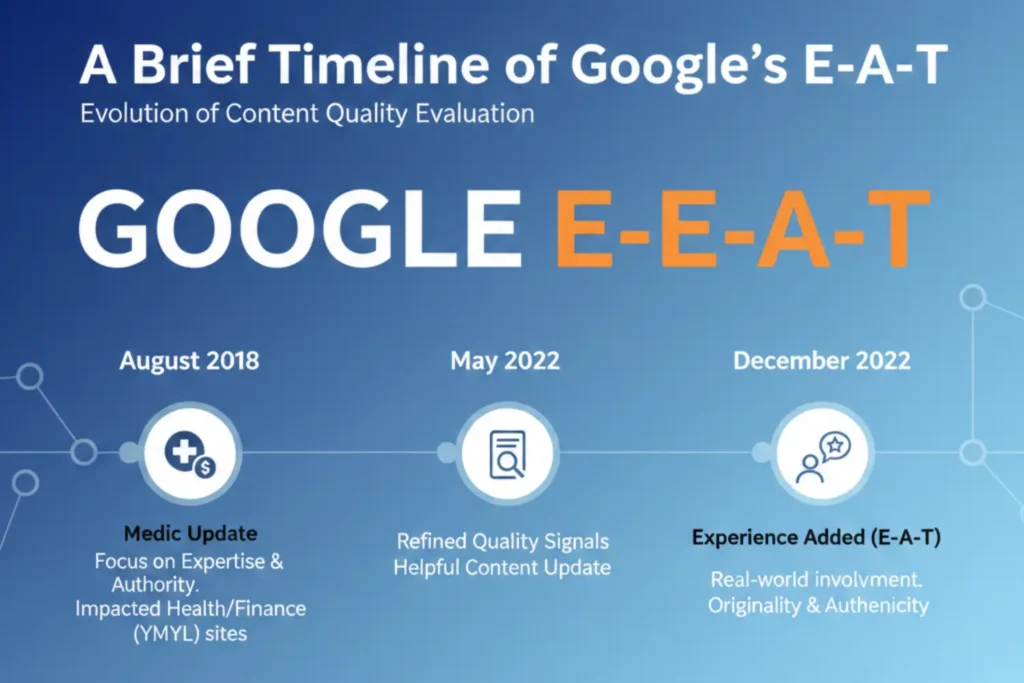
Google’s focus on content quality became more visible in August 2018, when it released a major update often referred to as the Medic Update. This update significantly impacted websites in health, finance, and other YMYL categories. Google aimed to reduce the visibility of misleading or low-quality information. Sites that lacked authority or trustworthiness saw ranking drops. This marked the beginning of Google’s stronger emphasis on content credibility.
In May 2022, another core update reinforced the importance of reliable and helpful content. Google continued refining how it evaluates quality signals. Later that year, in December 2022, experience was officially added to the framework. This shift showed Google’s growing concern about content created without real-world involvement. The update encouraged creators to focus on originality, authenticity, and usefulness rather than just SEO tactics.
How E-E-A-T Shapes Long-Term SEO Success
Over time, E-E-A-T has become a central guideline for how Google evaluates websites. Sites that ignore these principles risk losing visibility, even if they are technically optimized. Thin content, anonymous authorship, and unverified claims can slowly push a site down in search results. On the other hand, websites that focus on experience, expertise, and trust often see consistent growth. These sites become reliable sources in their niche.
Understanding this evolution helps you see why adapting now is essential. E-E-A-T is not a one-time task but a long-term strategy. Improving content quality, building authority, and earning trust takes time, but the results are lasting. The sooner you align your website with E-E-A-T principles, the stronger your online presence becomes. In the long run, trust-driven SEO always outperforms shortcuts.
Why E-E-A-T Matters for SEO
E-E-A-T helps Google decide whether your website deserves to be shown to users. When your content demonstrates strong experience, expertise, authority, and trust, Google is more confident in ranking it higher. This is especially important for competitive topics where many websites are competing for attention. For YMYL (Your Money or Your Life) topics such as health, finance, and safety, the standards are even stricter. In these areas, incorrect or misleading information can cause real harm, so Google prioritizes sources it can trust.
Strong E-E-A-T also improves how users interact with your website. When readers trust your content, they stay longer, explore more pages, and are more likely to take action. This leads to lower bounce rates and better engagement signals, which indirectly support SEO performance. Over time, your website starts to stand out as a reliable source within your niche. The more trust you build, the stronger your long-term SEO results become.
Key Components of E-E-A-T

Experience
Experience means proving that the content creator has personally interacted with the topic. This could involve hands-on use of a product, real-life problem solving, or direct involvement in a situation. Google prefers content that reflects lived experiences rather than information copied from other sources. A product review authored by someone who has tried the product, for instance, has greater credibility. This type of content feels authentic and builds stronger trust with both users and search engines.
Expertise
The degree of knowledge and proficiency underlying the subject matter is referred to as expertise. An expert understands the topic deeply and can explain it clearly and accurately. This is shown through detailed explanations, correct use of industry terminology, and reliable information. Credentials, education, or professional experience also support expertise. When readers sense expertise, they are more likely to rely on your advice and return for more information.
Authoritativeness
Authoritativeness is about how well your website or brand is recognized in its field. It grows when other trusted websites reference or link to your content. Mentions in industry publications, expert collaborations, and media coverage also increase authority. Google views these signals as proof that others trust your content. Over time, strong authority helps your site stand out as a leading voice in your niche.
Trustworthiness
Trustworthiness is the most critical part of E-E-A-T. It focuses on whether users feel safe and confident using your website. This includes honest content, secure browsing, clear policies, and accurate claims. Displaying contact information, privacy policies, and disclaimers strengthens trust. Without trust, even experienced and expert content may struggle to rank.
Content Accuracy
Accuracy ensures that the information you provide is correct and up to date. Every fact, statistic, or claim should come from a reliable source. Incorrect or outdated content can quickly harm credibility and rankings. Regular content reviews help prevent misinformation. Accurate content signals to Google that your site is a dependable source of information.
Transparency
Transparency means being open about who you are and why you create content. This includes showing author names, bios, editorial guidelines, and sponsorship disclosures. When users understand your intentions, they are more likely to trust your content. Google also favors transparency because it reduces the risk of misleading information. Clear and honest communication strengthens long-term credibility.
User Engagement
User engagement reflects how audiences interact with your content. Comments, social shares, time spent on pages, and repeat visits indicate value. Interactive elements such as videos, polls, or quizzes can improve engagement. These behaviors tell Google that users find your content helpful and relevant. Higher engagement often supports better search visibility.
Consistency
Consistency shows reliability and professionalism. Publishing quality content on a regular schedule builds audience expectations and trust. Consistent tone, messaging, and formatting strengthen brand identity. Inconsistent updates can make a site appear inactive or unreliable. Over time, consistency helps turn occasional visitors into loyal readers.
How to Improve Your Website’s E-E-A-T
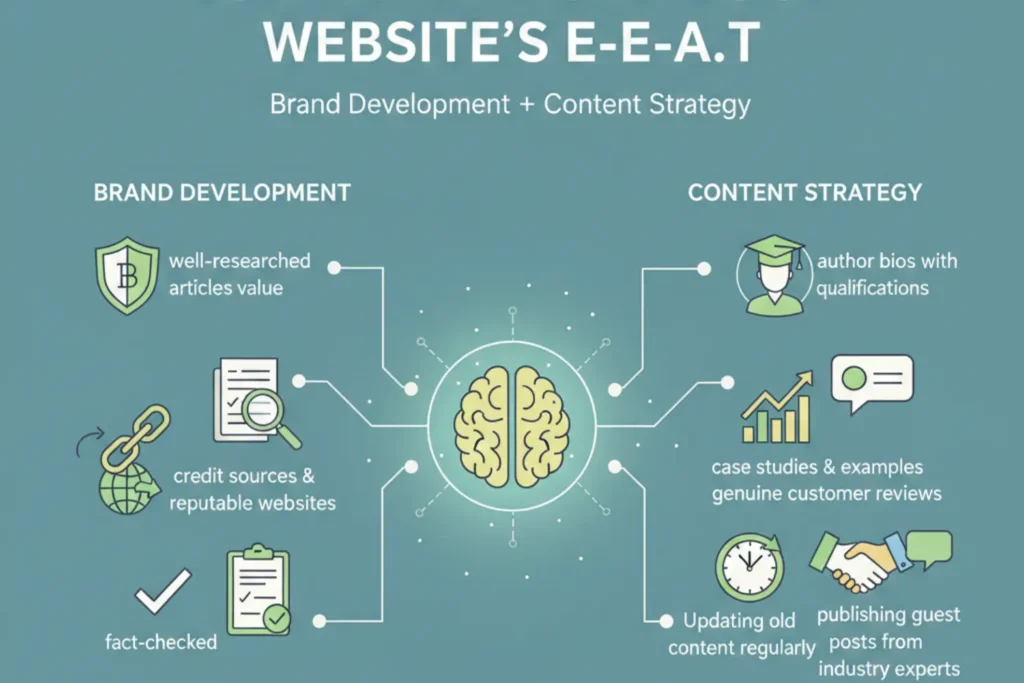
A combination of brand development and content strategy is needed to improve E-E-A-T. Start by creating detailed, well-researched articles that provide unique value. Always credit sources and link to reputable websites. Make sure every page is fact-checked before publishing. This shows both readers and Google that you care about accuracy.
Practical steps to boost E-E-A-T include:
- Adding author bios with qualifications
- Including case studies and examples
- Updating old content regularly
- Collecting genuine customer reviews
- Publishing guest posts from industry experts
Optimize Site Elements for E-E-A-T
Your About Us page plays a major role in building trust. It should clearly explain who you are, what your website stands for, and why users should trust your information. Adding real team photos, detailed bios, and professional backgrounds helps humanize your brand. This transparency reassures both users and Google that real people stand behind the content. A strong About Us page often improves credibility across the entire site.
Another essential strategy is content clustering, which organizes articles around a central topic. This approach helps Google understand that your site has deep knowledge in a specific area. Internal links between related articles strengthen topical authority. Clear menus, logical structure, and easy navigation also improve user experience. Together, these elements enhance trust, engagement, and SEO performance.
The Role of E-E-A-T in Competitive Niches
In highly competitive industries, E-E-A-T often determines which websites rank and which get ignored. When multiple sites offer similar information, Google chooses the one with stronger credibility signals. High-quality backlinks, consistent brand mentions, and expert-written content all help build authority. Industries like healthcare, real estate, and finance depend heavily on trust and accuracy. Without strong E-E-A-T, even well-optimized content may struggle to rank.
Strong credibility also influences user behavior. People prefer websites that appear knowledgeable and reliable. When users trust your site, they are more likely to convert into customers or subscribers. Increased engagement and return visits result from this. In competitive niches, E-E-A-T becomes a long-term advantage that sets you apart.
E-E-A-T and Google Quality Rater Guidelines
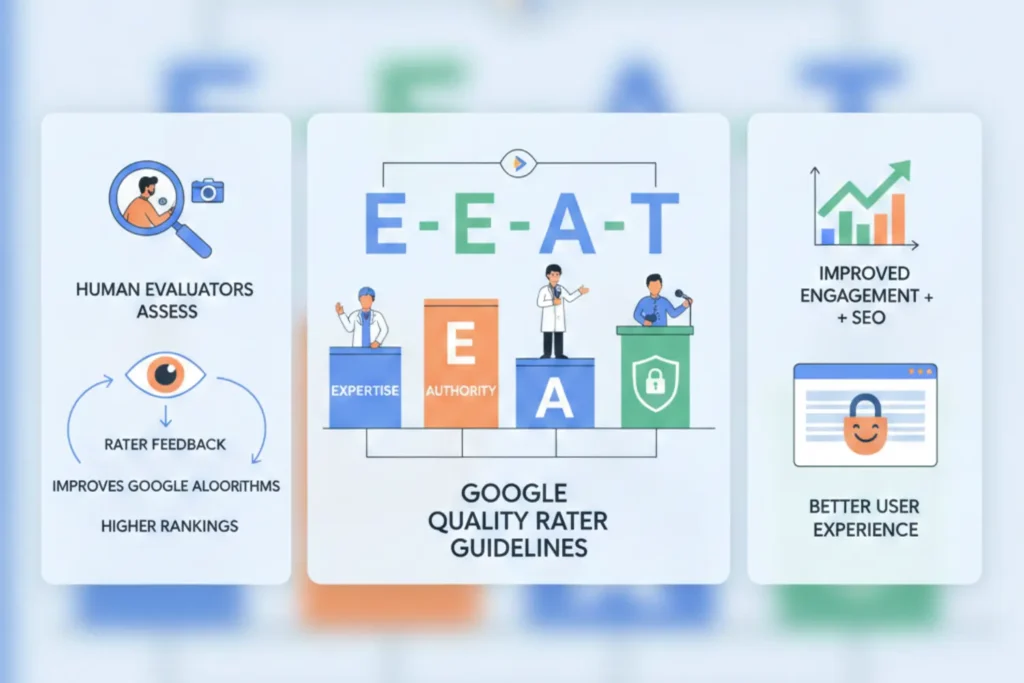
Google’s Quality Rater Guidelines explain how human evaluators assess content quality. These raters do not directly influence rankings, but their feedback helps improve Google’s algorithms. E-E-A-T is a core part of how content is judged. Pages that show experience, expertise, authority, and trust are rated higher. This makes the guidelines an important reference for content creators.
Following these guidelines helps ensure your content aligns with Google’s expectations. It encourages accuracy, transparency, and user-focused writing. Websites that apply these principles often deliver better user experiences. Over time, this leads to improved engagement and stronger SEO performance. Understanding these guidelines helps you create content that truly meets quality standards.
Signs Your Website Lacks E-E-A-T
Websites with weak E-E-A-T often show clear warning signs. Missing author names or bios can make content feel anonymous and unreliable. Outdated information suggests poor maintenance and lack of expertise. Pages that fail to cite trustworthy sources quickly lose credibility. These issues reduce both user trust and search visibility.
Other red flags include unclear contact details and missing privacy policies. Users may hesitate to engage with a site that lacks transparency. Slow-loading pages or broken links also harm trust. Regular site audits help identify and fix these problems early. Addressing these gaps strengthens your E-E-A-T over time.
E-E-A-T and User Trust
User trust is built through consistent quality and honesty. Readers trust content that is easy to understand, accurate, and well-organized. Reviews, testimonials, and case studies add social proof and reassurance. These elements show that real people value your services or information. Users are more likely to stay on your website when they feel trusted.
When users trust your website, they return more often and recommend it to others. This creates a positive feedback loop of engagement and loyalty. Google notices these user signals and views your site more favorably. Strong trust improves brand reputation and SEO together. Trust is the bridge between content quality and long-term success.
Future of E-E-A-T in SEO
E-E-A-T is expected to play an even bigger role in the future of SEO. As misinformation continues to spread online, Google will rely more on trust signals. Websites that invest in credibility now will be better prepared for algorithm changes. Experience and authenticity will become harder to fake. This makes genuine expertise more valuable than ever.
Focusing on E-E-A-T is a long-term SEO strategy, not a quick fix. It requires consistent effort, quality content, and transparent practices. However, the benefits are lasting and reliable. Sites that prioritize trust and authority today will remain competitive tomorrow. E-E-A-T is the foundation of sustainable SEO growth.
E-E-A-T Tips for Specific Industries
Healthcare
In the healthcare industry, accuracy and trust are essential because content can directly affect people’s well-being. Articles should be written or reviewed by qualified medical professionals to demonstrate genuine expertise. Using medically verified sources, clinical studies, and government health websites helps ensure reliability. Author credentials, medical disclaimers, and clear update dates further strengthen trustworthiness. Explaining complex health topics in simple language improves both user experience and credibility.
Sharing real patient experiences or case-based explanations helps demonstrate first-hand experience. Healthcare websites should avoid exaggerated claims or unverified advice, as Google applies strict quality standards to health content. Secure website practices and transparent policies are also important trust signals. Consistently accurate and ethical content builds long-term authority. Strong E-E-A-T improves visibility and patient confidence over time.
NGOs
For NGOs, credibility depends heavily on transparency and accountability. Clearly explaining the organization’s mission, leadership, and goals helps build trust with readers. Publishing impact reports, progress updates, and real-world success stories demonstrates experience and commitment. Showing how donations are used reassures both users and search engines. Verified partnerships and acknowledgments further enhance authority.
NGO websites benefit from featuring testimonials from beneficiaries and collaborators. Regular updates about ongoing projects signal active involvement and reliability. Educational and awareness-based content performs well when supported by factual data. Strong E-E-A-T helps NGOs gain visibility and attract long-term supporters. Trust-focused content encourages deeper engagement and loyalty.
Real Estate
In real estate, local expertise and market knowledge play a major role in credibility. Content should reflect first-hand understanding of neighborhoods, pricing trends, and buyer behavior. Publishing local market reports, neighborhood guides, and property walkthroughs helps demonstrate experience. Case studies from successful sales or rentals strengthen expertise. These elements help Google recognize authority at the local level.
Author profiles that include certifications and years of experience build trust. Client reviews and testimonials add strong social proof. Transparent listings, accurate information, and easy contact options further improve trustworthiness. A strong E-E-A-T approach helps real estate websites rank better in local search results. This trust directly supports lead generation and conversions.
AI and E-E-A-T

AI can assist in creating content quickly, but it cannot replace genuine human experience or insight. Google expects content to reflect real understanding, practical knowledge, and thoughtful perspectives. For this reason, AI-generated drafts should always be reviewed, edited, and enriched by a human expert. Adding personal examples, updated facts, and original viewpoints helps align AI-assisted content with E-E-A-T standards.
Google has clearly stated that AI-generated content is acceptable when it is helpful, accurate, and trustworthy. Content that feels generic, lacks originality, or shows no real experience is unlikely to perform well in search results. The most effective strategy is using AI for efficiency while relying on human expertise for accuracy and credibility. This balanced approach ensures content meets both user expectations and Google’s quality guidelines.
E-E-A-T Compliance Checklist (Table)
| Element | Action Step | Tool |
| Experience | Use case studies and personal examples | Custom photography, blog posts |
| Expertise | Show qualifications and industry knowledge | Author bios, LinkedIn |
| Authoritativeness | Get high-quality backlinks | Ahrefs, SEMrush |
| Trustworthiness | Use reviews and secure site policies | SSL, Trustpilot |
Elevate Your Online Presence with Mugenz Expertise
Looking to boost your website’s credibility, visibility, and authority across industries? Mugenz offers specialized services to help you master E-E-A-T and dominate search rankings. Whether you run a healthcare platform, an NGO website, or a real estate business, we create content that demonstrates real experience, showcases expertise, and builds trust with your audience.
Our team combines human expertise with AI efficiency, ensuring content is accurate, well-researched, and fully aligned with Google’s standards. From authoritative articles and case studies to impactful testimonials and local insights, Mugenz delivers content strategies that drive engagement and conversions. Partner with us to strengthen your brand, attract loyal users, and grow your online authority effortlessly.
Contact Mugenz today to transform your website into a trusted source and maximize your SEO performance.
Conclusion
E-E-A-T in SEO is about showing Google and users that your website is credible, reliable, and built on real knowledge. When your content reflects genuine experience, clear expertise, strong authority, and honest intent, your visibility naturally improves. These principles apply across all industries, from healthcare and NGOs to real estate and service-based businesses. Consistently following E-E-A-T helps you earn user trust and build a strong digital reputation over time. With the right strategy, your brand can position itself as a trusted voice and achieve sustainable SEO growth.
FAQs
Q1: What does Google mean by E-E-A-T?
E-E-A-T refers to Experience, Expertise, Authoritativeness, and Trustworthiness used to evaluate content quality.
Q2: Is E-E-A-T important for SEO in 2025?
Yes, it is more important than ever due to the rise of AI content and online misinformation.
Q3: Does E-E-A-T directly affect rankings?
E-E-A-T is not a direct ranking factor, but it strongly influences how Google evaluates content quality.
Q4: How can small businesses improve E-E-A-T?
They can highlight real experience, add author information, collect reviews, and publish accurate, helpful content.
Q5: Does E-E-A-T matter for every niche?
Yes, but it is especially critical for YMYL topics such as health, finance, and legal content.