
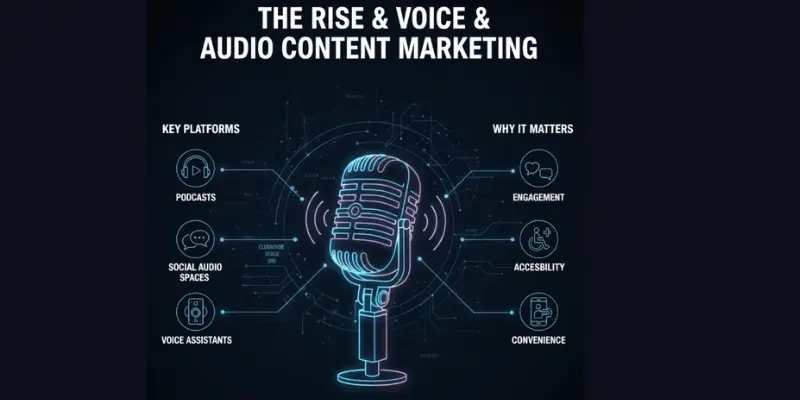
Introduction to Voice and Audio-Based Social Media
Social media is no longer just about images and videos, and this shift is happening fast. People now prefer content they can listen to while working, driving, or relaxing. Voice and audio content marketing is changing how brands connect with audiences. Audio feels personal, real, and human compared to polished visuals. This is why podcasts, live audio rooms, and social audio platforms are booming.
Audio-based social media allows users to consume content without staring at a screen. This convenience fits perfectly into busy lifestyles. Brands can now speak directly to their audience instead of shouting for attention. Conversations feel natural and less scripted. As a result, trust and engagement levels are rising across voice-first platforms.
The Evolution of Audio-Based Platforms
Audio content did not become popular overnight. It started with radio shows and later evolved into downloadable podcasts. Over time, smartphones made audio content accessible anywhere. Voice and audio content marketing grew as platforms improved distribution. Today, live audio and social audio dominate digital conversations.
Podcasts introduced on-demand listening to global audiences. Live audio rooms then added real-time interaction. Platforms like Clubhouse and Twitter Spaces made voice social. Users could now talk, listen, and engage instantly. This evolution reshaped how content is created and consumed.
Why Audio-Based Content Is Gaining Popularity
Audio content fits easily into daily routines. People can listen while cooking, walking, or commuting. Voice and audio content marketing removes the pressure of visual perfection. It feels more relaxed and authentic. This emotional connection drives loyalty.
Another reason is low production cost. You do not need expensive cameras or studios. A microphone and clear message are enough. Audio also reduces content fatigue. Users feel less overwhelmed compared to endless scrolling.
Key Types of Voice-First Social Platforms
Voice-first platforms come in different formats. Each format serves a unique audience and purpose. Podcasts offer deep and structured content. Live audio rooms allow real-time interaction. Social audio communities combine discussion and networking.
Here are the main types of voice-first platforms:
- Podcasts for long-form and evergreen content
- Live audio rooms for discussions and events
- Social audio platforms for community building
Each type supports different voice and audio content marketing goals. Brands should choose based on audience behavior. Mixing formats often delivers better results.
Major Players Leading the Social Audio Revolution
Clubhouse sparked global interest in live audio conversations. It showed the power of drop-in voice chats. Twitter Spaces expanded this idea to existing followers. LinkedIn Audio Events targeted professionals and brands. These platforms pushed voice and audio content marketing into the mainstream.
YouTube also invested heavily in podcast support. Spotify focused on exclusive audio and creator monetization. Discord blended voice chat with communities. Each platform offers unique features and audiences. Brands must test and adapt to find the best fit.
The Power of Podcasting as an Evergreen Marketing Strategy
Podcasting remains one of the strongest audio formats today. It allows deep storytelling and expert positioning. Voice and audio content marketing thrives through consistent podcast episodes. Podcasts build authority over time. They also attract loyal niche audiences.
Unlike social posts, podcasts have a long lifespan. Episodes remain searchable for years. Branded podcasts help businesses share values and insights. Monetization options include ads, sponsorships, and memberships. This makes podcasting both strategic and profitable.
Building Community Through Voice and Real Conversations
Voice-based platforms encourage honest conversations. People feel heard when they speak and interact live. Voice and audio content marketing creates emotional bonds. Communities grow faster through shared discussions. This builds long-term trust.
Live Q&A sessions increase participation. Audience feedback feels instant and real. Audio influencers often lead these spaces. Their authenticity attracts loyal listeners. Communities formed through voice are often more engaged.
Leveraging Voice and Audio Content Marketing for Brands
Brands now use audio to tell meaningful stories. Voice content humanizes brand messaging. Voice and audio content marketing helps brands stand out naturally. Audio feels less like advertising. This improves message retention.
Brands can use audio for:
- Product launches
- Expert interviews
- Educational sessions
- Customer stories
Audio integrates well with blogs and social media. It also boosts brand recall. Consistent voice branding strengthens trust.
Building an Effective Audio Content Strategy
A strong audio strategy starts with clear goals. Brands must know who they want to reach. Voice and audio content marketing requires platform selection. Content style must match audience expectations. Consistency is key for growth.
Here is a simple audio strategy framework:
| Step | Action |
| Planning | Define audience and goals |
| Creation | Choose format and tone |
| Distribution | Select platforms |
| Engagement | Encourage interaction |
| Measurement | Track performance |
Tracking listens and engagement helps improvement. Repurposing audio into clips boosts reach. Strategy turns effort into results.
Challenges and Considerations in Audio Marketing
Audio marketing has its own challenges. Discoverability is still limited on some platforms. Voice and audio content marketing requires time commitment. Live sessions need moderation and planning. Brand safety is also important.
Content saturation is increasing rapidly. Standing out requires unique topics and value. Technical issues can affect quality. Measuring ROI is not always easy. Brands must plan carefully to avoid burnout.
Future Trends in Voice-First and Audio Content Marketing
The future of audio looks promising and innovative. AI voice tools are becoming common. Voice and audio content marketing will integrate with voice search. Personalization will improve listening experiences. Monetization options will expand.
Here are upcoming trends to watch:
- AI-generated voice content
- Voice search optimization
- Interactive audio experiences
- Creator economy growth
Brands that adapt early will gain advantage. Audio will become more data-driven. The voice-first era is just beginning.
Why Voice Content Feels More Trustworthy Than Visual Content
Voice creates a stronger emotional bond than text or images. People can hear tone, pauses, and sincerity in audio. This makes conversations feel honest and real. Voice and audio content marketing benefits from this human connection. Listeners often trust voices more than polished visuals. This trust leads to higher engagement and loyalty.
Unlike visuals, audio does not rely on filters or editing tricks. Speakers sound more natural and relatable. Audiences feel like they are part of a real conversation. This reduces skepticism toward brands. Trust is built over time through consistent voice content. That trust directly impacts conversions.
How Voice and Audio Content Marketing Supports Multitasking Audiences
Modern audiences are always busy. They want content that fits into their routine. Voice and audio content marketing allows hands-free consumption. Users can listen while driving, working, or exercising. This flexibility increases total content consumption time. Audio fits naturally into daily life.
Visual content demands full attention. Audio does not. This makes podcasts and live audio more accessible. Brands can reach users during moments visuals cannot. This gives audio a competitive advantage. Multitasking listeners are often highly loyal.
Using Live Audio Rooms to Build Brand Authority
Live audio rooms position brands as industry leaders. Speaking live shows confidence and expertise. Voice and audio content marketing benefits from real-time interaction. Audiences can ask questions instantly. This creates transparency and credibility. Authority grows through knowledge sharing.
Live discussions feel exclusive and valuable. Listeners feel privileged to join. Brands can host panels or interviews. This boosts perceived expertise. Over time, audiences return for insights. Authority turns into influence.
The Role of Storytelling in Audio Content Success
Storytelling works best through voice. Tone and emotion bring stories to life. Voice and audio content marketing relies heavily on narrative flow. Stories keep listeners engaged longer. They make information memorable. Strong storytelling builds emotional impact.
Brands can share journeys and experiences. Customer stories sound more authentic in audio. Listeners connect with real emotions. This strengthens brand identity. Story-driven audio improves retention. It also increases sharing.
Repurposing Audio Content for Maximum Reach
Audio content should not exist alone. One podcast episode can create multiple assets. Voice and audio content marketing works best when repurposed. Audio clips can become social posts. Transcripts can become blogs. This multiplies visibility.
Repurposing saves time and effort. It keeps messaging consistent. Short audio clips perform well on social platforms. Written versions improve SEO. One idea can fuel many channels. This increases ROI.
How Small Businesses Can Compete Using Audio Content
Small businesses often lack big budgets. Audio content levels the playing field. Voice and audio content marketing is cost-effective. A simple microphone is enough to start. Authentic voices outperform expensive production. This gives small brands power.
Local businesses can host niche podcasts. They can address specific community issues. Audio helps them build trust locally. Consistency matters more than perfection. Small voices can build strong audiences. Growth becomes organic.
Measuring Success in Voice and Audio Content Marketing
Tracking audio performance is essential. Metrics go beyond downloads and listens. Voice and audio content marketing success includes engagement. Listener retention shows content quality. Feedback and reviews reveal impact. Live participation matters too.
Brands should track growth over time. Audience loyalty is a key indicator. Conversions may happen indirectly. Audio often influences buying decisions later. Data helps refine strategy. Measurement drives improvement.
Voice Search and Audio Content: A Powerful Combination
Voice search is growing rapidly with smart assistants and mobile devices. People now ask questions instead of typing keywords. Audio content supports this behavior naturally. Voice and audio content marketing helps brands appear in voice search results. Optimized audio answers common user questions. This improves discoverability and brand authority. Voice-friendly content will shape future search behavior.
How Audio Content Improves Brand Recall and Memory
Audio content stays in the listener’s mind longer than text because sound triggers emotional and cognitive memory. Repeated voice exposure helps audiences remember brands more easily over time. Voice and audio content marketing creates recognizable brand elements such as tone, rhythm, and speaking style. Listeners begin to associate specific voices with trust and familiarity. Audio intros, jingles, and recurring host voices strengthen brand identity. Unlike visuals that change often, voice creates consistency. This familiarity improves long-term brand recall and audience loyalty.
The Role of Consistent Voice Branding Across Platforms
Consistency is essential for success in audio marketing. Brands must sound the same across podcasts, live audio rooms, and social platforms. Voice and audio content marketing requires a defined tone, pace, and personality. When audiences hear a familiar voice, they feel comfortable and connected. Consistent voice branding builds trust and professionalism. It also makes brands easier to recognize in crowded audio spaces. Over time, a strong voice identity becomes part of the brand’s personality.
Using Audio Content to Nurture Long-Term Customer Relationships
Audio content supports long-term relationship building through regular engagement. Listeners develop emotional attachment by hearing familiar voices repeatedly. Voice and audio content marketing feels more personal than written or visual content. Brands can speak directly to their audience in a conversational way. This creates a sense of closeness and trust. Ongoing audio conversations keep brands present in daily routines. Strong relationships formed through audio often lead to repeat customers and advocacy.
Audio Content as a Tool for Thought Leadership
Audio content is powerful for establishing thought leadership. Experts can explain complex ideas clearly through voice. Voice and audio content marketing allows brands to share insights in a natural and engaging way. Podcasts and live audio discussions showcase expertise and confidence. Listeners trust brands that educate rather than sell. Consistent knowledge sharing builds authority over time. Thought leadership through audio increases influence and industry credibility.
The Impact of Audio Content on Decision-Making Behavior
Audio content strongly influences emotions and perception. Tone, pauses, and storytelling shape how messages are received. Voice and audio content marketing guides decision-making in a subtle and natural way. Listeners often feel connected to brands before making purchases. Clear explanations reduce confusion and hesitation. Emotional storytelling builds confidence and reassurance. This emotional impact increases conversions and brand preference.
Why Audio Content Works Well in Emerging Markets
Audio content performs exceptionally well in emerging markets. It requires less internet data compared to video. Voice and audio content marketing reaches users with limited connectivity. Literacy barriers are lower because people can listen instead of read. Audio content can be shared in local languages easily. This makes communication more inclusive and accessible. As a result, brands can reach wider and more diverse audiences.
Transform Voice & Audio Conversations Into Real Business Impact With Mugenz
People are already tuning in now help them take the next step.
Mugenz turns voice and audio content marketing into meaningful engagement, trust, and growth for brands ready to lead the audio-first future.
Healthcare Brands
Educate, reassure, and connect through voice. Use podcasts and audio-led communication to simplify information, strengthen patient relationships, and build long-term trust.
See Healthcare Audio Solutions
Real Estate Businesses
Bring properties to life with sound. From voice tours to live audio discussions, create emotional connections that move buyers closer to decisions.
Explore Real Estate Audio Tools
NGOs & Purpose-Driven Organizations
Let your mission be heard. Share real stories, host community audio sessions, and inspire action through authentic voice-led engagement.
Activate Your Cause With Audio
Conclusion:
Voice and audio content marketing is no longer a trend it is a necessity for modern digital success. Audio allows brands to communicate with authenticity, emotion, and clarity in a crowded online space. It fits naturally into daily routines and creates stronger human connections. Brands that adopt audio early gain trust, visibility, and long-term engagement. Ignoring this shift means missing opportunities where audiences are already listening.
By using podcasts, live audio rooms, and social audio platforms, brands can stay relevant and memorable. Audio works best when combined with visual and written content for a balanced strategy. With clear planning and consistent execution, voice and audio content marketing supports sustainable growth. The future of digital communication belongs to voices that inform, inspire, and connect.
FAQs:
What is voice and audio content marketing?
Voice and audio content marketing uses podcasts, live audio, and voice platforms to promote brands through sound-based communication.
Why is audio content effective for marketing?
Audio builds trust, allows multitasking, and creates emotional connections with audiences.
Which platforms are best for social audio?
Popular platforms include Spotify, Clubhouse, Twitter Spaces, LinkedIn Audio Events, and YouTube podcasts.
How can brands monetize audio content?
Brands can earn through sponsorships, ads, memberships, and premium audio experiences.
Is audio content good for small businesses?
Yes, audio content has low production costs and helps small brands build authority and community.