

Introduction
Have you ever wondered why some brands seem to follow you everywhere online? You check a product once, and suddenly, that same product appears in your Facebook feed, your Instagram stories, and even on websites you browse later. This isn’t magic it’s retargeting. Businesses use it to remind customers of what they once showed interest in and encourage them to complete the purchase. In this guide, we’ll explore retargeting campaign setup and show you how to build campaigns that actually bring results.
Retargeting is one of the most powerful digital marketing strategies today. Unlike traditional ads that reach cold audiences, retargeting focuses on warm leads people who already know your brand. It makes your marketing budget work harder by reducing wasted ad spend. At the same time, it helps brands build deeper relationships with their audiences. By the end of this article, you’ll have a clear roadmap for creating retargeting campaigns that convert clicks into customers.
Remarketing vs. Retargeting: What’s the Difference?
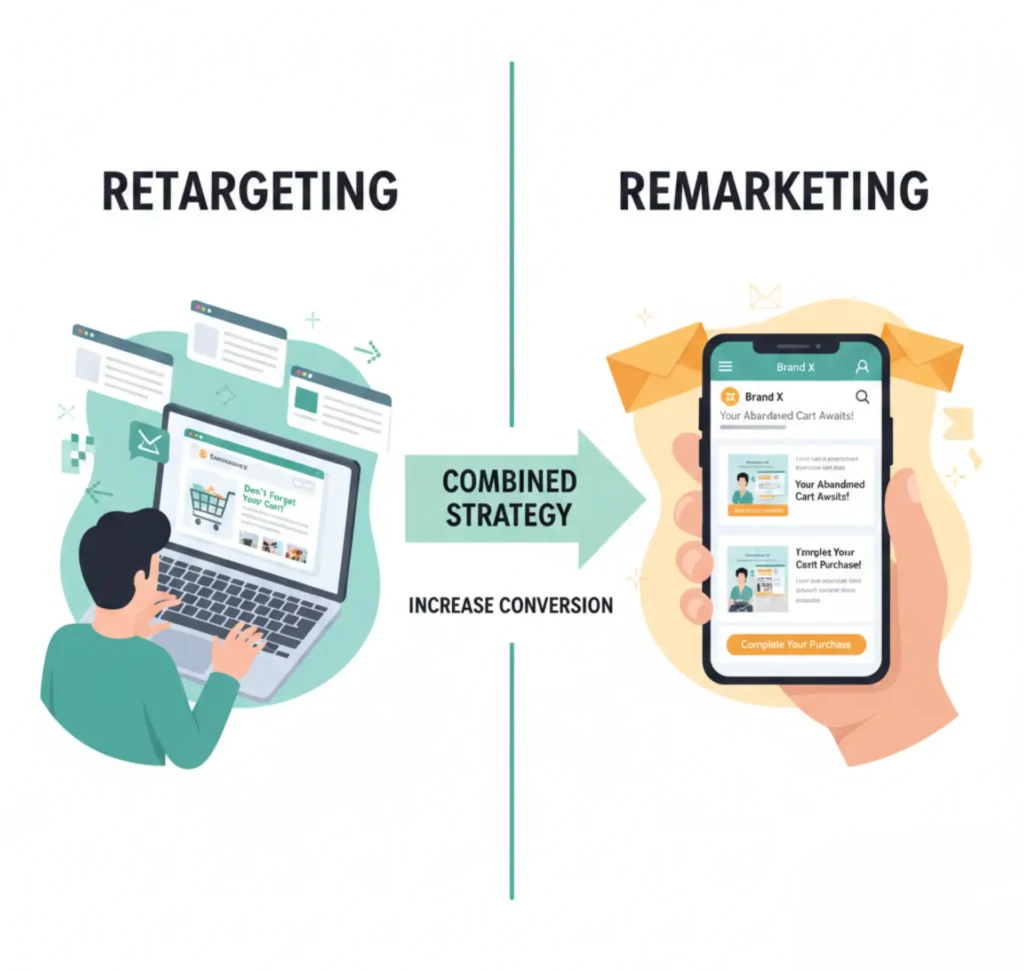
Many people confuse remarketing and retargeting, but they are not the same. Retargeting usually involves ads shown to people who visited your website or app but didn’t take action. Remarketing, on the other hand, often uses email or direct messages to re-engage customers. Both strategies aim to reconnect with people who have shown interest in your brand. Knowing the difference helps you plan your campaigns more effectively.
Think of retargeting as catching the customer online, while remarketing is reaching them in their inbox. For example, if someone leaves a cart abandoned on your e-commerce site, you can run a retargeting ad to remind them. But if you send them a follow-up email about their cart, that’s remarketing. Both work best when combined. This blend ensures your brand stays visible across multiple touchpoints, increasing the chances of conversion.
Why Use Retargeting Campaigns?
The biggest reason to use retargeting campaigns is brand awareness. Customers are bombarded with ads daily, and they easily forget products they looked at. Retargeting keeps your brand top of mind by showing up again when they browse other sites or social platforms. This repeated exposure builds familiarity. And familiarity often leads to trust.
Retargeting campaigns also help reach warm leads the people already interested in your business. Instead of advertising to a cold audience, you focus on those closer to purchasing. This saves time and money. More importantly, it increases the likelihood of conversion because you’re speaking to an audience already aware of your brand. For any business, this is the sweet spot of digital advertising.
How Do Retargeting Campaigns Work?
Retargeting works through small bits of code called pixels or cookies. When a user visits your website, this code tracks their activity. Later, ads are shown to them based on what they viewed or interacted with. This method ensures highly targeted advertising. Instead of guessing what the customer wants, you show them what they already liked.
There are also two main types of retargeting: pixel-based and list-based. Pixel-based retargeting activates immediately after someone visits your site. List-based retargeting, however, uses email lists or CRM data to show ads. Both are effective, but pixel-based campaigns capture real-time intent. By combining these strategies, you can create a retargeting campaign setup that works across multiple customer stages.
Types of Retargeting Campaigns
Retargeting campaigns come in several forms, each with its unique benefits:
- Abandoned Cart Retargeting – Remind users to finish checkout.
- Dynamic Product Retargeting – Show ads with specific items customers viewed.
- Email Retargeting – Send personalized offers directly to inboxes.
- Social Media Retargeting – Re-engage users on platforms like Facebook, Instagram, and LinkedIn.
- Time-delayed Retargeting – Target users after a set period to reignite interest.
Each type of campaign works differently, but all share the same goal bringing back interested users. Your business goals will determine which one is best for you. For e-commerce, abandoned cart and dynamic product ads are most effective. For B2B, list-based email retargeting might perform better. Tailoring your approach ensures better results.
The Benefits of Retargeting and Remarketing
The benefits of retargeting campaigns go far beyond sales. They help businesses achieve higher engagement with customers. By showing the right ad at the right time, brands can spark conversations, clicks, and shares. This builds stronger relationships over time. Engagement ultimately leads to loyalty.
Retargeting also delivers measurable business results. It increases conversion rates, reduces cost per acquisition, and boosts return on ad spend. Brands using retargeting consistently report higher ROI compared to traditional campaigns. Over time, it also helps build long-lasting customer relationships. This combination of results and relationship-building makes retargeting a must-have strategy.
Setting Up Your Retargeting Campaign Step-by-Step
Step 1: Define Your Goals
Every campaign starts with clear goals. Do you want to increase sales, build awareness, or recover abandoned carts? Without defined objectives, retargeting campaigns often waste budget. Goals guide ad design, audience segmentation, and platform choice. The more specific your goals, the more successful your campaign.
Step 2: Install the Retargeting Pixel
Pixels are the backbone of retargeting. Installing them allows you to track user behavior. Without pixels, you cannot collect the data needed for retargeting ads. Most platforms, like Google Ads and Facebook, provide easy pixel integration. Make sure it’s set up correctly to avoid missed opportunities.
Step 3: Build Audience Segments
Not all visitors are equal. Some may be new, while others are returning users close to buying. You can make sure your advertisements are relevant by segmenting your audience. For instance, you can target cart abandoners with discount offers. Meanwhile, frequent browsers may need brand awareness ads.
Step 4: Create High-Performing Ads
Your ad design is crucial. Make use of powerful calls to action, concise language, and captivating images. Dynamic product ads work best for e-commerce. Personalized messaging works best for B2B. Test multiple ad variations to see what performs better.
Step 5: Choose the Right Platforms
Different platforms serve different purposes. Google Ads is excellent for wide reach across the web. For visual storytelling, Facebook and Instagram are ideal. LinkedIn works best for B2B retargeting. Make a decision depending on audience preferences and your company’s objectives.
Step 6: Personalize with Email Retargeting
Emails are a powerful way to re-engage leads. Personalized subject lines and offers make emails effective. You can remind users about abandoned carts or share limited-time offers. Unlike ads, emails go directly to your audience’s inbox. They complement other retargeting strategies.
Step 7: Monitor and Optimize Performance
A retargeting campaign setup is not complete without monitoring. Track metrics like CTR, conversions, and ROI. Adjust frequency caps to avoid ad fatigue. Refine your segments if certain groups aren’t converting. Continuous optimization ensures lasting success.
How to Write Retargeting Ad Copy That Converts
Keep Messages Simple
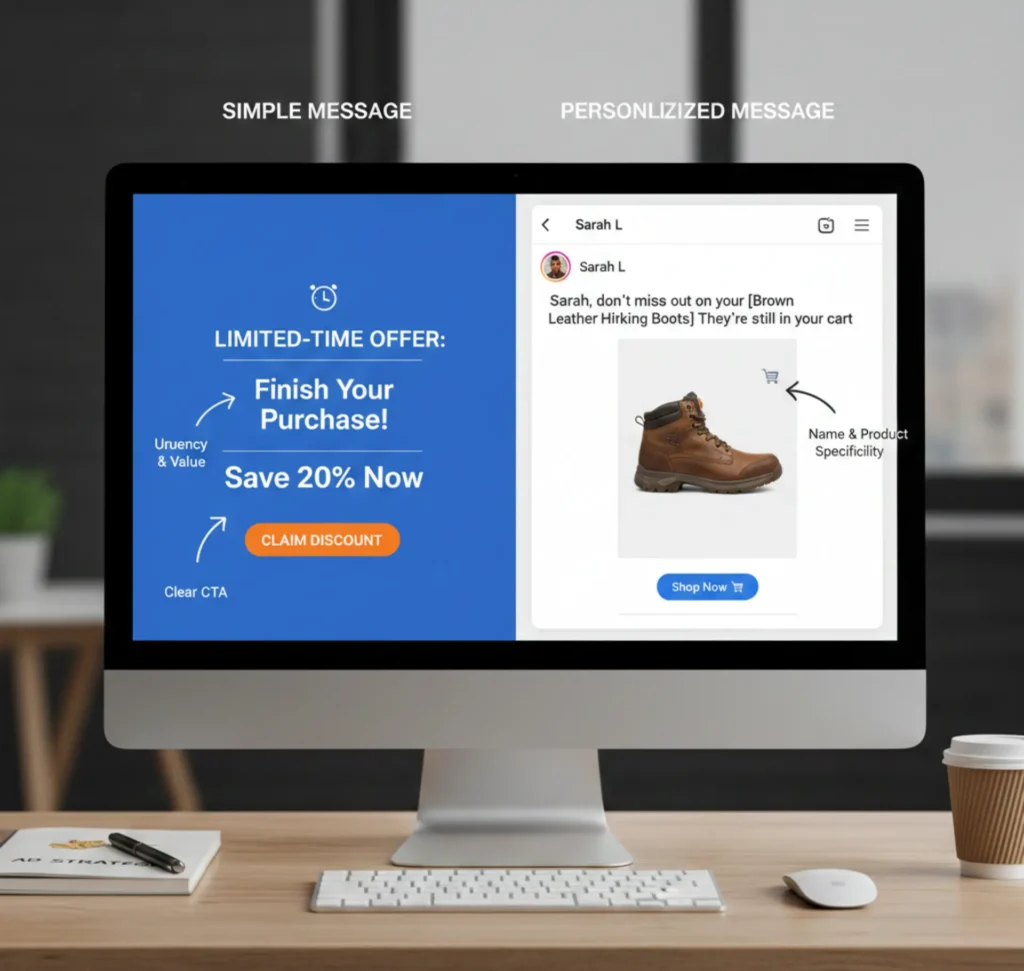
Your retargeting ads must communicate value quickly. Long messages often confuse or bore the audience. Keep sentences short, direct, and clear so the user understands the offer instantly. Highlight what problem you solve or the benefit they gain. Make sure to include a clear call to action at the end.
Simple ad copy works because online users have short attention spans. If your ad takes too long to explain, most people will scroll past it. Urgency is created by phrases like “limited offer,” “exclusive,” or “don’t miss out.” Use action-driven verbs that encourage clicks. This straightforward approach can significantly improve conversion rates.
Focus on Personalization
Generic ads rarely connect with customers. Personalization shows that you know their needs and interests. Mention specific products they viewed or categories they explored. Tailor your ad design and language to reflect their preferences. This makes the message more engaging.
Personalized ads build trust and connection faster. For instance, showing a customer the shoes they left in their cart increases the chance of purchase. It feels like a reminder, not a sales pitch. Dynamic ads on Facebook or Instagram make personalization easy. This strategy boosts both engagement and ROI.
Retargeting for Different Industries
E-commerce Retargeting
E-commerce businesses rely heavily on retargeting for sales. Dynamic product ads showcase the exact products users browsed, which makes them highly relevant. Abandoned cart campaigns recover potential lost revenue. Offering discounts or free shipping in these ads can seal the deal. E-commerce retargeting directly impacts bottom-line growth.
Online stores that combine urgency and relevance perform even better. For example, reminding users about low stock creates FOMO (fear of missing out). Running seasonal promotions with retargeting also boosts results. Pairing retargeting with email marketing strengthens the impact. This multi-channel approach helps e-commerce brands grow consistently.
B2B Retargeting
B2B retargeting works differently from e-commerce. Decision-making in B2B often takes weeks or months. Retargeting ensures your business stays top of mind during this journey. Platforms like LinkedIn are powerful for this type of campaign. They allow precise targeting of job titles and industries.
Sharing value-based content is key in B2B retargeting. Case studies, whitepapers, and industry reports build authority. Instead of pushing a sale, the goal is nurturing leads. This approach slowly moves them down the funnel. With patience, B2B retargeting can convert prospects into long-term clients.
Measuring Success in Retargeting Campaigns
Key Metrics to Track
Success in retargeting campaigns depends on tracking the right metrics. Click-through rate (CTR) shows if people find your ads attractive. Conversion rate reveals how many complete the desired action. Return on ad spend (ROAS) measures profitability. Cost per acquisition (CPA) shows how much each customer costs.
Without tracking, you cannot improve your campaigns. These numbers reveal what works and what doesn’t. For example, a low CTR signals poor ad design. High CPA may mean you’re targeting the wrong audience. Monitoring these regularly ensures better campaign performance.
Using A/B Testing
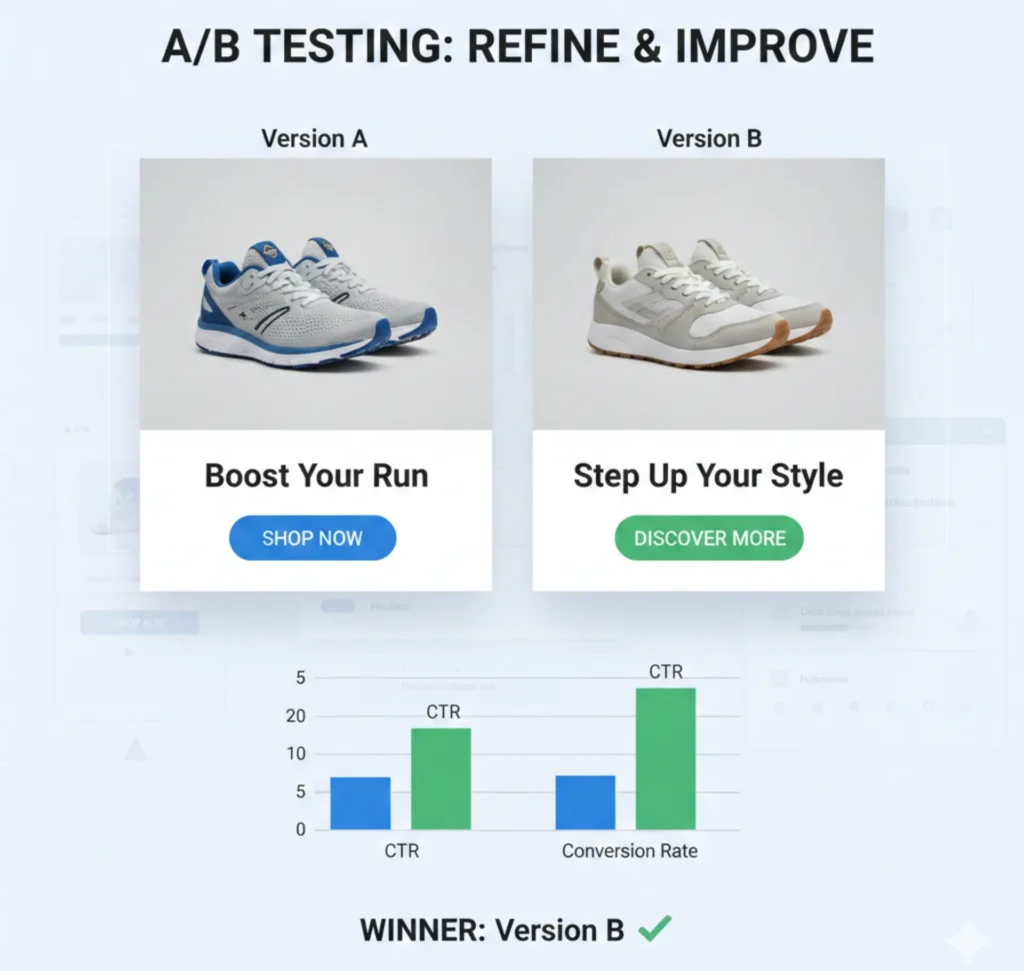
A/B testing helps refine retargeting campaigns. You test two versions of an ad to see which performs better. Different pictures, headlines, or calls to action could be examples of this. Over time, the winning ad provides insights into customer behavior. This data guides future improvements.
Even small changes can lead to better results. For instance, switching the color of a button or changing one word in the headline might boost CTR. Always test on a controlled audience to avoid misleading results. Run multiple tests for continuous learning. A/B testing ensures your campaigns never go stale.
Retargeting vs. Prospecting Campaigns
Retargeting Campaigns Explained
Users that have already interacted with your brand are the focus of retargeting. These could be website visitors, app users, or past customers. It builds on familiarity and interest. Retargeting ads aim to push them closer to a decision. This makes them cost-efficient and high-performing.
Because the audience is already warm, conversion rates are usually higher. Retargeting works best for abandoned carts, product views, and returning customers. It is about reminding rather than introducing. Businesses that invest in retargeting often see better ROI. That’s why it is considered essential in digital marketing.
Prospecting Campaigns Explained
Prospecting campaigns target cold audiences who never interacted with your brand. The goal is to reach new people and increase awareness. These campaigns often require more budget because the audience is unfamiliar. They work well for introducing products or building brand visibility. Prospecting casts a wider net.
While prospecting builds reach, it lacks efficiency compared to retargeting. This is why most brands use both strategies together. Prospecting finds new users, and retargeting converts them later. It’s a balanced approach that combines awareness and conversions. Together, they create a full-funnel marketing strategy.
Retargeting Best Practices for 2024
Limit Ad Frequency
Showing ads too often can backfire. Customers may feel overwhelmed or even annoyed. Use frequency caps to control how many times someone sees your ad. Three to five impressions per week is usually enough. Beyond that, results often decline.
Managing ad frequency also protects your brand reputation. People dislike being followed around the internet endlessly. Balanced exposure builds positive recognition instead of frustration. Setting the right cap requires testing and adjustment. A well-managed campaign keeps customers engaged without pushing them away.
Refresh Creatives Regularly
Even the best ad creative will lose impact over time. Audiences get tired of seeing the same visuals and messages. Refresh your ads every few weeks with new designs, headlines, or offers. This keeps the content fresh and interesting. Updated creatives perform better and maintain engagement.
Refreshing also gives you a chance to test new ideas. You can experiment with seasonal themes, trending topics, or customer testimonials. These updates show that your brand is active and relevant. They also prevent ad fatigue from lowering results. Regular updates are vital for long-term campaign success.
Retargeting Platforms and Tools (Comparison Table)
| Platform | Best For | Key Feature | Example Use Case |
| Google Ads | Search & Display Retargeting | Wide reach | Abandoned cart |
| Facebook Ads | Social retargeting | Custom audiences | Driving sales |
| Instagram Ads | Visual retargeting | Dynamic creatives | New collection |
| LinkedIn Ads | B2B retargeting | Job role targeting | Lead nurturing |
| Personalized messaging | Automation features | Win-back users |
The Future of Retargeting in a Cookieless World
Third-party cookies are disappearing, and businesses must adapt. Retargeting will now rely more on first-party data and contextual targeting. Brands will need innovative strategies to personalize without invading privacy. Mugenz, for instance, is leading with solutions that combine AI-driven targeting and ethical data use. This ensures compliance while maintaining results.
Alternatives to Third-Party Cookies
- First-Party Data: Get information straight from your clients.
- Contextual Targeting: Show ads based on content relevance instead of tracking.
- Clean Rooms: Secure spaces for data sharing without privacy risks.
- Digital Fingerprinting: Anonymous tracking methods for better targeting.
Common Mistakes to Avoid
- Running too many ads and overwhelming customers.
- Using the same message for all audiences.
- Ignoring frequency caps.
- Not testing multiple creatives.
- Forgetting to measure ROI.
Avoiding these mistakes ensures your campaign performs better. Many businesses fail because they don’t optimize or personalize their ads.
Mugenz’s Innovative Approach
Mugenz is not just another digital marketing agency. Their innovative technology brings retargeting to industries beyond retail. In the healthcare sector, Mugenz supports hospitals and clinics by strengthening patient confidence through timely reminders for check-ups and wellness initiatives. For NGOs, Mugenz leverages retargeting to boost donor interaction and expand awareness for ongoing campaigns. Within real estate, the company enables agencies to reconnect with interested buyers and renters using tailored property promotions that match individual preferences.
This multi-industry expertise proves retargeting isn’t just for e-commerce. By tailoring strategies to different sectors, Mugenz ensures businesses achieve measurable results. Their creative blend of technology, data, and personalization sets them apart. For organizations looking to maximize ROI while keeping user trust intact, Mugenz is the right partner.
Conclusion
Retargeting is more than a trend it’s a proven strategy to drive conversions and revenue. A solid retargeting campaign setup allows businesses to connect with the right audience at the right time. Whether you’re in e-commerce, healthcare, NGOs, or real estate, the right mix of tools and personalization ensures success. The future will bring challenges like the end of cookies, but innovative solutions are already here. With the right partner, retargeting can transform your business growth.
Unlock the full potential of your digital marketing
Ready to unlock the full potential of your digital marketing with advanced retargeting strategies?
Partner with Mugenz and discover how our data-driven retargeting campaign setup can boost conversions, strengthen customer relationships, and maximize your ROI. Let our experts craft tailored solutions that deliver measurable results across industries from e-commerce and healthcare to NGOs and real estate. Contact Mugenz today and take the first step toward smarter, results-driven marketing.
FAQs
Q1: Is remarketing the same as retargeting?
No. Retargeting usually involves online ads, while remarketing often uses email.
Q2: Where does retargeting fit into a marketing strategy?
It fits into the conversion stage, turning warm leads into paying customers.
Q3: How much should you customize retargeting ads?
As much as possible. Personalized ads perform better than generic ones.
Q4: How will the loss of third-party cookies affect retargeting?
It will reduce traditional tracking, but new solutions like first-party data and contextual ads will replace them.
Q5: What are the best alternatives to third-party cookies?
First-party data, contextual targeting, clean rooms, and digital fingerprinting.