
In today’s fast-paced digital landscape, trends can either amplify your brand or quietly damage its identity. Jumping on viral trends feels tempting, but doing it without strategy often makes brands sound forced or inauthentic. Audiences can instantly sense when content does not feel “on-brand.”
This guide shows you how to use trends strategically without losing your brand voice, trust, or long-term positioning.
Why Brands Chase Trends and How They Lose Themselves
How Brands Lose Themselves Chasing Trends
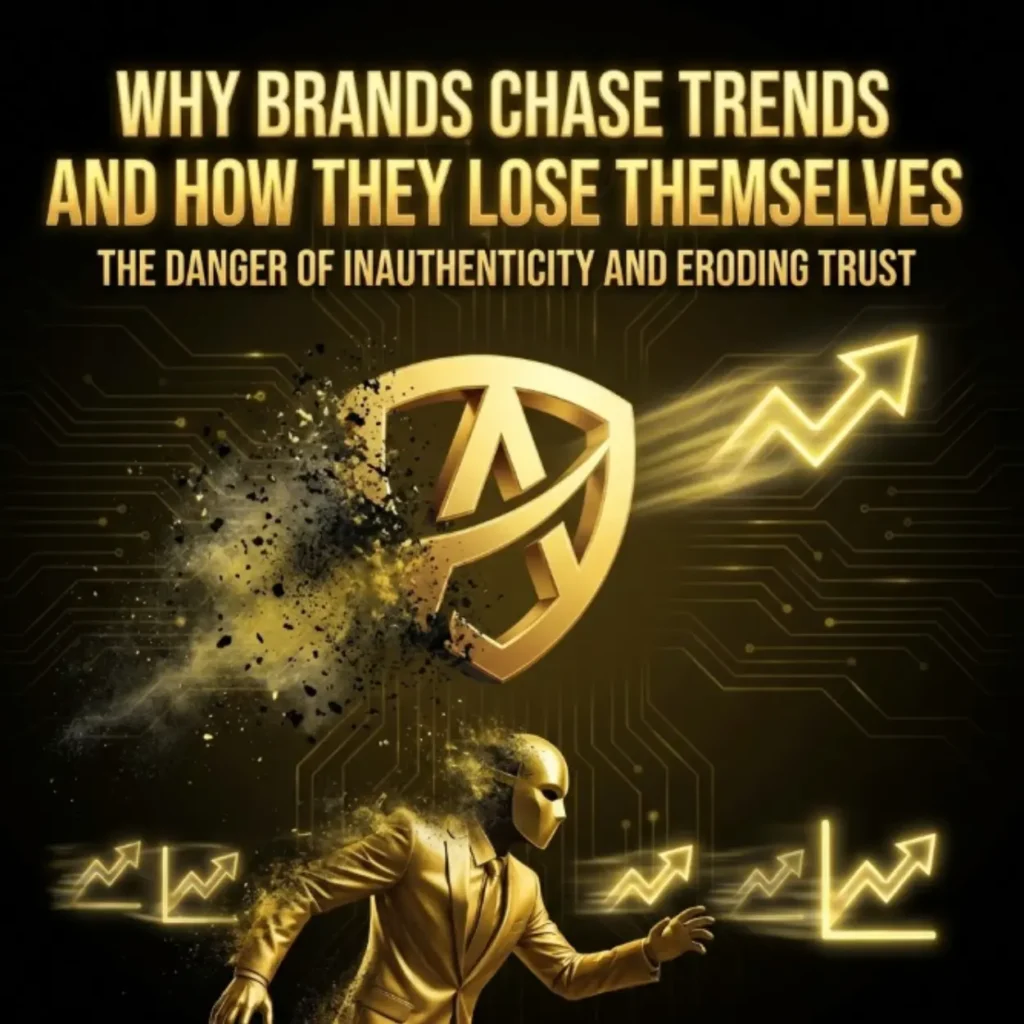
Brands often mimic trending content to gain quick engagement. While viral posts can temporarily boost visibility, they risk eroding trust. Copying trends without aligning them with brand values confuses audiences. Consumers notice when a brand appears “fake-trendy,” reducing loyalty. Maintaining a consistent voice is critical for long-term success.
Trends should complement your identity, not replace it. Evaluate each trend before adopting it. Analyze its relevance, audience impact, and longevity. A thoughtful approach ensures your content resonates while protecting brand integrity. Over time, authenticity builds credibility that trends alone cannot.
Ask This Question Before You Jump On Any Trend
Before creating trend-based content, ask: “Does this match our brand’s values?” If the answer is no, skip it. Misaligned content can harm credibility and confuse your audience. Trends are effective only when they enhance your messaging. Always prioritize brand consistency over short-term virality.
Consider audience expectations when analyzing trends. Only adopt trends that support storytelling or provide value. Adjust content to fit your voice, rather than copying blindly. Ensure trends reinforce your core brand identity. This careful evaluation reduces the risk of brand dilution.
5 Ways to Stay on Trend Without Losing Your Brand Voice
1. Understand the Trend Before You Use It
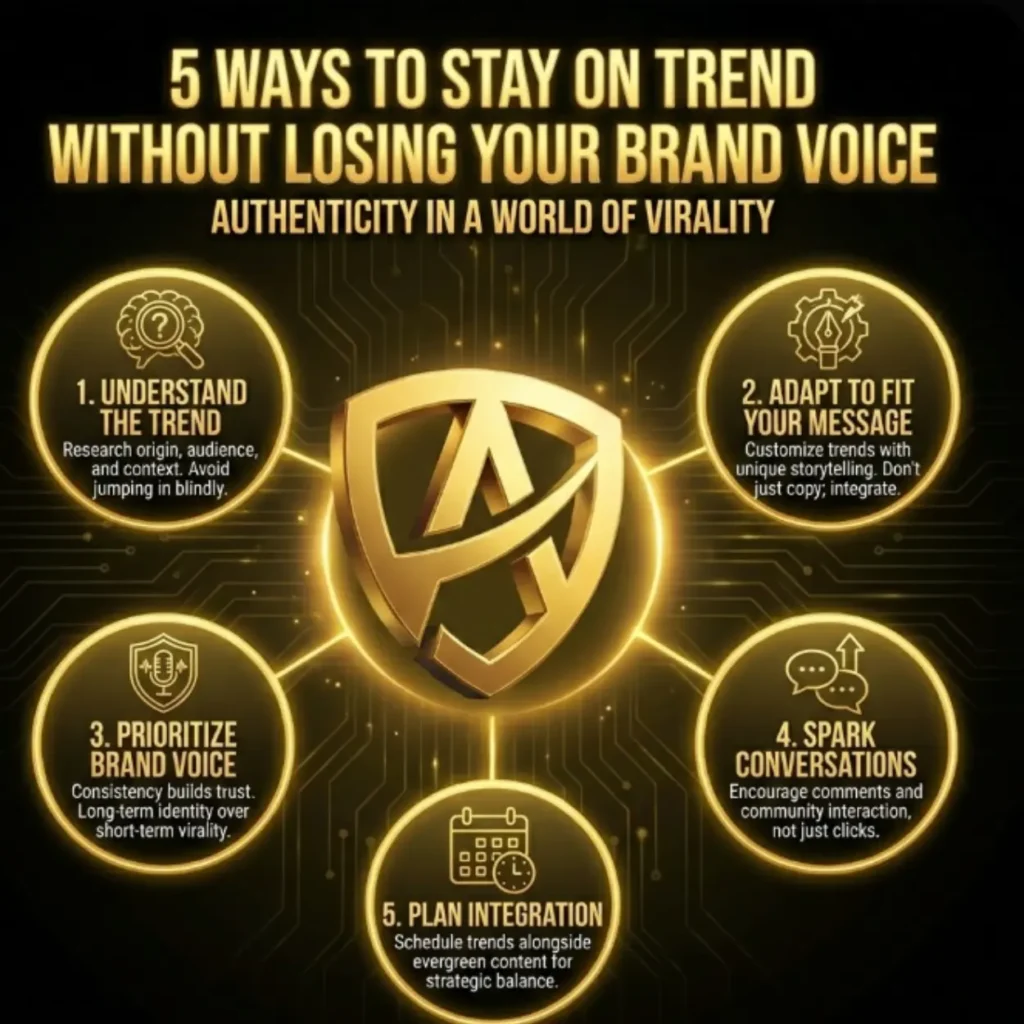
Trends have context that is easy to overlook. Research the trend’s origin, audience, and reach before posting. Understanding why it works prevents missteps. Avoid jumping on a trend without analyzing its impact. Strategic awareness helps maintain brand credibility.
Also, determine whether the trend aligns with your long-term messaging goals. Skip trends that contradict your core values. Study competitors and past examples for safe adaptations. Knowledge empowers creativity while keeping your brand voice intact. Trend research is the first step to authentic engagement.
2. Adapt Trends to Fit Your Message
Trends work best when they are customized for your brand. Avoid copying memes, formats, or captions verbatim. Add your unique perspective to make content original. Creative adaptation strengthens brand identity. This ensures the trend complements, rather than overrides, your voice.
Integration works best when trends enhance storytelling. Infuse educational or entertaining elements relevant to your audience. Even a viral challenge can include tips or insights that fit your niche. Customization creates both engagement and value. Authentic adaptation transforms trends into meaningful content.
For example, Duolingo uses trending TikTok sounds, but always with its playful and sarcastic tone. The trend never replaces the brand personality it amplifies it. This is why their content feels natural instead of forced.
3. Prioritize Brand Voice Over Viral Potential
Viral content is exciting, but compromising your voice can backfire. Consistency in messaging builds trust and loyalty. Even minor inconsistencies can confuse your followers. Brand voice is the foundation of sustainable growth. Always prioritize long-term identity over fleeting virality.
Focus on content that aligns with your audience’s expectations. Viral trends can educate or entertain without diluting your brand. Storytelling that resonates ensures both engagement and authenticity. A consistent voice balances reach and credibility. Sustainable engagement comes from authenticity, not trends alone.
4. Use Trends to Start Conversations, Not Just Get Clicks
Trends are opportunities to create meaningful engagement. Encourage comments, shares, and discussions rather than just clicks. Ask questions or start debates to spark conversation. Interactive content builds community and trust. Engagement grows stronger when your audience feels involved.
5. Plan Trend Integration into Your Content Calendar
Planning trend content avoids reactive posting mistakes. Schedule trends alongside evergreen content for balance. Consider long-term storytelling when integrating short-lived trends. Use analytics to track alignment and impact. Planning ensures every post supports your brand goals.
A content calendar allows team collaboration and creative brainstorming. Allocate time for trend adaptation and review. Prevent rushed posts that compromise voice. Structured planning turns trends into strategic opportunities. Consistency and foresight create a strong, sustainable brand presence.
Bonus Tips to Stay Trend-Ready
Track Emerging Trends Early
- Use tools like Google Trends, TikTok Discover, and Twitter hashtags.
- Adopt trends early for a creative edge.
- Observe audience reactions before a trend peaks.
- Identify which trends align with your niche.
- Document successful past trends for reference.
Early tracking allows safe, strategic content creation. Planning prevents mistakes and increases audience engagement. Trending insights also inform content strategy. Being proactive ensures authenticity while leveraging visibility. Early adopters maintain relevance without compromising brand voice.
Collaborate With Influencers Who Match Your Voice
Partnering with influencers amplifies trends authentically. Choose influencers whose voice complements your brand. Collaboration prevents messaging conflicts. Influencer content can enhance creativity and engagement. Co-created campaigns feel natural and credible.
Set guidelines to maintain consistency and brand alignment. Review content before publishing to avoid misrepresentation. Influencers can help translate trends in a way that fits your audience. Collaboration maximizes reach without losing identity. Strategic partnerships turn trends into opportunities for growth.
Measure Trend Success With the Right Metrics
| Metric | Why It Matters | How to Track |
| Engagement Rate | Shows audience interest | Likes, comments, shares per post |
| Conversion Rate | Measures business impact | Clicks, form submissions, purchases |
| Reach & Impressions | Tracks trend visibility | Social analytics tools |
| Audience Feedback | Provides qualitative insights | Comments, messages, polls |
| Comparison to Evergreen Content | Evaluates effectiveness | Analyze similar past posts |
Tracking metrics ensures lessons are learned. Compare trend posts to regular content for insights. Adjust future content based on results. Patterns of successful trends can be replicated safely. Data turns experimentation into strategy.
Leverage Evergreen Content to Support Trends
Evergreen content provides stability amidst fast-moving trends. Combining trends with timeless content strengthens brand voice. Trends can redirect attention to evergreen posts. This strategy extends visibility and relevance. Your content remains valuable long after the trend fades.
Evergreen content can reinforce your brand message while trends provide excitement. Use blogs, guides, or tutorials as supporting content. This ensures every trend contributes to your long-term authority. Audiences recognize consistent messaging. Evergreen + trend balance builds credibility and engagement.
Trendy + True to You = Timeless
The best brands embrace trends without losing authenticity. Trends should enhance storytelling, not replace it. Audiences reward brands that feel genuine. Authenticity builds trust and long-term loyalty. Staying true ensures relevance and respect over time.
How Brand Voice Actually Builds Trust Over Time
Brand voice is not just about tone or words. It is about how people feel every time they interact with your content. When your voice stays consistent, your audience knows what to expect from you. This familiarity builds emotional trust and long-term loyalty. Trends should support this trust, not weaken it.
A strong brand voice makes your content recognizable even without logos. Over time, audiences associate your voice with value and reliability. This is why brands that stay consistent grow faster and retain audiences longer. Trends come and go, but trust compounds. Protecting your voice protects your future growth.
The Difference Between Trendjacking and Strategic Trend Use
Not all trend usage is smart marketing. Trendjacking is when brands jump on trends purely for attention. Strategic trend use is intentional and aligned with brand goals. Understanding the difference protects your credibility.
Trendjacking looks like:
- Copying viral content word for word
- Using slang that doesn’t fit your audience
- Posting trends with no clear message
- Chasing engagement without purpose
Strategic trend use looks like:
- Adapting trends to your brand story
- Adding value or insight to the trend
- Aligning trends with campaign goals
- Maintaining consistent tone and visuals
Strategic use strengthens brand authority. Trendjacking weakens it.
How to Filter Trends Using a Simple Brand Voice Checklist
Before approving any trend-based content, run it through a checklist. This keeps your messaging consistent and intentional. A simple filter saves time and prevents mistakes.
Ask yourself:
- Does this sound like us?
- Would our audience expect this from us?
- Does this support our content pillars?
- Can we add value or insight to this trend?
- Will this still make sense in 6 months?
If most answers are “no,” skip the trend. Discipline is a brand advantage.
Trend Content vs Evergreen Content: Finding the Right Balance
Trends bring visibility. Evergreen content builds authority. You need both to grow sustainably. Over-relying on trends creates short-term spikes but weak foundations.
Use trends for:
- Reach and discoverability
- Engagement and conversation
- Testing new formats
- Staying culturally relevant
Use evergreen content for:
- Education and trust-building
- SEO and long-term traffic
- Brand positioning
- Conversion-focused messaging
Ideal content balance
| Content Type | Purpose | Frequency |
| Evergreen | Authority & SEO | 60–70% |
| Trend-based | Reach & engagement | 30–40% |
This balance keeps your brand visible and credible.
How Different Platforms Require Different Trend Adaptations
A trend that works on TikTok may fail on LinkedIn. Platform context matters just as much as the trend itself. Adapting trends platform-wise protects your brand voice.
Platform adaptation tips:
- Instagram: Visual storytelling with branded tone
- TikTok: Personality-driven, informal but intentional
- LinkedIn: Insight-led, professional trend adaptation
- YouTube: Trend-inspired topics with evergreen depth
Never repost trends blindly across platforms. Adjust tone, format, and pacing while keeping your core voice intact.
Common Mistakes Brands Make When Using Trends
Even experienced marketers make mistakes with trends. Awareness helps you avoid them.
Most common mistakes:
- Posting too late when the trend is already dead
- Forcing humor that doesn’t match the brand
- Ignoring audience feedback
- Overusing trends and losing identity
- Forgetting conversion goals
Trends should support your strategy, not replace it. Mistakes usually happen when speed is prioritized over clarity.
How Trends Can Support Conversions (Not Just Engagement)
Trends are often seen as top-of-funnel tools. But when used correctly, they can also drive conversions. The key is intentional positioning.
Ways to connect trends to conversions:
- Use trends to introduce a problem your product solves
- Add soft CTAs instead of aggressive selling
- Link trend content to evergreen landing pages
- Use trends to warm up cold audiences
When aligned properly, trends guide users smoothly from attention to action.
Building a Long-Term Trend Strategy Instead of Reacting Daily
Reacting daily to trends leads to burnout and inconsistency. A long-term trend strategy creates clarity and control.
Smart trend strategy includes:
- Monthly trend review sessions
- Pre-approved brand-safe formats
- Clear content pillars
- Performance benchmarks
- Post-trend analysis
This approach allows creativity without chaos. Brands that plan trends grow faster and stress less.
Why Brands That Skip Trends Completely Also Lose Relevance
Avoiding trends entirely is risky. Brands that never evolve often feel outdated and disconnected from their audience. The goal is not to chase every trend, but to find the right balance between consistency and relevance.
Trends signal cultural awareness. When brands ignore them completely, they lose relatability and visibility. Strategic trend use helps brands stay modern while protecting their identity. Growth happens when tradition meets innovation.
For brands operating in trust-based or regulated industries, trend usage requires extra care. A single off-brand post can damage credibility built over years. This is why trend strategies must be adapted to industry context—not applied blindly.
CTA:
Healthcare
Deliver better patient experiences and streamlined healthcare solutions. Connect with Mugenz to enhance medical services, optimize workflows, and improve outcomes. [Explore Healthcare Services →]
Real Estate
Maximize property visibility and client engagement. Mugenz helps real estate businesses attract leads, showcase listings, and grow sales. [Discover Real Estate Solutions →]
NGOs
Amplify your impact and reach more supporters. Mugenz offers marketing strategies, awareness campaigns, and operational support for NGOs. [Learn How NGOs Benefit →]
Conclusion:
Trends will always come and go, but your brand voice is what stays with your audience. When you chase every trend without intention, you risk sounding like everyone else. But when you adapt trends thoughtfully, you stay relevant without losing identity. The real goal is not to go viral once, but to be remembered consistently. Brands that balance trends with authenticity build trust, loyalty, and long-term growth.
The goal is not to chase every trend, but to choose the right ones. When trends support your voice, they feel natural instead of forced. Brands that stay intentional grow faster and last longer. Let trends amplify who you are not replace it.
FAQ
Q1: Can social media trends really help my brand grow?
Yes, trends boost visibility if aligned with your voice. They complement, not replace, core messaging.
Q2: How often should I incorporate trends into content?
Use trends sparingly and strategically. Prioritize relevance, authenticity, and audience interest.
Q3: What if a trend doesn’t suit my brand?
Skip it. Focus on content aligned with your values and goals.
Q4: How do I measure if trend content is successful?
Track engagement, conversions, and audience feedback. Compare with regular content to learn.
Q5: Can adapting a trend harm my brand?
Only if it conflicts with your voice or values. Careful adaptation strengthens trust and authority.