
What is a Blog Content Strategy?
To make your blog stand out in today’s crowded online space, you need more than random posts. A blog content strategy is a clear plan that outlines what to write, when to publish, and how to promote each piece of content. This strategy gives your blog structure, direction, and purpose. It ensures that both search engines and your target audience can find and engage with your content. Without a strategy, blogging becomes guesswork with unpredictable results.
The Foundation of a Successful Blog
A blog content strategy serves as the blueprint for creating, optimizing, and distributing posts that support your goals. It includes researching relevant topics, selecting target keywords, and organizing posts for maximum impact. This method helps you remain consistent, stay relevant, and outperform competitors in your niche. It also strengthens your authority and credibility with readers. With a well-planned strategy, your blog evolves from a hobby into a powerful tool for growth and engagement.
Why a Blog Content Strategy is Important
Blogging without a plan is like driving without a map you might move forward, but you’ll probably get lost. A blog content strategy ensures every piece of content has a clear purpose. It aligns your blog with your brand goals, whether that’s attracting traffic, generating leads, or building trust. With the right strategy, you can target your ideal audience and keep them coming back. This is how blogs turn into long-term traffic machines.
How a Blog Content Strategy Boosts SEO Performance
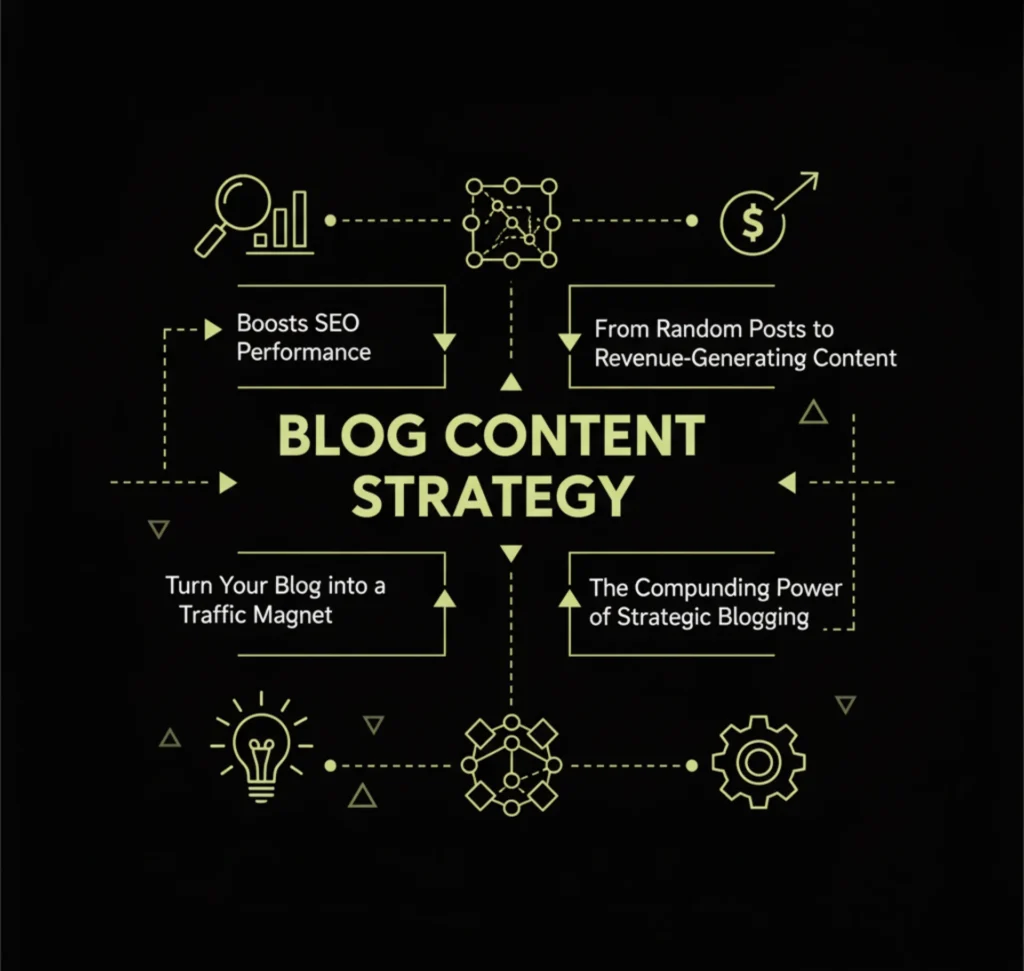
A well-planned strategy also improves your SEO. When you use relevant keywords and optimize posts, search engines can understand and rank your content better. It helps you focus on topics your audience actually searches for. Better interaction and increased visibility follow from this. It serves as a link between writing and outcomes, to put it briefly.
Turn Your Blog into a Traffic Magnet
Imagine publishing a blog post today and seeing it bring in visitors, leads, and sales for months or even years to come. That’s the power of a smart blog content strategy. It’s not just about writing; it’s about creating evergreen content that keeps working while you sleep. With the right plan, your blog becomes a traffic magnet that draws in your ideal audience day after day. The secret is knowing exactly what to write, when to publish, and how to promote it.
From Random Posts to Revenue-Generating Content
Many bloggers post whatever comes to mind and hope for the best but hope isn’t a strategy. A carefully thought-out strategy turns your blog into a marketing tool that supports your company’s objectives. Every article you publish has a purpose, whether it’s to rank for a high-value keyword, answer a burning question, or guide readers toward your products or services. This focused approach ensures your effort translates into measurable growth. Once you see results, you’ll wonder how you ever blogged without a plan.
The Compounding Power of Strategic Blogging
One blog post might bring in a trickle of traffic but dozens of optimized, interconnected posts can create a flood. That’s the magic of combining SEO-friendly content with consistent publishing. Each post boosts the others through internal links, topical authority, and keyword variety. Your blog eventually establishes itself as a reliable source in your field. This is when Google starts rewarding your site with higher rankings and more organic traffic.
Step-by-Step Process to Create an Impactful Blog Content Strategy
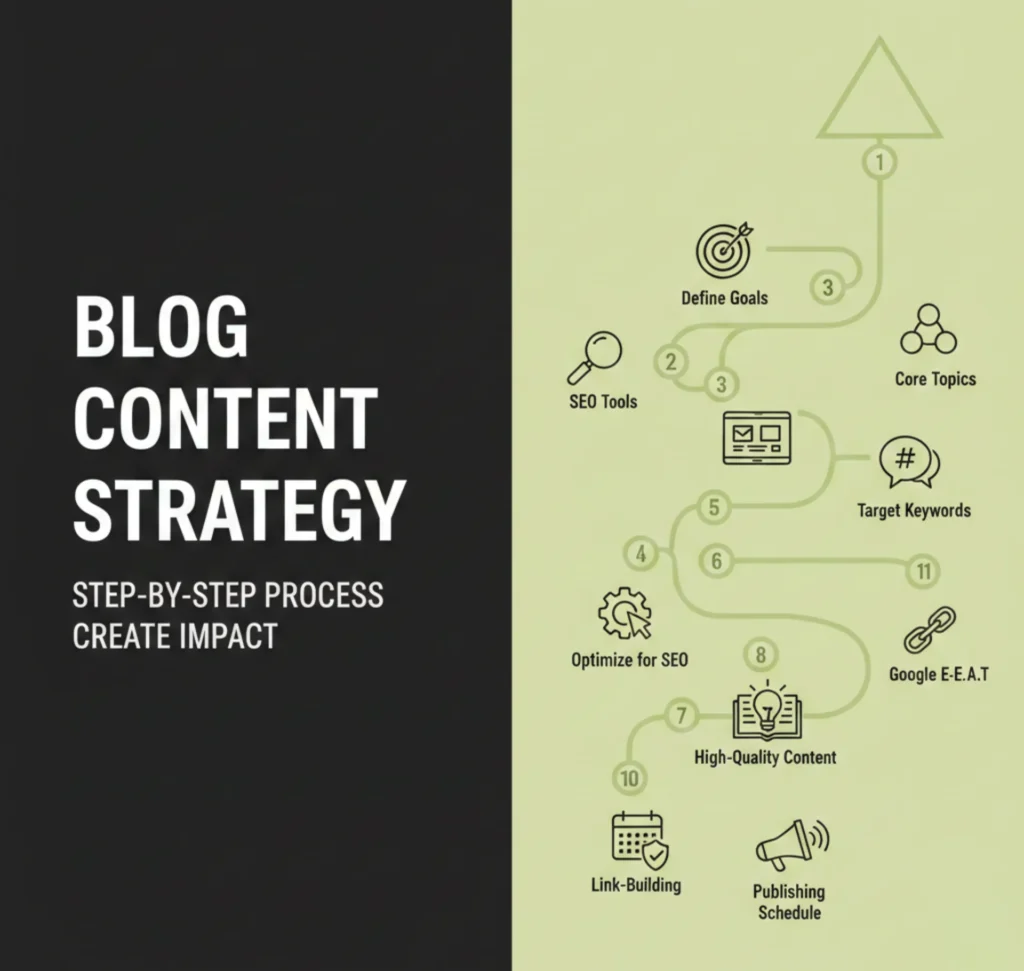
Step 1 – Use the Right SEO Tools
Finding topics and keywords is easier when you have the right tools. Platforms like Semrush, Ahrefs, and Ubersuggest can reveal what your audience is searching for. They also assist you in identifying high-potential keywords with less competition. Keyword research is the foundation of every strong blog content strategy. Without it, you risk creating content no one finds.
Here are some recommended tools:
- Semrush – Competitor analysis & keyword tracking
- Ahrefs – Backlink insights & keyword difficulty
- Google Keyword Planner – Free keyword research tool
- AnswerThePublic – Topic ideas from search questions
Step 2 – Define Your Goals
Every successful blog starts with clear goals. Do you want to increase organic traffic, improve conversions, or build brand authority? Knowing your objectives shapes your strategy. It guides your content topics, writing style, and promotion methods. Without goals, you can’t measure progress or success.
SMART goals work best for blogs:
- Specific: Increase blog traffic by 25% in 3 months.
- Measurable: Track traffic using Google Analytics.
- Achievable: Based on your current resources.
- Relevant: Supports your overall business strategy.
- Time-bound: Set a clear deadline.
Step 3 – Identify Core Topics
Core topics are the pillars of your blog content strategy. They represent the main themes your blog will focus on. A health blog might, for instance, discuss mental wellness, exercise, and nutrition. Defining these pillars ensures you stay consistent and build authority in your niche. Without them, your blog can become scattered and confusing.
Organize these topics into topic clusters for SEO benefits:
- Main topic (pillar page): Broad, comprehensive guide.
- Cluster content: Specific posts linking to the pillar.
- Interlink all related posts for better rankings.
Step 4 – Choose the Right Content Format
The impact of your message might be greatly impacted by the format you select. Blog posts, guides, infographics, videos, and case studies all have their place. Each has a distinct function and appeals to various kinds of audiences. Matching your format to user intent improves engagement. For example, tutorials might work better as step-by-step blog posts or videos.
Content format ideas:
- How-to guides for instructional content
- Case studies for proof-based trust
- Lists for easy-to-digest tips
- Infographics for visual learning
Step 5 – Find and Target the Right Keywords
Keywords connect your content to searchers. Start with keyword research using your SEO tools, focusing on terms with low competition and high volume. For balance, use a combination of long-tail and short-tail keywords. Place them naturally in headings, body text, and image alt tags. Avoid keyword stuffing it can hurt rankings.
Keyword placement tips:
- In the title and meta description
- In the first 100 words of your post
- Naturally within subheadings
- In the URL and image alt text
Step 6 – Optimize for SEO
On-page SEO makes your content search-engine friendly. Make use of pertinent meta descriptions, brief URLs, and appropriate header formats.Include images with descriptive alt text and ensure mobile responsiveness. Internal linking improves site navigation and boosts rankings. A blog content strategy without optimization misses big opportunities.
On-page SEO checklist:
- H1 for the title, H2/H3 for structure
- Meta title under 60 characters
- Meta description under 160 characters
- Include primary keyword in URL
- Compress images for fast load speed
Step 7 – Create High-Quality, Comprehensive Content
Quality is king in blogging. Prioritize writing for readers over search engines.. Make your content useful, accurate, and engaging. Add new insights and data to stand out from competitors. Your audience will trust you more if you offer more value.
Tips for high-quality content:
- Use short paragraphs and clear headings
- Add examples and case studies
- Include images, charts, or videos
- Link to reliable sources
Step 8 – Showcase Google E-E-A-T
Content that exhibits experience, expertise, authority, and trustworthiness is highly valued by Google. Cite reliable sources, incorporate quotes from experts, and share personal experiences. To demonstrate your credentials, include an author bio. These elements boost your credibility with both users and search engines. E-E-A-T is key for sensitive niches like health, finance, and legal content.
Ways to improve E-E-A-T:
- Display author credentials
- Link to authoritative references
- Keep content updated regularly
Step 9 – Build a Link-Building Strategy
Links are the internet’s currency for trust and authority. Internal links connect related posts, improving user navigation and SEO. External backlinks from reputable sites increase your domain authority. Use strategies like guest blogging and broken link building to earn these links. Link building is an ongoing effort in your blog content strategy.
Link-building methods
- Guest posting on relevant sites
- Broken link outreach to replace dead links
- Resource pages for high-value backlinks
Step 10 – Set a Publishing Schedule
To keep your audience interested and coming back for more, you must be consistent. A content calendar helps you stay organized and maintain a steady flow of blog posts. Decide on a publication frequency that works for your team without compromising quality. Sticking to your schedule builds trust with readers and signals reliability to search engines. Even publishing one high-quality post per week can generate significant long-term results.
Tips for an effective publishing schedule:
- Plan content monthly or quarterly in advance
- Assign deadlines for writing, editing, and publishing
- Prioritize quality over quantity
- Include seasonal or trending topics for relevance
- Track performance to adjust frequency if needed
Step 11 – Promote and Distribute Content
Publishing content is only half the battle promotion ensures it reaches the right audience. Share your blog posts across social media platforms, email newsletters, and online communities. Collaborate with influencers or industry partners to expand your reach. Consider paid advertising for high-value or flagship content. Without a promotion plan, even the best posts may go unnoticed.
Content promotion strategies:
- Share posts on Facebook, LinkedIn, Instagram, and Twitter
- Send newsletters to your email subscribers
- Partner with industry influencers or guest bloggers
- Use paid social ads or Google Ads for priority content
- Repurpose content into videos, infographics, or slides for wider reach
Measuring the Impact of Your Blog Content Strategy
| Metric | Tool | Purpose |
| Organic traffic | Google Analytics | See visitor growth |
| Keyword rankings | Semrush, Ahrefs | Track SEO performance |
| Conversion rate | Google Analytics | Measure lead/sales impact |
| Bounce rate | Google Analytics | Gauge content engagement |
Consistency Builds Authority
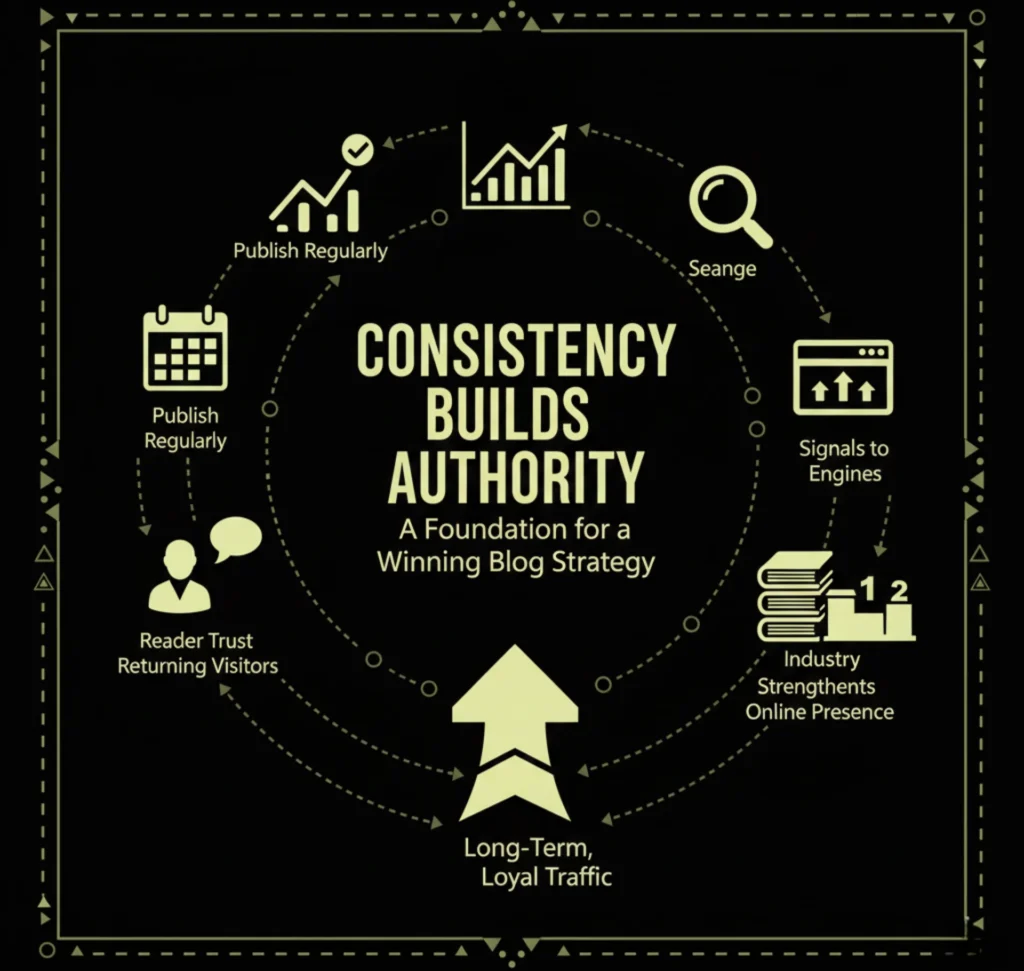
Consistency is one of the strongest foundations of a winning blog content strategy because it proves your blog is dependable and committed to delivering value. Publishing high-quality content regularly signals to search engines that your website is active, updated, and worth ranking. It also helps your readers trust your brand and return for more helpful insights. Over time, this steady rhythm positions you as an industry authority and strengthens your online presence. The more consistent you are, the more your blog becomes a reliable resource that attracts long-term, loyal traffic.
User Experience Matters
A powerful blog isn’t just about optimized text the entire experience your visitors have on your site plays a major role in SEO success. Fast loading speeds prevent users from bouncing, while a mobile-friendly layout ensures your blog performs well on every device. Clear navigation helps readers move smoothly from one topic to another, increasing engagement time and lowering bounce rates. Search engines reward this kind of positive user behavior with improved rankings. When your audience enjoys reading your content, your SEO performance naturally grows stronger.
Content Promotion Extends Reach
Creating great content is only half the journey promoting it effectively is what turns a good post into a high-performing asset. Sharing your blogs across social media, email newsletters, communities, and partner websites helps you reach audiences beyond your regular visitors. This increased visibility brings more traffic, sparks engagement, and encourages other sites to link back to your content. Backlinks are one of the most valuable SEO signals because they show Google that your content is credible and authoritative. With consistent promotion, every post you publish can continue attracting readers long after it goes live.
Mugenz: Your Partner for Purpose-Driven Digital Growth
At Mugenz, we don’t believe in one-size-fits-all solutions we build tailored digital marketing strategies designed specifically for NGOs, healthcare organizations, and real estate businesses. Our team focuses on understanding your audience, your mission, and your long-term goals so we can create blog content that not only ranks but also drives meaningful action. From keyword research and SEO optimization to engaging storytelling and multi-channel promotion, we ensure every piece of content supports your brand’s growth. Whether your goal is to attract donors, educate patients, or reach serious property buyers, we craft content that informs, inspires, and converts.
Partner with Mugenz today and transform your blog into a powerful growth engine that consistently brings results.
Conclusion
A blog content strategy is not just about writing posts it’s about building a roadmap that turns your ideas into traffic, leads, and loyal readers. By planning your topics, targeting the right keywords, and optimizing for SEO, you create content that works for you long after it’s published. Consistency, quality, and promotion are the keys to long-term success. Remember, a blog grows best when it delivers real value to its audience. Start small, stay focused, and watch your blog become a powerful tool for your brand’s growth.
FAQs
Q1: What is a blog content strategy?
A blog content strategy is a structured plan for creating, optimizing, and promoting blog posts to achieve your business objectives and improve SEO performance.
Q2: How does a blog content strategy improve SEO?
It helps you publish relevant, high-quality, and keyword-optimized content that search engines can easily understand and rank higher in results.
Q3: How often should I publish blog posts?
Publish as frequently as you can maintain quality and consistency. For most blogs, one high-quality post per week is a practical and effective start.
Q4: Are paid SEO tools necessary?
While free tools can provide useful insights, paid tools like Semrush or Ahrefs offer deeper data, competitor analysis, and keyword opportunities that can accelerate growth.
Q5: Can a blog content strategy work for any industry?
Yes! Whether you’re in NGOs, healthcare, real estate, or any other sector, a well-planned strategy helps you reach your target audience, build authority, and drive meaningful results.