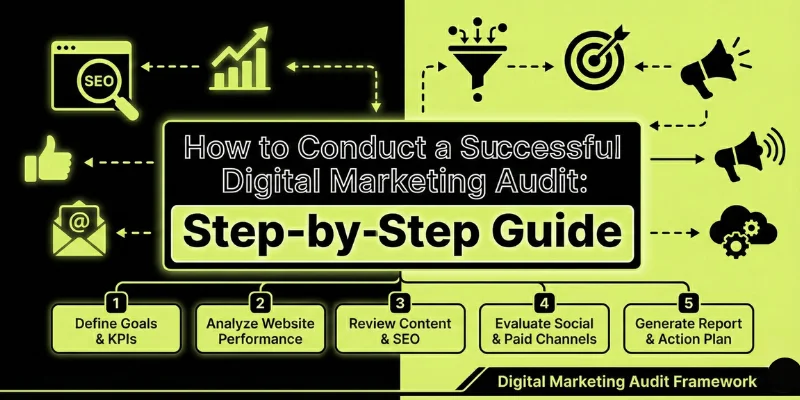
Imagine investing in digital marketing campaigns for months, only to realize you’re not reaching your target audience effectively. Every dollar spent on ads, content creation, or social media could be wasted if your strategy isn’t optimized. This is where a digital marketing audit becomes a game-changer. Think of it as a comprehensive health check for your online presence it helps you uncover strengths, fix weaknesses, and identify new opportunities. By the end of this guide, you’ll know exactly how to evaluate your digital marketing channels and maximize ROI.
A proper audit does more than highlight problems it provides actionable insights to drive growth. You’ll understand which campaigns bring the most value, which channels convert best, and where hidden opportunities lie. It’s like having a roadmap for your digital strategy, ensuring every action aligns with your business goals. Regular audits also keep you ahead of competitors in a fast-changing online world. Let’s dive into the step-by-step process to make your marketing smarter and more effective.
What is a Digital Marketing Audit?

A digital marketing audit is a detailed review of your entire online marketing ecosystem. It evaluates your website, content, SEO, social media, advertising, and analytics to see what’s performing and what isn’t. The goal is to identify gaps, uncover opportunities, and create a plan for improvement. It’s not just about numbers it’s about understanding your audience, brand perception, and overall marketing effectiveness. Essentially, it’s a strategy session guided by real data.
By conducting a digital marketing audit, businesses gain clarity on ROI and campaign effectiveness. For example, you might discover that your blog drives traffic but doesn’t convert readers into leads. Or you may find that a paid campaign is generating clicks but at a high cost per acquisition. With these insights, you can make informed decisions that improve results, reduce wasted budget, and strengthen your brand.
Benefits of a Digital Marketing Audit
The biggest advantage of a digital marketing audit is gaining clarity. Instead of guessing which channels are performing, you have concrete data. It highlights your strengths, identifies underperforming areas, and provides actionable recommendations. Better ROI and more precisely targeted campaigns result from this. Ultimately, your marketing becomes more efficient and cost-effective.
Another key benefit is strategic alignment. A digital marketing audit ensures that all your campaigns paid ads, social media, and website content work together toward the same business goals. It also helps you spot trends and adapt quickly to changing market conditions. By optimizing every channel, your brand becomes more cohesive and impactful. This makes it easier to connect with your audience and stay ahead of competitors.
What’s Included in a Digital Marketing Audit?
A thorough audit covers all your digital touchpoints. It examines your website, SEO, content, social media presence, paid campaigns, and analytics setup. Each element is analyzed for technical performance, engagement, and alignment with goals. For example, a slow-loading website can reduce conversions, while outdated content may fail to rank on search engines. Identifying these issues early allows for timely improvements.
Here’s a simple overview of what a full digital marketing audit includes:
| Audit Area | Key Focus Points | Tools to Use |
| Website & Technical Audit | Page speed, mobile responsiveness, UX, security | Google PageSpeed, GTmetrix |
| Content Audit | Relevance, quality, engagement, SEO optimization | SEMrush, Google Analytics |
| SEO Audit | Keywords, backlinks, technical SEO | Ahrefs, Screaming Frog |
| Social Media Audit | Engagement, reach, audience demographics | Meta Business Suite, Sprout |
| Digital Advertising Audit | Ad performance, targeting, cost efficiency | Google Ads, Facebook Ads Mgr |
| Analytics & Performance Audit | Tracking setup, conversion funnels, data accuracy | Google Analytics, Tag Manager |
Step-by-Step Process to Conduct a Digital Marketing Audit
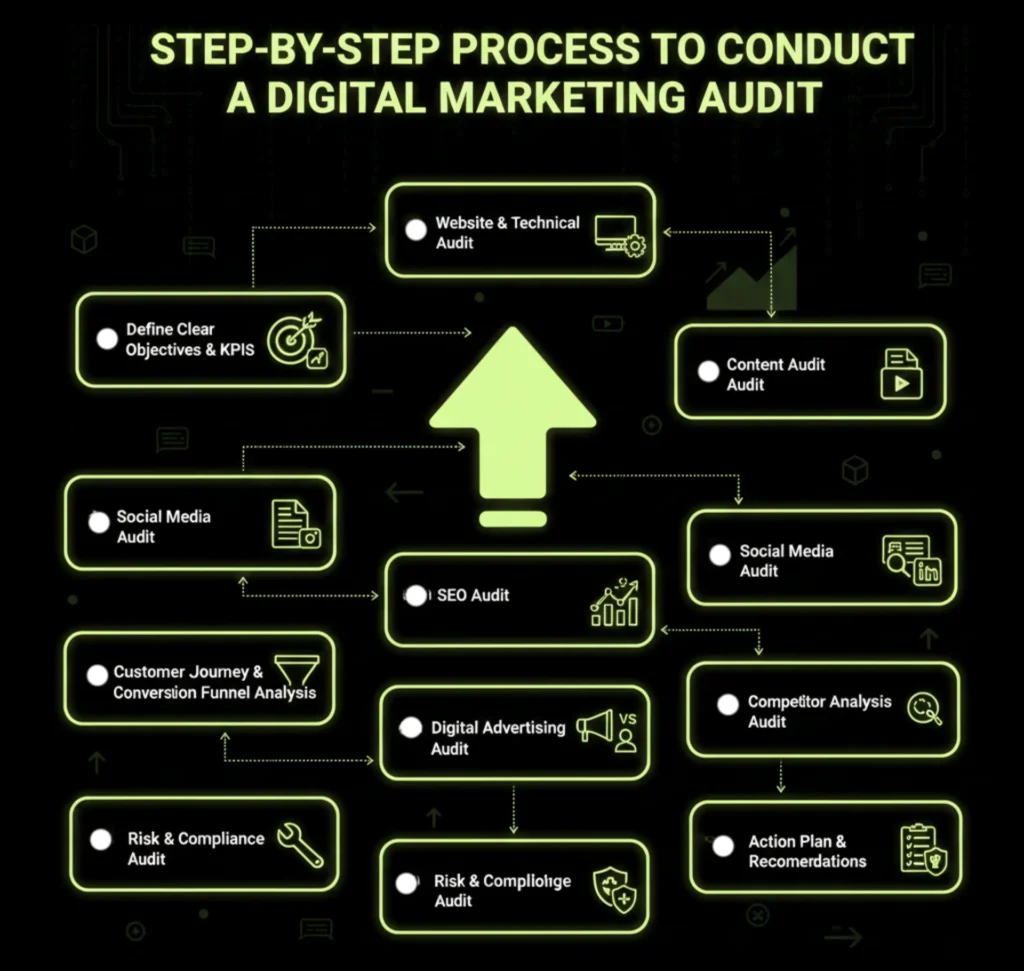
1. Define Clear Objectives & KPIs
Before analyzing any data, set clear goals. Decide whether you want more website traffic, better lead generation, or improved sales conversions. KPIs should be measurable, such as conversion rate, cost per lead, or engagement metrics. Align these goals with your overarching business plan. This ensures that your audit produces insights that matter.
Setting clear goals also helps you evaluate success accurately. For instance, a campaign aimed at brand awareness will be measured differently than one focused on direct sales. Using SMART objectives specific, measurable, achievable, relevant, and time-bound provides a clear roadmap for auditing. Without clear goals, your audit might reveal data without actionable insights.
2. Website & Technical Audit
The core of your online presence is your website. A technical audit checks speed, mobile responsiveness, navigation, security, and UX design. Slow-loading pages can frustrate visitors, increase bounce rates, and reduce conversions. Since smartphones now account for the majority of traffic, mobile optimization is essential. Identifying these issues ensures a seamless experience for users.
Beyond technical aspects, consider usability and accessibility. Are visitors finding what they need quickly? Do forms, CTAs, and checkout pages function smoothly? This audit phase also highlights opportunities to improve user engagement and satisfaction. A well-optimized website keeps visitors longer and encourages conversions.
3. Content Audit
Content fuels your digital marketing success. Evaluate blogs, videos, and social posts for quality, relevance, and engagement. Identify outdated content to update or remove and spot gaps where new content can attract your audience. Ensure consistency in tone and branding across all platforms. Focus on replicating content that performs well for maximum impact.
A content audit also uncovers hidden SEO potential. Are all posts optimized for relevant keywords? Are meta descriptions, headings, and alt tags in place? Small updates can significantly boost search rankings and traffic. In addition to drawing visitors, high-quality content establishes authority and confidence.
4. SEO Audit
SEO determines your visibility in search engines. Check on-page SEO, technical SEO, and backlinks to identify issues that may be limiting organic traffic. Analyze keyword performance, identify broken links, and fix missing meta tags. Optimizing these elements helps your website rank higher and attract the right audience. A solid SEO foundation is essential for long-term growth.
Off-page SEO matters too. Examine your backlink profile to ensure high-quality, relevant links. Remove toxic links that may harm rankings. Based on performance statistics, modify your keyword strategy. A thorough SEO audit strengthens your digital footprint and improves search engine visibility.
5. Social Media Audit
Social media is your direct line to your audience. Evaluate engagement rates, follower growth, and brand consistency across platforms. Identify which channels drive traffic and conversions, then focus efforts accordingly. Review posting frequency, content types, and tone. Optimizing social media efforts saves time and boosts ROI.
An audit also uncovers untapped opportunities. Are trending hashtags or viral content formats being used? Is your audience interacting with your content as expected? Small adjustments can yield significant improvements. Consistency and relevance are key to social media success.
6. Digital Advertising Audit
Paid campaigns provide quick exposure but must be managed efficiently. Review targeting accuracy, ad creatives, CTR, and conversion metrics. Reallocate funds to high-performing advertisements after identifying failing ones. Optimize landing pages to ensure ad clicks lead to conversions. A data-driven advertising audit maximizes ROI and reduces waste.
Analyze campaign structures, bid strategies, and audience segments. To increase engagement, test calls to action, headlines, and images. Regular audits prevent overspending and improve lead quality. Paid campaigns that align with your goals drive sustainable growth.
7. Analytics & Performance Audit
Accurate analytics data is critical for informed decisions. Check tracking codes, dashboards, and goal setups to ensure all relevant events are captured. Review conversion funnels and determine where users drop off. Confirm that data aligns with business objectives to make actionable insights. This audit phase ensures you measure what truly matters.
Performance analysis also highlights high-value channels. Knowing which campaigns drive revenue enables smarter budget allocation. Data-driven optimization improves overall marketing effectiveness. Regular performance audits keep your strategy agile and results-focused.
8. Competitor Analysis
A comprehensive digital marketing audit also involves studying your competitors. Examine their websites, social media presence, SEO performance, and content strategy.Determine their strengths and weaknesses. This helps you uncover market opportunities and differentiate your brand. Benchmarking against competitors provides context for your own performance.
Competitor analysis can also inform keyword and content strategies. For instance, if a competitor ranks for high-volume keywords you’re missing, you can adjust your SEO plan accordingly. Observing their paid campaigns can reveal trends and ad formats that resonate with your shared audience.
9. Customer Journey & Conversion Funnel Analysis
Mapping your customer journey is essential for understanding user behavior. Identify the stages your audience passes through: awareness, consideration, and conversion. Check if any touchpoints cause drop-offs or frustration. Optimizing each stage ensures higher engagement and conversions. This step helps align your marketing efforts with real user needs.
Analyze funnel performance with analytics tools. Which channels contribute most to conversions? Are there gaps in messaging or content at key stages? Addressing these issues improves the overall experience and boosts ROI.
10. Marketing Technology & Tools Audit
Review the tools and platforms you’re using for marketing automation, email campaigns, CRM, analytics, and social management. Are they integrated and used efficiently? Are you underutilizing features that could enhance performance? Evaluating your tech stack ensures maximum productivity and return on investment. Modern tools can also simplify reporting and optimization efforts.
Make sure everyone on your team is properly taught to use these tools. A poorly implemented platform can hinder marketing performance instead of supporting it. Streamlining your tech stack improves workflow, reporting, and campaign outcomes.
11. Risk & Compliance Audit
Digital marketing isn’t just about performance it’s also about compliance. Ensure that your campaigns comply with privacy laws (like GDPR or CCPA), advertising standards, and platform policies. Check that data collection practices are secure and transparent. A compliance audit protects your business from legal issues and reputational damage.
Identify risks related to website security, ad policies, or content claims. Addressing these proactively ensures uninterrupted marketing campaigns. Risk mitigation also builds trust with customers and stakeholders.
12. Action Plan & Recommendations
The final step is compiling your findings into a clear action plan. Prioritize tasks based on impact and feasibility. Assign tasks and establish deadlines for putting improvements into practice. This ensures that insights from your audit translate into real results. Without follow-through, even the most thorough audit is wasted effort.
Include measurable targets for each improvement. Monitor progress and adjust strategies as needed. Continuous follow-up ensures long-term performance gains. Your audit becomes a roadmap for sustained growth and optimization.
Digital Marketing Audit Checklist
- Define objectives and KPIs
- Review website speed, mobile responsiveness, and UX
- Audit content quality, relevance, and SEO
- Evaluate social media engagement and audience growth
- Analyze paid campaigns for cost efficiency
- Check analytics setup and conversion funnels
- Identify gaps, opportunities, and actionable improvements
- Implement changes with a clear roadmap
Conclusion
A digital marketing audit is essential for businesses that want to maximize their online performance. It reveals actionable insights, improves ROI, and ensures your strategy stays aligned with business goals. Regular audits help identify opportunities, fix inefficiencies, and maintain a competitive edge. By implementing the steps outlined in this guide, you can create a smarter, more effective digital marketing strategy. Start your audit today and unlock the full potential of your digital channels.
Boost Your Business with Mugenz Digital Solutions
For NGOs, Real Estate, and Healthcare in One Location
Mugenz provides tailored digital solutions to help your business thrive online.
- Healthcare – Improve patient engagement with cutting-edge digital tools.
- Real Estate – Capture more leads with targeted online marketing strategies.
- NGOs – Maximize outreach and impact with data-driven solutions.
Explore Mugenz Solutions Now and start transforming your digital marketing strategy today!
FAQs
Q1: How often should I perform a digital marketing audit?
A digital marketing audit should be carried out at least once a year. For fast-moving industries or highly competitive markets, a quarterly audit is ideal. Regular audits help you stay ahead of trends and maintain a strong online presence. They also ensure your campaigns remain aligned with evolving business goals. Consistent auditing keeps your strategy proactive rather than reactive.
Q2: Which tools are most effective for a digital marketing audit?
Several tools can simplify and enhance your audit process. Google Analytics aids in monitoring user activity and website traffic. SEMrush and Ahrefs provide SEO insights and competitor analysis. Screaming Frog audits technical SEO issues, while Meta Business Suite evaluates social media performance. Using these tools together gives a complete picture of your digital marketing health.
Q3: How long does a digital marketing audit typically take?
The duration depends on the size and complexity of your digital presence. A small-scale audit may take just a few days. Comprehensive audits of multiple channels can take several weeks. Planning and organization help streamline the process. The time invested pays off with actionable insights and better ROI.
Q4: Can I perform a digital marketing audit myself, or should I hire an expert?
You can absolutely conduct an audit yourself with the right tools and know-how. However, hiring a professional brings deeper insights and saves significant time. Experts are able to spot tiny problems that others might miss. They also provide actionable recommendations to optimize every channel. Combining DIY efforts with expert guidance often yields the best results.
Q5: What’s the difference between a digital marketing audit and a general marketing audit?
A general marketing audit evaluates all marketing activities, including offline channels. A digital marketing audit focuses exclusively on online channels, such as websites, social media, SEO, and paid campaigns. This specialized focus allows for more detailed insights into digital performance. Both audits are valuable, but the digital audit provides actionable insights for online growth.