
Evergreen vs Trending Content: How to Balance Both for Long-Term Traffic and Growth
Introduction:
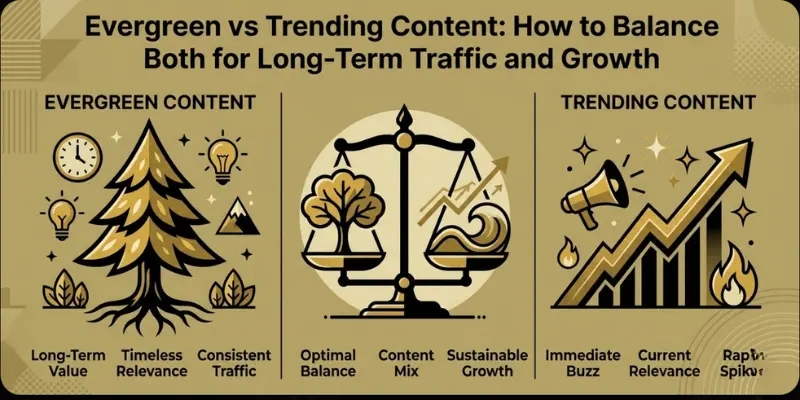
Evergreen vs trending content is one of the most important concepts in modern content marketing. Content marketing success rarely comes from publishing random posts. Smart brands understand that balancing evergreen vs trending content helps capture both short-term attention and long-term traffic. Some posts attract readers for years, while others ride the wave of current trends and viral discussions. The real challenge is finding the right mix that keeps audiences engaged and search engines satisfied. If you want consistent growth, learning this balance is essential.
In today’s digital world, audiences search for both timeless information and trending topics. A strong content marketing strategy combines long-term SEO content with timely updates. This approach helps brands maintain steady website traffic while also benefiting from viral opportunities. Businesses that master this balance often see better engagement, higher rankings, and stronger authority online.
Understanding Evergreen vs Trending Content in Content Marketing
What Is Evergreen Content?
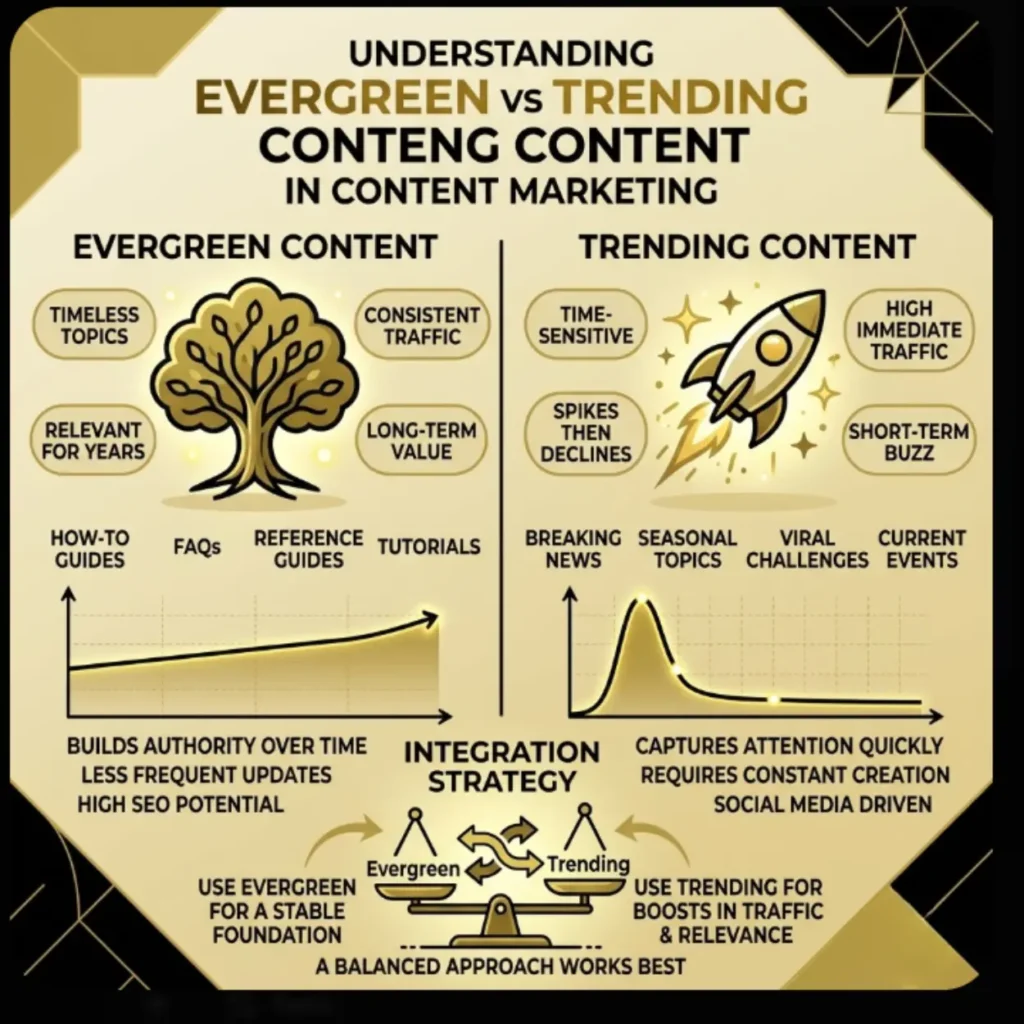
Evergreen content is information that stays relevant for a long time. It answers questions people will continue searching for months or even years. Topics like guides, tutorials, and educational posts often fall into this category. These posts build consistent traffic through SEO and organic search. They act as the foundation of a strong blog strategy.
Examples of evergreen content include:
- “How to Create a Content Marketing Strategy”
- “Beginner’s Guide to SEO”
- “Social Media Marketing Tips for Small Businesses”
Such posts generate steady traffic and can be updated periodically to stay fresh.
What Is Trending Content?
Trending content focuses on topics that are currently popular or widely discussed. These topics often come from social media, industry news, or viral events. When a trend rises, many people search for information about it immediately. Publishing quickly allows brands to capture this temporary surge in traffic. However, the interest often fades quickly.
Trending content examples include:
- Industry news updates
- Viral social media challenges
- New technology announcements
- Breaking marketing trends
This type of content drives rapid engagement but may lose traffic once the trend passes.
Key Differences Between Evergreen and Trend-Driven Content
The main difference between evergreen and trending content is longevity. Evergreen posts remain useful for years and bring steady SEO traffic. Trend-driven content, however, focuses on short bursts of interest. Both have value when used correctly in a content marketing strategy. Understanding these differences helps marketers create a balanced plan.
| Feature | Evergreen Content | Trending Content |
| Lifespan | Long-term | Short-term |
| Traffic Pattern | Consistent | Sudden spikes |
| SEO Value | High | Moderate |
| Update Frequency | Occasional | Frequent |
Using both allows businesses to maintain stable growth while capturing new opportunities.
Tools to Find Evergreen and Trending Content Ideas
Example content:
- Google Trends
- BuzzSumo
- Ahrefs
- SEMrush
- Social media trends
Benefits and Limitations of Each Content Type
Advantages of Evergreen Content
Evergreen content provides long-term value for both readers and search engines. Once it ranks on Google, it can bring steady organic traffic every month. This type of content also builds trust and authority within a niche. Readers often bookmark or share these resources. Over time, evergreen posts become the backbone of a website’s SEO strategy.
Some key benefits include:
- Consistent website traffic
- Higher long-term SEO rankings
- Strong brand authority
- Better lead generation opportunities
Because of these advantages, many marketers prioritize evergreen articles when building a sustainable blog.
Advantages of Trend-Driven Content
Trend-driven content captures immediate attention from audiences. It allows brands to participate in current conversations and industry discussions. When done correctly, this content can generate high engagement and social media shares. Trending posts also help businesses appear active and relevant in fast-moving markets. They create opportunities to reach new audiences quickly.
Many companies use trending topics to increase brand visibility. For example, reacting to industry news or viral social media trends can boost engagement. While the traffic may not last forever, the exposure can still be valuable. It often attracts new visitors who later discover evergreen resources on the site.
Potential Drawbacks to Consider
Both evergreen and trending content come with limitations. Evergreen content takes time to research, write, and rank on search engines. It may not generate instant traffic or viral engagement. However, its long-term benefits usually outweigh the slow start. Patience is important when building evergreen SEO content.
Trending content has the opposite challenge. It requires quick creation and fast publishing to stay relevant. Once the trend fades, traffic often drops sharply. This makes it unreliable as the only content strategy. A balanced mix is necessary to maintain consistent growth.
Why a Balanced Content Strategy Is Essential
How Evergreen Content Builds Long-Term SEO Traffic
Evergreen articles continue attracting visitors long after they are published. They answer common questions and solve problems that people search for regularly. Search engines favor this type of content because it provides ongoing value. As a result, rankings often improve over time. This makes evergreen content essential for sustainable SEO growth.
For example, a detailed guide on content marketing strategy may receive traffic for years. Updating it occasionally keeps it relevant and competitive. Businesses often rely on these posts to generate leads and conversions. This stability makes evergreen content a powerful digital marketing asset.
How Trending Content Drives Short-Term Engagement
Trending content works like a traffic booster for your website. It attracts visitors who are searching for the latest news or discussions. When people see relevant trending topics, they are more likely to click and share the post. This leads to rapid spikes in engagement and website visits. Brands can use this attention to promote their services or products.
Although the traffic may decline later, the exposure still benefits brand awareness. Many readers who discover a site through trending content later explore evergreen resources. This creates a natural pathway for audience growth. In this way, trending posts support long-term marketing goals.
Using Both for Sustainable Growth
Successful brands rarely rely on only one type of content. Instead, they combine evergreen guides with timely trending articles. This approach keeps the content calendar dynamic and engaging. Readers enjoy both useful resources and current insights. The result is a more balanced and effective marketing strategy.
A smart content mix improves SEO performance and audience engagement. Evergreen posts maintain stable traffic levels. Trending posts generate excitement and visibility. Together, they create a powerful content ecosystem.
Finding the Right Content Ratio
The Popular 70–30 Content Strategy
Many experts recommend the 70–30 content rule. This strategy suggests that about 70 percent of content should be evergreen. The remaining 30 percent can focus on trending topics or current events. This balance allows businesses to maintain consistent traffic while still participating in industry trends. It creates stability without missing viral opportunities.
The 70–30 ratio works well for most blogs and marketing websites. However, it is not a strict rule. Some industries may require more frequent trend-based content. Adjusting the ratio based on audience behavior can improve results.
Adjusting the Ratio Based on Your Industry
Different industries respond to content in different ways. Technology and digital marketing often rely more on trending topics. Meanwhile, education and tutorials benefit greatly from evergreen resources. Understanding your audience helps determine the ideal content mix. Analytics data can reveal what type of content performs best.
For example, a tech blog might use a 60–40 evergreen vs trending content strategy. A financial education website may prefer an 80–20 ratio because informational guides remain valuable longer. Testing different approaches can help marketers refine their strategy.
Factors That Influence Your Ideal Balance
Several factors affect how much evergreen or trending content you should publish. Audience behavior, industry trends, and competition all play a role. Website goals also matter, especially when focusing on lead generation or brand awareness. Understanding these elements helps create a more effective content plan.
Key factors include:
- Audience search behavior
- Industry trends and updates
- SEO competition
- Content production resources
Evaluating these factors helps marketers design a balanced and sustainable strategy.
How to Create a Balanced Content Calendar
Monthly Content Planning Framework
A content calendar helps maintain consistency and organization. Planning posts in advance ensures a healthy mix of evergreen and trending topics. It also helps teams manage deadlines and research time effectively. With a clear plan, content production becomes more efficient. This approach improves both quality and SEO performance.
A simple monthly framework might look like this:
| Week | Content Type |
| Week 1 | Evergreen guide |
| Week 2 | Trending topic article |
| Week 3 | Evergreen tutorial |
| Week 4 | Industry news or update |
This balance ensures continuous value while staying relevant to current discussions.
Seasonal and Event-Based Planning
Some trending topics are predictable because they happen every year. Holidays, industry conferences, and seasonal events often create new content opportunities. Planning these posts early helps businesses publish at the right time. This preparation increases the chances of capturing search traffic during peak interest periods.
Seasonal planning also allows marketers to update old content with fresh insights. For example, updating a “digital marketing trends” article every year keeps it relevant. This method combines evergreen value with trending relevance. The result is stronger search engine visibility.
Integrating Trends Without Losing Evergreen Value
The best content strategies blend trends with long-term relevance. Instead of writing purely temporary posts, marketers can connect trends to evergreen concepts. This makes the content useful even after the trend fades. Readers still gain valuable insights from the article.
For instance, a post about a new marketing tool can include a broader guide to digital marketing strategies. This combination ensures lasting value while capturing current interest. Such hybrid content performs well in search results.
must relate to above
Ready to Grow with the Right Content Strategy?
Balancing evergreen vs trending content can transform your traffic and engagement. Let Mugenz help you turn smart content strategies into real digital growth.
- Healthcare: Reach more patients with powerful digital solutions.
- Explore Healthcare Services
- Real Estate: Generate quality leads and showcase properties online.
Discover Real Estate Solutions - NGOs: Expand your impact and connect with more supporters.
See NGO Digital Tools
Start your digital growth today.
Contact Mugenz or explore our solutions now!
Conclusion:
Achieving success in content marketing requires more than simply publishing articles. The real power lies in balancing Evergreen vs trending content to capture both stability and excitement. Evergreen posts provide consistent SEO traffic and long-term value, while trending topics bring immediate engagement and visibility. Together, they create a strong and adaptable content strategy that supports sustainable growth. Businesses that master Evergreen vs trending content strategies often outperform competitors in search rankings and audience growth. By planning a smart content calendar, monitoring analytics, and adapting to industry trends, marketers can achieve long-term success. Whether you run a blog, digital agency, or online business, the right mix of Evergreen vs trending content will help your brand grow steadily in the digital world.
FAQs
What is evergreen content?
Evergreen content is information that remains useful and relevant for a long time. Examples include guides, tutorials, and how-to articles that people search for regularly.
What is trending content?
Trending content focuses on topics that are currently popular or widely discussed. These posts usually gain quick traffic but may lose relevance once the trend fades.
Is evergreen content better than trending content?
Evergreen content provides long-term SEO benefits, while trending content delivers short-term traffic and engagement. Both are important for a balanced content strategy.
How often should I publish trending content?
It depends on your industry and audience. Many marketers follow a 70% evergreen and 30% trending content mix to maintain steady growth.
How do I find trending topics for content?
You can discover trends using tools and platforms such as:
- Google Trends
- Social media platforms
- Industry news websites
- Keyword research tools
How do I create evergreen content that ranks on Google?
Focus on solving common problems, use SEO keywords naturally, and keep the content updated. High-quality guides and tutorials often perform well.
Can trending content become evergreen?
Sometimes yes. If a trending topic continues to stay relevant or is updated regularly, it can eventually become evergreen content.
How long does evergreen content last?
Evergreen content can generate traffic for months or even years. Updating the content occasionally helps maintain its rankings.
Should small businesses focus more on evergreen content?
Yes, because evergreen content builds consistent organic traffic over time. Small businesses often benefit from long-term SEO visibility.
What types of evergreen content perform best?
Common high-performing evergreen content includes:
- Step-by-step guides
- Beginner tutorials
- Industry best practices
- FAQs and resource lists
How can I measure the success of evergreen vs trending content?
Track performance using metrics such as:
- Organic traffic
- Search rankings
- Engagement rate
- Conversion rate
These insights help improve your content marketing strategy over time.
Introduction:
Evergreen vs trending content is one of the most important concepts in modern content marketing. Content marketing success rarely comes from publishing random posts. Smart brands understand that balancing evergreen vs trending content helps capture both short-term attention and long-term traffic. Some posts attract readers for years, while others ride the wave of current trends and viral discussions. The real challenge is finding the right mix that keeps audiences engaged and search engines satisfied. If you want consistent growth, learning this balance is essential.
In today’s digital world, audiences search for both timeless information and trending topics. A strong content marketing strategy combines long-term SEO content with timely updates. This approach helps brands maintain steady website traffic while also benefiting from viral opportunities. Businesses that master this balance often see better engagement, higher rankings, and stronger authority online.
Understanding Evergreen vs Trending Content in Content Marketing
What Is Evergreen Content?
Evergreen content is information that stays relevant for a long time. It answers questions people will continue searching for months or even years. Topics like guides, tutorials, and educational posts often fall into this category. These posts build consistent traffic through SEO and organic search. They act as the foundation of a strong blog strategy.
Examples of evergreen content include:
- “How to Create a Content Marketing Strategy”
- “Beginner’s Guide to SEO”
- “Social Media Marketing Tips for Small Businesses”
Such posts generate steady traffic and can be updated periodically to stay fresh.
What Is Trending Content?
Trending content focuses on topics that are currently popular or widely discussed. These topics often come from social media, industry news, or viral events. When a trend rises, many people search for information about it immediately. Publishing quickly allows brands to capture this temporary surge in traffic. However, the interest often fades quickly.
Trending content examples include:
- Industry news updates
- Viral social media challenges
- New technology announcements
- Breaking marketing trends
This type of content drives rapid engagement but may lose traffic once the trend passes.
Key Differences Between Evergreen and Trend-Driven Content
The main difference between evergreen and trending content is longevity. Evergreen posts remain useful for years and bring steady SEO traffic. Trend-driven content, however, focuses on short bursts of interest. Both have value when used correctly in a content marketing strategy. Understanding these differences helps marketers create a balanced plan.
| Feature | Evergreen Content | Trending Content |
| Lifespan | Long-term | Short-term |
| Traffic Pattern | Consistent | Sudden spikes |
| SEO Value | High | Moderate |
| Update Frequency | Occasional | Frequent |
Using both allows businesses to maintain stable growth while capturing new opportunities.
Tools to Find Evergreen and Trending Content Ideas
Example content:
- Google Trends
- BuzzSumo
- Ahrefs
- SEMrush
- Social media trends
Benefits and Limitations of Each Content Type
Advantages of Evergreen Content
Evergreen content provides long-term value for both readers and search engines. Once it ranks on Google, it can bring steady organic traffic every month. This type of content also builds trust and authority within a niche. Readers often bookmark or share these resources. Over time, evergreen posts become the backbone of a website’s SEO strategy.
Some key benefits include:
- Consistent website traffic
- Higher long-term SEO rankings
- Strong brand authority
- Better lead generation opportunities
Because of these advantages, many marketers prioritize evergreen articles when building a sustainable blog.
Advantages of Trend-Driven Content
Trend-driven content captures immediate attention from audiences. It allows brands to participate in current conversations and industry discussions. When done correctly, this content can generate high engagement and social media shares. Trending posts also help businesses appear active and relevant in fast-moving markets. They create opportunities to reach new audiences quickly.
Many companies use trending topics to increase brand visibility. For example, reacting to industry news or viral social media trends can boost engagement. While the traffic may not last forever, the exposure can still be valuable. It often attracts new visitors who later discover evergreen resources on the site.
Potential Drawbacks to Consider
Both evergreen and trending content come with limitations. Evergreen content takes time to research, write, and rank on search engines. It may not generate instant traffic or viral engagement. However, its long-term benefits usually outweigh the slow start. Patience is important when building evergreen SEO content.
Trending content has the opposite challenge. It requires quick creation and fast publishing to stay relevant. Once the trend fades, traffic often drops sharply. This makes it unreliable as the only content strategy. A balanced mix is necessary to maintain consistent growth.
Why a Balanced Content Strategy Is Essential
How Evergreen Content Builds Long-Term SEO Traffic
Evergreen articles continue attracting visitors long after they are published. They answer common questions and solve problems that people search for regularly. Search engines favor this type of content because it provides ongoing value. As a result, rankings often improve over time. This makes evergreen content essential for sustainable SEO growth.
For example, a detailed guide on content marketing strategy may receive traffic for years. Updating it occasionally keeps it relevant and competitive. Businesses often rely on these posts to generate leads and conversions. This stability makes evergreen content a powerful digital marketing asset.
How Trending Content Drives Short-Term Engagement
Trending content works like a traffic booster for your website. It attracts visitors who are searching for the latest news or discussions. When people see relevant trending topics, they are more likely to click and share the post. This leads to rapid spikes in engagement and website visits. Brands can use this attention to promote their services or products.
Although the traffic may decline later, the exposure still benefits brand awareness. Many readers who discover a site through trending content later explore evergreen resources. This creates a natural pathway for audience growth. In this way, trending posts support long-term marketing goals.
Using Both for Sustainable Growth
Successful brands rarely rely on only one type of content. Instead, they combine evergreen guides with timely trending articles. This approach keeps the content calendar dynamic and engaging. Readers enjoy both useful resources and current insights. The result is a more balanced and effective marketing strategy.
A smart content mix improves SEO performance and audience engagement. Evergreen posts maintain stable traffic levels. Trending posts generate excitement and visibility. Together, they create a powerful content ecosystem.
Finding the Right Content Ratio
The Popular 70–30 Content Strategy
Many experts recommend the 70–30 content rule. This strategy suggests that about 70 percent of content should be evergreen. The remaining 30 percent can focus on trending topics or current events. This balance allows businesses to maintain consistent traffic while still participating in industry trends. It creates stability without missing viral opportunities.
The 70–30 ratio works well for most blogs and marketing websites. However, it is not a strict rule. Some industries may require more frequent trend-based content. Adjusting the ratio based on audience behavior can improve results.
Adjusting the Ratio Based on Your Industry
Different industries respond to content in different ways. Technology and digital marketing often rely more on trending topics. Meanwhile, education and tutorials benefit greatly from evergreen resources. Understanding your audience helps determine the ideal content mix. Analytics data can reveal what type of content performs best.
For example, a tech blog might use a 60–40 evergreen vs trending content strategy. A financial education website may prefer an 80–20 ratio because informational guides remain valuable longer. Testing different approaches can help marketers refine their strategy.
Factors That Influence Your Ideal Balance
Several factors affect how much evergreen or trending content you should publish. Audience behavior, industry trends, and competition all play a role. Website goals also matter, especially when focusing on lead generation or brand awareness. Understanding these elements helps create a more effective content plan.
Key factors include:
- Audience search behavior
- Industry trends and updates
- SEO competition
- Content production resources
Evaluating these factors helps marketers design a balanced and sustainable strategy.
How to Create a Balanced Content Calendar
Monthly Content Planning Framework
A content calendar helps maintain consistency and organization. Planning posts in advance ensures a healthy mix of evergreen and trending topics. It also helps teams manage deadlines and research time effectively. With a clear plan, content production becomes more efficient. This approach improves both quality and SEO performance.
A simple monthly framework might look like this:
| Week | Content Type |
| Week 1 | Evergreen guide |
| Week 2 | Trending topic article |
| Week 3 | Evergreen tutorial |
| Week 4 | Industry news or update |
This balance ensures continuous value while staying relevant to current discussions.
Seasonal and Event-Based Planning
Some trending topics are predictable because they happen every year. Holidays, industry conferences, and seasonal events often create new content opportunities. Planning these posts early helps businesses publish at the right time. This preparation increases the chances of capturing search traffic during peak interest periods.
Seasonal planning also allows marketers to update old content with fresh insights. For example, updating a “digital marketing trends” article every year keeps it relevant. This method combines evergreen value with trending relevance. The result is stronger search engine visibility.
Integrating Trends Without Losing Evergreen Value
The best content strategies blend trends with long-term relevance. Instead of writing purely temporary posts, marketers can connect trends to evergreen concepts. This makes the content useful even after the trend fades. Readers still gain valuable insights from the article.
For instance, a post about a new marketing tool can include a broader guide to digital marketing strategies. This combination ensures lasting value while capturing current interest. Such hybrid content performs well in search results.
must relate to above
Ready to Grow with the Right Content Strategy?
Balancing evergreen vs trending content can transform your traffic and engagement. Let Mugenz help you turn smart content strategies into real digital growth.
- Healthcare: Reach more patients with powerful digital solutions.
- Explore Healthcare Services
- Real Estate: Generate quality leads and showcase properties online.
Discover Real Estate Solutions - NGOs: Expand your impact and connect with more supporters.
See NGO Digital Tools
Start your digital growth today.
Contact Mugenz or explore our solutions now!
Conclusion:
Achieving success in content marketing requires more than simply publishing articles. The real power lies in balancing Evergreen vs trending content to capture both stability and excitement. Evergreen posts provide consistent SEO traffic and long-term value, while trending topics bring immediate engagement and visibility. Together, they create a strong and adaptable content strategy that supports sustainable growth. Businesses that master Evergreen vs trending content strategies often outperform competitors in search rankings and audience growth. By planning a smart content calendar, monitoring analytics, and adapting to industry trends, marketers can achieve long-term success. Whether you run a blog, digital agency, or online business, the right mix of Evergreen vs trending content will help your brand grow steadily in the digital world.
FAQs
What is evergreen content?
Evergreen content is information that remains useful and relevant for a long time. Examples include guides, tutorials, and how-to articles that people search for regularly.
What is trending content?
Trending content focuses on topics that are currently popular or widely discussed. These posts usually gain quick traffic but may lose relevance once the trend fades.
Is evergreen content better than trending content?
Evergreen content provides long-term SEO benefits, while trending content delivers short-term traffic and engagement. Both are important for a balanced content strategy.
How often should I publish trending content?
It depends on your industry and audience. Many marketers follow a 70% evergreen and 30% trending content mix to maintain steady growth.
How do I find trending topics for content?
You can discover trends using tools and platforms such as:
- Google Trends
- Social media platforms
- Industry news websites
- Keyword research tools
How do I create evergreen content that ranks on Google?
Focus on solving common problems, use SEO keywords naturally, and keep the content updated. High-quality guides and tutorials often perform well.
Can trending content become evergreen?
Sometimes yes. If a trending topic continues to stay relevant or is updated regularly, it can eventually become evergreen content.
How long does evergreen content last?
Evergreen content can generate traffic for months or even years. Updating the content occasionally helps maintain its rankings.
Should small businesses focus more on evergreen content?
Yes, because evergreen content builds consistent organic traffic over time. Small businesses often benefit from long-term SEO visibility.
What types of evergreen content perform best?
Common high-performing evergreen content includes:
- Step-by-step guides
- Beginner tutorials
- Industry best practices
- FAQs and resource lists
How can I measure the success of evergreen vs trending content?
Track performance using metrics such as:
- Organic traffic
- Search rankings
- Engagement rate
- Conversion rate
These insights help improve your content marketing strategy over time.