IIn today’s competitive digital marketing landscape, ranking on search engines requires more than great content. One often overlooked but powerful on-page SEO element is the meta description. A well-written meta description acts like a mini ad, encouraging clicks and improving click-through rates (CTR).
This guide shows you how to write effective meta tag descriptions, when to use a meta description generator, and how to optimize metadata for better visibility. Since meta descriptions appear below the title tag in search results, they often determine whether users click or scroll past making them a critical part of any SEO strategy.
What Is a Meta Description?
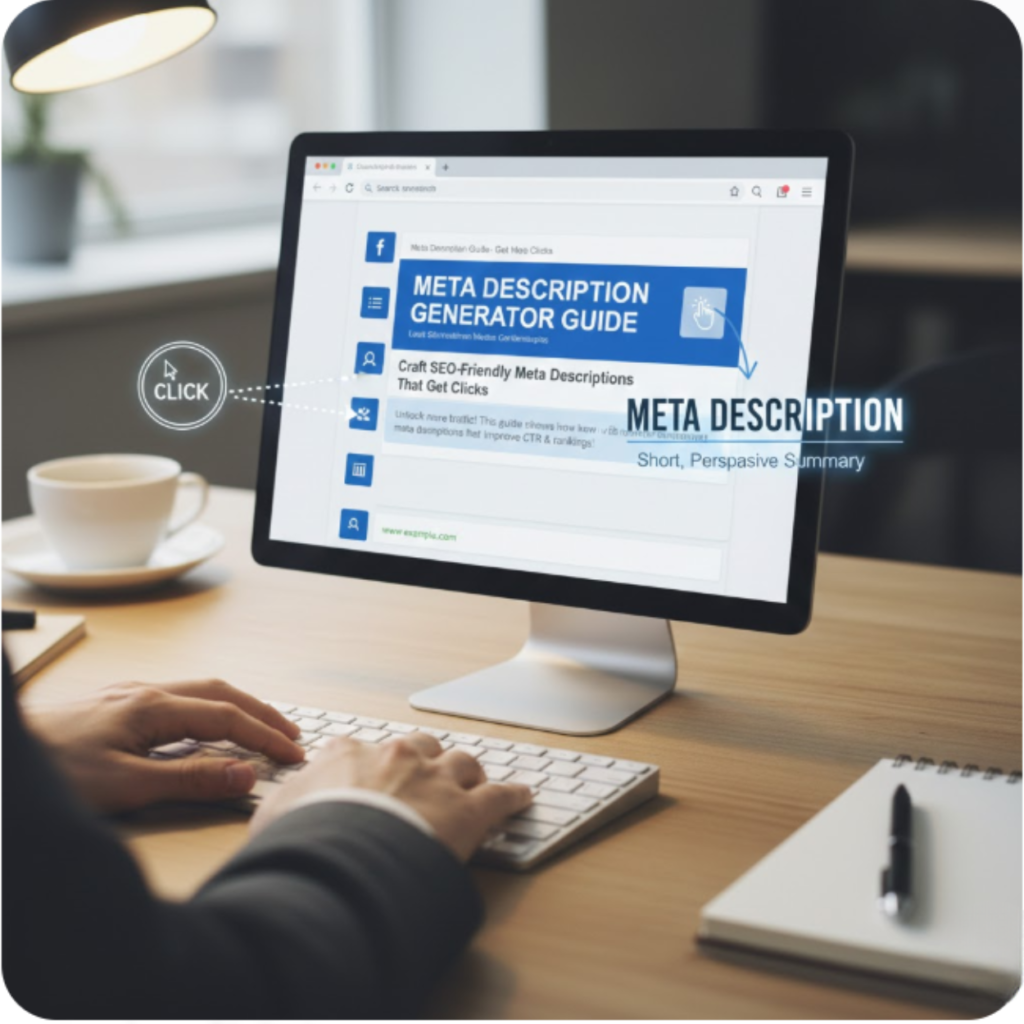
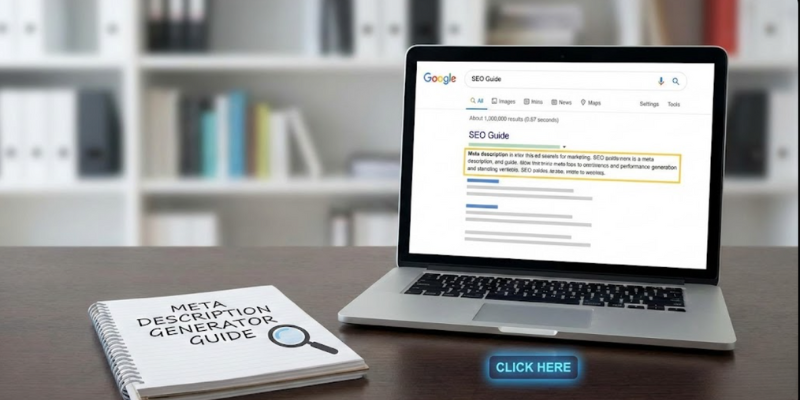
A meta description is a short summary of a webpage’s content that appears below the title tag in search engine results pages (SERPs). Although it does not directly affect rankings, it plays a major role in influencing user behavior by encouraging clicks. When written well, meta descriptions help your page stand out in crowded SERPs and improve organic traffic.
Many website owners leave meta descriptions empty or rely on auto-generated text, missing a valuable opportunity to communicate relevance and value. When learning how to write a meta tag description, relevance is key. Google may rewrite your description if it better matches search intent, so your description should clearly summarize the page, include the focus keyword naturally, and set accurate expectations. Think of it as a concise pitch clear, honest, and persuasive.
Why Meta Descriptions Matter for SEO
The importance of meta description lies in its influence on click-through rates. Even if your page ranks well, a weak description can cause users to skip it in favor of competitors. Higher CTR sends positive engagement signals to search engines, indirectly supporting long-term SEO performance.
A well-optimized, SEO-friendly meta description sets expectations before the click. When users find what they expect, bounce rates decrease and dwell time improves. These behavioral signals strengthen your overall on-page SEO strategy.
Understanding meta tag optimization in SEO ensures that each page communicates value clearly. Whether you write manually or automate with a meta description generator, the goal remains the same attract the right users and convert impressions into clicks.
Key Elements of a High-Quality Meta Description
To write an effective, SEO-friendly meta description, several essential components must be present. These elements improve readability, relevance, and persuasion.
Best practices include:
- Meta description length between 150–160 characters
- Active, benefit-driven language
- Natural inclusion of the focus keyword
- Clear alignment with page content
- Unique descriptions for every page
- A strong call-to-action (CTA)
Keyword placement is important, but stuffing terms like meta title and description SEO repeatedly can harm readability. Instead, focus on clarity and intent. A meta description analyzer can help evaluate length, tone, and keyword balance, while a meta description generator ensures consistency at scale.
How to Write Meta Descriptions Users Actually Click
Writing effective meta descriptions requires understanding search intent. Each description should directly answer the user’s query while offering a compelling reason to click.
Think of your meta description as your final pitch before the searcher makes a decision.
Simple framework to follow:
- Identify the user problem or question
- Highlight the benefit or solution
- Add trust or credibility if relevant
- End with a clear CTA
Avoid keyword stuffing, but naturally incorporate essential terms related to meta tag optimization in SEO. Using a professional meta description generator tool helps balance creativity and optimization without sacrificing quality.
Tools That Help Write Better Meta Descriptions
If writing descriptions manually feels repetitive or inconsistent, using a meta description generator is a smart solution. These tools analyze your content and suggest optimized snippets aligned with search intent.
Many commercial tools also include performance insights, helping you refine descriptions over time.
Popular Meta Description Tools
| Tool Name | Features | Best For |
| Yoast SEO | Snippet preview, readability checks | WordPress users |
| SEMrush Writing Assistant | AI optimization & intent matching | Agencies |
| RankMath | Bulk editing & SEO scoring | Bloggers |
| Copy.ai | AI-generated descriptions | E-commerce |
Most modern tools integrate directly with CMS platforms, simplifying meta tag optimization in SEO while saving time.
Real-World Meta Description Examples (Detailed Breakdown)
Examining real-world meta descriptions from leading platforms helps us understand how effective metadata is crafted at scale. These brands consistently optimize their meta descriptions to align with user intent, maintain clarity, and encourage clicks often using automation or internal systems to manage millions of pages efficiently. Let’s break down why their meta descriptions work so well and what you can learn from them.
Amazon
Meta Description:
Shop electronics with quick delivery and affordable prices, including phones, laptops, and accessories.
Why This Meta Description Works
- Clear Value Proposition:
Amazon immediately communicates what the user can expect—electronics products without unnecessary wording. This clarity reduces friction and increases the likelihood of a click. - User Intent Alignment:
Most users searching for electronics are looking for variety, affordability, and convenience. Phrases like fast delivery and competitive prices directly address these expectations. - Action-Oriented Language:
The word Shop acts as a strong call-to-action, encouraging users to take immediate action rather than passively read. - SEO-Friendly Structure:
The description stays within ideal meta description length guidelines and uses simple, scannable language that works well across devices.
Key Takeaway:
Effective meta descriptions highlight benefits quickly and use action verbs to drive engagement especially important for eCommerce websites competing for high-intent traffic.
YouTube
Meta Description:
“Watch and share videos from creators worldwide. Discover trending content, music, and live streams.”
Why This Meta Description Works
- Broad Yet Relevant Appeal:
YouTube serves multiple audiences, and this description successfully speaks to all of them viewers, creators, and casual browsers without sounding generic. - Benefit-Focused Messaging:
Instead of explaining what YouTube is, the description focuses on what users can do: watch, share, and discover. - Strong Intent Matching:
Common search queries around YouTube include watching videos, discovering trends, and exploring content. The description mirrors this language, strengthening relevance. - Scalable Optimization:
The wording is flexible enough to apply globally, which is ideal for platforms that manage metadata at scale using automated systems.
Key Takeaway:
When writing meta descriptions for platforms or content with wide appeal, focus on user actions and experiences rather than technical explanations.
Wikipedia
Meta Description:
“Wikipedia is a free online encyclopedia, created and edited by volunteers around the world.”
Why This Meta Description Works
- Trust and Authority Signals:
Wikipedia emphasizes transparency and community contribution, reinforcing trust—a critical factor for informational search intent. - Clear and Accurate Representation:
The description sets honest expectations. Users know exactly what they’re clicking on, which helps maintain low bounce rates. - Informational Intent Optimization:
Most Wikipedia searches are informational. This description avoids sales language and instead prioritizes clarity and reliability. - Consistency at Scale:
Wikipedia applies similar description logic across millions of pages, often using structured templates that ensure consistency without sacrificing relevance.
Key Takeaway:
For informational websites, a meta description should prioritize clarity, trust, and accuracy over persuasion or urgency.
What These Examples Teach Us
Across all three examples, there are shared best practices that contribute to high-performing meta descriptions:
- They stay within recommended meta description length limits
- They clearly communicate value without keyword stuffing
- They match search intent (transactional, navigational, or informational)
- They use simple, human-friendly language
- They scale effectively using structured systems or automation
These brands demonstrate that a well-optimized meta description—whether written manually or generated using a meta description generator—can significantly influence click-through rates and user engagement. By applying these principles to your own pages, you can create SEO-friendly meta descriptions that attract the right audience and convert impressions into clicks.
Common Meta Description Mistakes to Avoid

- Using duplicate meta descriptions across multiple pages
- Writing descriptions that exceed the recommended length and get truncated in search results
- Using misleading or clickbait language that does not match the page content
- Ignoring clear calls-to-action (CTAs) that encourage clicks
- Overusing keywords, making descriptions sound unnatural or spammy
- Relying entirely on manual editing for large websites, which leads to inconsistency
A reliable meta description analyzer helps identify these issues quickly, while a meta description generator ensures consistency and efficiency at scale.
Optimizing Meta Descriptions for Higher Click-Through Rates (CTR)
- Focus on clear, concise, and relevant messaging
- Match the meta description closely with user search intent
- Highlight a strong benefit or solution early in the description
- Use modifiers such as best, free, updated, or proven to increase appeal
- Add urgency or curiosity to motivate users to click
- Test multiple variations through A/B testing
- Update meta descriptions regularly based on performance and CTR data
Advanced commercial meta description tools provide actionable insights and testing features, enabling continuous, data-driven optimization.
Scaling Meta Descriptions for Large Websites
Managing hundreds or thousands of pages manually is impractical. A powerful meta description generator tool allows bulk creation using dynamic templates.
Segment pages by type (blogs, products, landing pages) and use variables like product name or category. Pair automation with a meta description analyzer to maintain quality and SEO compliance.
Meta Descriptions and Social Media Sharing
Meta descriptions also influence how your content appears when shared on social platforms. Social previews often pull metadata automatically.
Using Open Graph and Twitter Card tags ensures consistent previews across platforms. Many meta description generator tools support social preview optimization, improving CTR beyond search engines.
Get Started With Smarter Meta Description Optimization
Want to improve your organic visibility and engagement? Mugenz helps brands scale SEO-optimized metadata using strategic automation and expert insights. Explore powerful meta description generator solutions, optimize your snippets, and turn impressions into clicks. Book a free consultation and upgrade your metadata strategy today.
How to Choose the Right Keywords for Meta Descriptions
Selecting the right keywords is one of the most critical steps when crafting effective meta descriptions. You should focus on keywords that directly match the user’s search intent, ensuring that your snippet appears for the right queries. It is important to naturally integrate these keywords into your description without overstuffing them, as keyword stuffing can make your description unreadable and spammy. Including relevant keywords helps search engines understand the page context and can improve visibility. Ultimately, the goal is to create a description that is both search-friendly and compelling enough for users to click.
The Role of Meta Descriptions in On-Page SEO
Meta descriptions play an important role in on-page SEO, even though they are not a direct ranking factor. They influence user behavior by improving click-through rates (CTR) and reducing bounce rates, which are signals that search engines monitor for relevance and engagement. A well-optimized meta description ensures that your page stands out in the search results by clearly communicating value and relevance. When users find what they expect from the snippet, they are more likely to engage with your content. Therefore, meta descriptions act as a bridge between your content and potential visitors, indirectly impacting your SEO performance.
Testing and Measuring Meta Description Performance
Testing and measuring the performance of meta descriptions is essential for long-term SEO success. By performing A/B testing or monitoring analytics, you can determine which variations of your descriptions drive the highest CTR and engagement. Tools like Google Search Console, SEMrush, or RankMath provide insights into impressions, clicks, and user behavior. This data allows you to refine your meta descriptions over time to improve relevance and performance. Regularly analyzing and updating your snippets ensures that your pages remain competitive in the search results, especially in niches with high competition.
Meta Description Best Practices for E-Commerce
For e-commerce websites, meta descriptions should focus on what convinces a shopper to click. Highlight key product benefits, pricing details, and shipping or return policies to give users immediate value. Adding urgency, such as “limited stock” or “sale ends soon,” can increase the likelihood of clicks. Each product page should have a unique meta description that aligns with the product title and content. Using action-oriented language like “Shop now” or “Buy today” further enhances engagement and improves CTR. A clear, concise, and compelling description helps your store stand out in crowded search results.
Meta Description Best Practices for Blogs & Articles
When creating meta descriptions for blog posts or articles, focus on clearly communicating the value of the content to readers. Highlight the main takeaway or learning outcome, so users know what they will gain by clicking. Naturally incorporate relevant keywords without making the description feel forced. Adding a clear call-to-action (CTA) such as “Learn how” or “Discover tips” encourages readers to engage. Keep descriptions concise but informative, summarizing the content accurately while enticing clicks. Well-crafted descriptions also build trust by accurately representing your content, reducing bounce rates.
Automation and Scaling Meta Descriptions
Large websites with hundreds or thousands of pages can benefit greatly from automation when managing meta descriptions. Using a meta description generator or templates with dynamic variables ensures each page has a unique and optimized snippet without manual effort. Automation reduces errors and maintains consistency across all pages, which is especially useful for e-commerce sites, blogs, or news platforms. Pairing automation with periodic manual reviews or a meta description analyzer ensures quality control. This approach saves time while keeping your SEO strategy scalable and effective, even as your website grows.
Meta Descriptions for Social Media Previews
Meta descriptions also play a crucial role in how your content appears when shared on social media platforms like Facebook, Twitter, and LinkedIn. Social platforms often pull the meta description to display a preview, making it the first thing users see when your content is shared. Optimizing your description with clear messaging and relevant keywords can improve engagement and click-throughs on these platforms. Using Open Graph (OG) and Twitter Card tags allows you to control how your preview appears, maintaining brand consistency and enhancing the visual appeal. A strong social meta description complements your SEO efforts by driving traffic from multiple channels.
Grow Smarter With Mugenz Digital Solutions
Mugenz helps purpose-driven businesses turn traffic into results with tailored digital solutions built for impact and growth.
Healthcare
Boost patient trust, visibility, and conversions with SEO-driven websites and performance marketing designed for healthcare brands.
Real Estate
Generate high-quality leads and close faster with conversion-focused landing pages, local SEO, and digital advertising.
NGOs
Increase awareness, donations, and engagement with storytelling-led content, SEO, and digital campaigns that inspire action.
Explore Mugenz Solutions | Get a Free Consultation | Stay Updated With UsSimple. Strategic. Results-driven.
Turn your digital presence into a growth engine with Mugenz.
Conclusion
Meta descriptions may be short, but they play a powerful role in SEO and user engagement. A well-written meta description connects search intent with your content and encourages users to click. By keeping descriptions concise, relevant, and keyword-focused and using meta description generators when needed you can improve click-through rates and make your pages stand out in search results.
FAQs
Q. How does meta tag optimization in SEO affect traffic?
It improves relevance and CTR by clearly communicating value to searchers.
Q. What’s the best way to manage meta descriptions at scale?
Use a meta description generator with dynamic templates.
Q. Do meta description tools support social sharing?
Yes, many include Open Graph and social preview features.
Q. Should I analyze descriptions after generation?
Absolutely. A meta description analyzer ensures compliance and intent alignment.
Q. Why is the meta title and description SEO combination important?
Together, they improve relevance, trust, and click-through potential.