
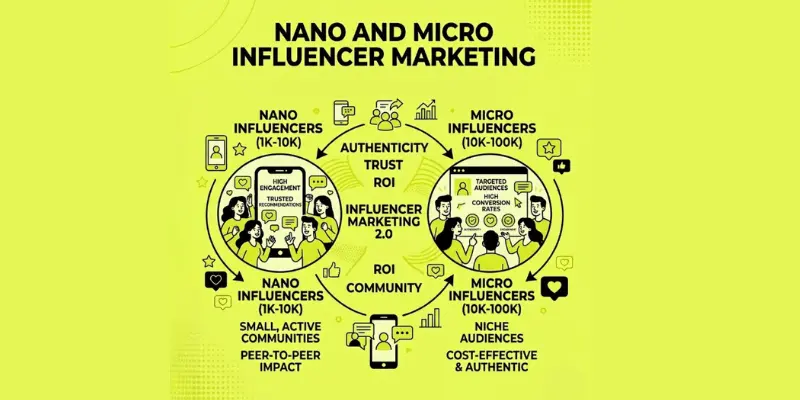
TL;DR: Nano & Micro Influencer Marketing
Nano and micro influencers are small-scale creators who drive trust, engagement, and conversions. Unlike big influencers, they connect with loyal communities, deliver authentic content, and influence real buying decisions. Brands leveraging them see higher ROI, stronger audience relationships, and scalable campaigns while maintaining credibility.
Introduction
Influencer marketing did not always look like it does today. At first, brands focused on celebrities and massive reach. Over time, engagement started to drop. Audiences became more skeptical of sponsored posts. Trust slowly faded. This shift created the need for a better approach.
Influencer Marketing 2.0 focuses on trust and relevance. It values meaningful connections over numbers. Nano and micro influencer marketing fits this new model perfectly. Smaller creators influence real decisions. Brands now care more about impact than impressions
Understanding Nano and Micro Influencers
2.1 What Is a Nano-Influencer?
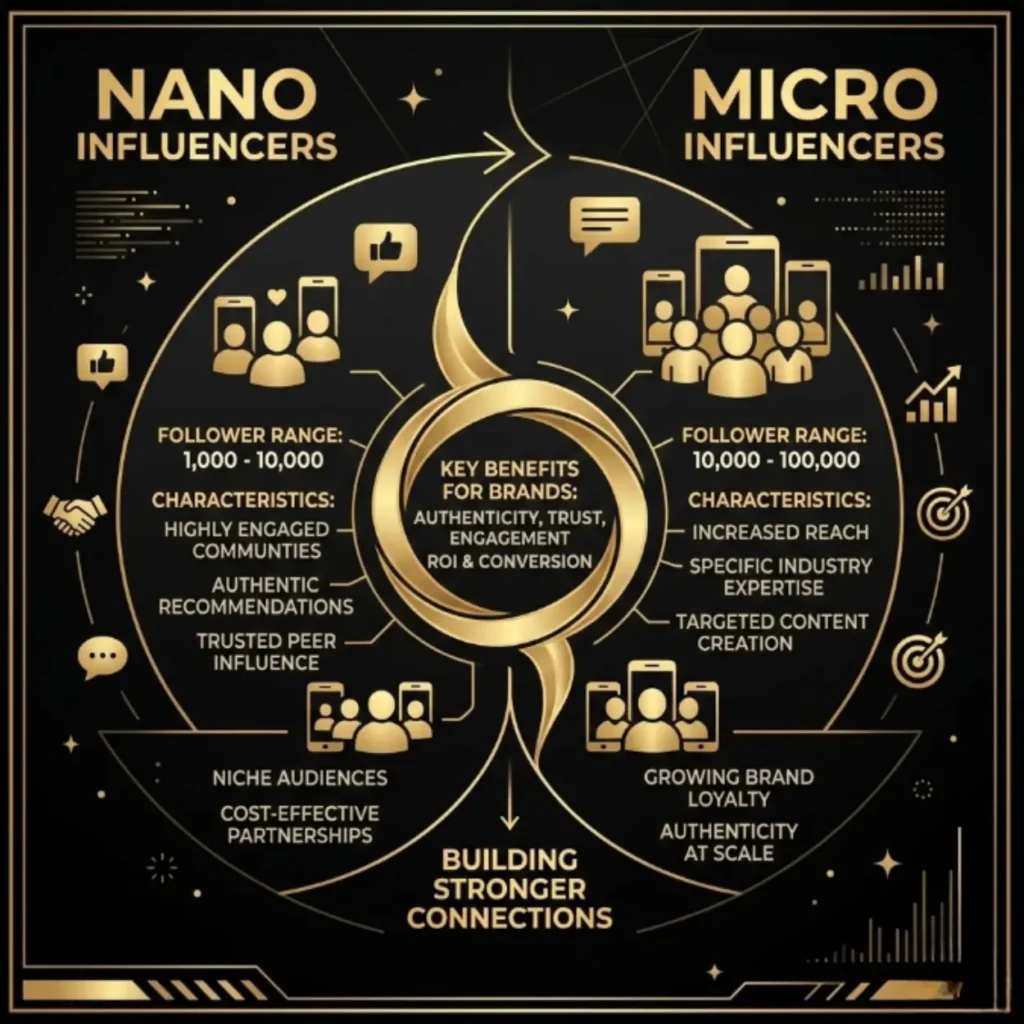
Nano influencers are everyday people with small but loyal audiences. They usually have between 1,000 and 10,000 followers. Their content feels personal and honest. Followers often know them in real life or relate closely to them. This creates deep trust.
Nano influencer marketing works well for local and niche brands. These influencers talk directly with their audience. Comments turn into conversations. Their recommendations feel natural, not forced. This makes them powerful in Influencer Marketing 2.0.
2.2 What Is a Micro-Influencer?
Micro influencers sit between nano and macro creators. They usually have 10,000 to 100,000 followers. Their audience follows them for expertise or shared interests. They are seen as specialists in a niche. This boosts credibility.
Micro influencer marketing balances reach and trust. Brands get exposure without losing authenticity. Engagement rates stay high. Costs remain manageable. This makes micro influencers ideal for scaling campaigns.
2.3 Nano vs Micro Influencers: Key Differences
Nano influencers focus on close-knit communities. Micro influencers reach wider but still targeted audiences. Both deliver high engagement compared to big influencers. Their content feels more relatable. Trust is their biggest asset.
Here is a quick comparison:
| Factor | Nano Influencers | Micro Influencers |
| Followers | 1k–10k | 10k–100k |
| Trust Level | Very high | High |
| Cost | Low | Moderate |
| Best For | Local & niche | Growth & scale |
Why Nano and Micro Influencer Marketing Works
3.1 Authenticity and Opinion Leadership
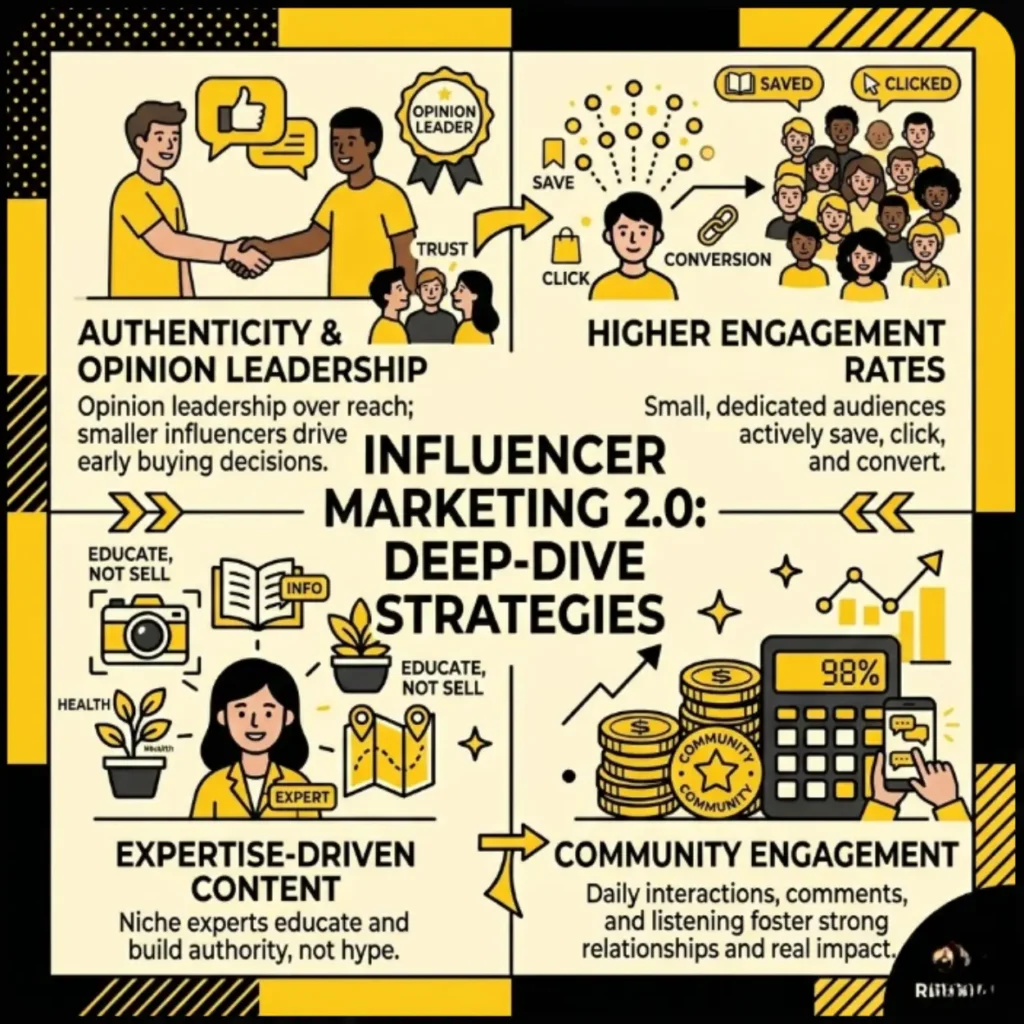
People trust people like themselves. That is why nano and micro influencers lead opinions online. They share real experiences, not polished ads. Followers believe their opinions. This drives action.
Opinion leadership matters more than reach today. Smaller influencers influence buying decisions early. They help during the research phase. This builds long-term brand trust. Big influencers often fail here.
3.2 Expertise-Driven Content
Micro influencers are often experts in a niche. They explain products clearly. Their content educates instead of selling. This helps followers make confident choices. Brands benefit from informed buyers.
Expert content performs better in Influencer Marketing 2.0. It answers real questions. It builds authority for both influencer and brand. Nano and micro influencer marketing thrives on value. Not hype.
3.3 Community Engagement and Follower Response
Smaller influencers talk with their audience daily.They reply to comments, ask thoughtful questions, and actively listen to their audience.This creates strong relationships.
Engagement signals trust and relevance. Algorithms also favor it. Nano and micro influencers often outperform big influencers here. Brands see better saves, clicks, and conversions. Engagement becomes real impact.
Nano & Micro Influencers vs Big Influencers
4.1 Engagement Rates Comparison
Big influencers reach many people but engage few. Their comments are often shallow. Likes do not convert. This reduces ROI. Brands notice the gap.
Nano and micro influencers show higher engagement rates. Their followers care. Conversations happen. Recommendations feel genuine. This leads to better performance across platforms.
Influencer Cost Comparison
| Influencer Type | Average Cost |
| Nano | Very Low |
| Micro | Low–Medium |
| Macro | High |
| Celebrity | Very High |
4.3 ROI and Conversion Performance
Big influencers often deliver awareness only. Sales remain uncertain. Tracking becomes difficult. ROI suffers. Brands feel disappointed.
Nano and micro influencer marketing focuses on conversions. Tracking links work better. Audiences trust recommendations. This improves influencer marketing ROI. Brands see real growth.
Influencer Marketing Strategy for Brands
5.1 When to Use Nano Influencers
Nano influencers work best for trust-building. They help new brands gain credibility. Local businesses benefit the most. Their audience listens closely. Results feel personal.
Use nano influencer marketing when budgets are tight. It allows testing without high risk. Feedback comes fast. Relationships grow naturally. This supports long-term strategy.
5.2 When to Use Micro Influencers
Micro influencers help scale campaigns. They reach targeted niches. Their content educates and converts. Brands gain visibility without losing trust. This balance is powerful.
Micro influencer marketing suits growing brands. It supports product launches. It works well for reviews and tutorials. Engagement remains strong. Results stay measurable.
5.3 Influencer Portfolio Approach
Smart brands do not choose one type only. They mix nano, micro, and macro influencers. Each serves a role. This spreads risk. Performance improves.
A balanced influencer portfolio supports Influencer Marketing 2.0. Nano influencers build trust. Micro influencers drive conversions. Big influencers support awareness. Strategy becomes flexible and scalable.
How to Find and Work With Nano & Micro Influencers
6.1 How to Find the Right Influencers
Finding the right influencer takes research. Look beyond follower count. Check engagement quality. Read comments. Analyze content style.
Use these steps:
- Search niche hashtags
- Review audience interaction
- Check posting consistency
- Look for value-driven content
6.2 Collaboration Best Practices
Treat influencers as partners. Give creative freedom. Avoid strict scripts. Authenticity matters most. Trust their voice.
Clear goals improve results. Define expectations early. Share brand values. Respect their audience. This builds strong collaborations.
6.3 Performance-Based Compensation Models
Performance-based pay reduces risk. Brands pay for results. Influencers stay motivated. Transparency improves trust. ROI becomes clearer.
Common models include:
- Affiliate links
- Discount codes
- Pay-per-sale
- Long-term partnerships
Measuring Success in Nano and Micro Influencer Marketing
7.1 Metrics That Actually Matter
Many brands still measure the wrong things in influencer campaigns. Likes and views look good on reports. They rarely show real business impact. Influencer Marketing 2.0 demands smarter tracking. Nano and micro influencer marketing focuses on meaningful actions.
The most important metrics show intent and trust. Engagement rate shows audience interest. Saves indicate value. Clicks reveal curiosity. Conversions confirm influence. These signals matter more than reach.
Key metrics to track:
- Engagement rate
- Comments and saves
- Website clicks
- Conversions and sales
- Cost per result
7.2 Tools and Tracking Methods
Tracking influencer performance does not need to be complex. Simple tools can deliver powerful insights. Many brands avoid tracking due to fear or confusion. This leads to wasted budgets. Smart tracking protects ROI.
UTM links help measure traffic sources. Affiliate links track sales accurately. Discount codes show conversion intent. Platform analytics reveal engagement quality. Together, these tools make nano and micro influencer marketing measurable.
Challenges, Limitations, and Future Trends
8.1 Common Challenges
Working with many small influencers can feel overwhelming. Communication takes time. Campaign coordination needs structure. Inconsistent content quality can happen. These challenges are real.
Clear systems solve most problems. Use templates for outreach. Set expectations early. Build creator guidelines. With planning, nano and micro influencer marketing becomes scalable and efficient.
8.2 Future of Nano and Micro Influencer Marketing
Influencer marketing will continue to shift toward trust. Audiences will reject obvious ads. Smaller creators will gain more influence. Community-first marketing will dominate. Brands must adapt fast.
Future trends include long-term partnerships. Performance-based influencer deals will grow. Community-driven content will outperform ads. Nano and micro influencer marketing will lead Influencer Marketing 2.0. Trust will remain the currency of influence.
Nano and Micro Influencer Marketing Across Platforms
Different platforms require different influencer strategies. What works on Instagram may fail on LinkedIn. Audience behavior changes by channel. Content formats also vary. Smart brands adapt their approach.
Nano and micro influencer marketing performs best when platform strengths are respected. Smaller creators understand their platform deeply. They know what their audience expects. This increases content relevance. Engagement stays high.
Platform-Specific Use Cases
- Instagram: Product reviews, reels, stories, lifestyle content
- TikTok: Short-form demos, trends, storytelling
- YouTube: In-depth reviews, tutorials, comparisons
- LinkedIn: B2B insights, thought leadership, professional credibility
- Twitter/X: Conversations, opinions, community engagement
Role of Nano and Micro Influencers in the Buyer Journey
Modern buyers do not buy instantly. Research comes first. Comparisons follow. Validation builds confidence before purchase.Influencer Marketing 2.0 supports this journey. Nano and micro influencers guide buyers at every step.
Smaller influencers influence early decisions. They help during awareness and consideration stages. Their opinions feel safe. Buyers trust their experience. This reduces hesitation.
How Nano & Micro Influencers Impact Buyer Journey
| Buyer Stage | Influencer Impact |
| Awareness | Discovery through relatable content |
| Consideration | Honest reviews and comparisons |
| Decision | Discount codes and real proof |
| Loyalty | Long-term trust and repeat exposure |
Content Formats That Perform Best for Nano and Micro Influencers
Content format matters as much as the influencer. Audiences respond differently to each type. Short videos often outperform static posts. Educational content builds trust. Real-life use cases convert better.
Nano and micro influencer marketing works best with content that feels natural. Over-produced content reduces credibility. Simple formats win. Real stories matter more than visuals.
High-Performing Content Types
- Short video reviews
- Before-and-after demos
- Day-in-the-life usage
- Honest pros and cons
- Q&A with followers
How Brands Can Scale Nano and Micro Influencer Marketing
Scaling does not mean losing authenticity. Many brands fear this step. They assume quality will drop. With systems, scale becomes possible. Strategy matters.
Brands should standardize processes, not creativity. Outreach templates save time. Tracking tools maintain control. Creator databases help planning. This allows growth without chaos.
Smart Scaling Tips
- Build influencer shortlists
- Use campaign briefs
- Track results consistently
- Repurpose top-performing content
- Turn winners into long-term partners
Nano and Micro Influencer Marketing for E-Commerce Brands
E-commerce brands benefit greatly from smaller influencers. Shoppers want proof before buying. They trust peer recommendations. Product demonstrations reduce doubt. Influencers shorten the decision cycle.
Nano and micro influencers humanize online shopping. They show real usage. They explain benefits simply. This increases confidence. Conversion rates improve naturally.
Best Use Cases for E-Commerce
- Product unboxings
- First impressions
- Comparison reviews
- Limited-time offers
- Affiliate-based campaigns
Mistakes Brands Make in Nano and Micro Influencer Marketing
Many brands fail despite choosing the right influencers. Strategy execution matters. Poor communication hurts results. Unrealistic expectations cause frustration. These mistakes are avoidable.
Influencer Marketing 2.0 requires patience and trust. Smaller creators are not ad machines. They need freedom. Brands that control too much lose authenticity. Results suffer.
Common Mistakes to Avoid
- Choosing influencers only by follower count
- Ignoring engagement quality
- Over-scripting content
- Paying without tracking performance
- Ending partnerships too quickly
Legal and Ethical Considerations
Transparency is critical in influencer marketing. Audiences value honesty. Platforms enforce disclosure rules. Brands must comply. Trust depends on ethics.
Nano and micro influencers often follow rules better. Their reputation matters locally. Clear disclosure protects both brand and creator. Long-term credibility grows.
Best Practices
- Use clear #ad or #sponsored tags
- Avoid misleading claims
- Share honest experiences
- Respect platform guidelines
- Maintain ethical partnerships
Why Big Influencers Are Losing Impact
Big influencers once ruled digital marketing. Now engagement is dropping. Audiences feel disconnected. Sponsored posts feel repetitive. Trust declines.
Algorithms also favor engagement over reach. Smaller creators perform better. Nano and micro influencer marketing fits platform priorities. Big influencers still matter, but their role is shrinking.
Influencer Marketing 2.0: What Makes It Different
Influencer Marketing 2.0 is not about trends. It is about mindset. Trust replaces reach. Performance replaces popularity. Relationships replace transactions.
Nano and micro influencer marketing sits at the center of this evolution. It aligns with buyer behavior. It supports long-term growth. Brands that adapt early win faster.
Final Strategic Advice for Brands and Marketers
Do not chase vanity metrics. Focus on trust. Choose relevance over reach. Build real partnerships. Measure what matters.
Nano and micro influencer marketing is not a shortcut. It is a sustainable strategy. It rewards patience and authenticity. Brands that invest wisely see lasting results. This is the future of influencer marketing.
Turn Influence Into Impact With Mugenz
Ready to turn strategy into measurable results? Mugenz helps brands apply high-impact digital approaches like nano and micro influencer marketing to drive real growth in highly competitive sectors.
Healthcare
Build patient trust, strengthen credibility, and increase engagement with compliant, performance-driven digital marketing solutions tailored for healthcare brands.
Explore Healthcare Solutions
Real Estate
Attract serious buyers and investors through local influence, targeted visibility, and conversion-focused digital strategies that deliver results.
Grow Your Real Estate Presence.
Conclusion
Influencer marketing has entered a new era. Audiences demand honesty and relevance. Big influencers no longer guarantee results. Brands must rethink strategy. Influencer Marketing 2.0 answers this shift.
Nano and micro influencer marketing delivers trust, engagement, and ROI. Smaller creators influence real decisions. They build communities, not just reach. Brands grow smarter with this approach. The future belongs to authentic influence.
FAQs:
What is nano and micro influencer marketing?
Nano and micro influencer marketing involves creators with smaller, highly engaged audiences. Nano influencers (1k–10k followers) and micro influencers (10k–100k) deliver authentic content, high engagement, and credible recommendations, making them ideal for building trust and conversions in modern marketing.
2. Are nano influencers better than big influencers?
Nano influencers are not better for reach, but they excel at trust and engagement. Their recommendations feel personal, driving conversions. Big influencers are better for awareness, while smaller creators influence real decisions. Combining both creates a balanced, effective Influencer Marketing 2.0 strategy.
3. How much do micro influencers charge?
Micro influencer costs vary by niche and platform but are far lower than celebrities. Some accept free products; others charge per post. Most campaigns remain affordable, allowing brands to test strategies, scale slowly, and achieve higher ROI while maintaining budget control and performance tracking.
4. How can small businesses benefit from micro influencers?
Small businesses gain trust and engagement through micro influencers. Their audiences feel connected, boosting recommendations and conversions. Micro influencer marketing suits limited budgets, supports niche targeting, and creates organic, sustainable growth. Results are measurable without compromising authenticity or brand credibility.
5. How do brands ensure authenticity in influencer campaigns?
Authenticity starts with choosing the right influencer and giving creative freedom. Brands should avoid over-scripting, encourage honest reviews, and ensure transparency. Clear disclosure (#ad, #sponsored) builds credibility, while letting influencers share real experiences improves audience trust and campaign effectiveness.