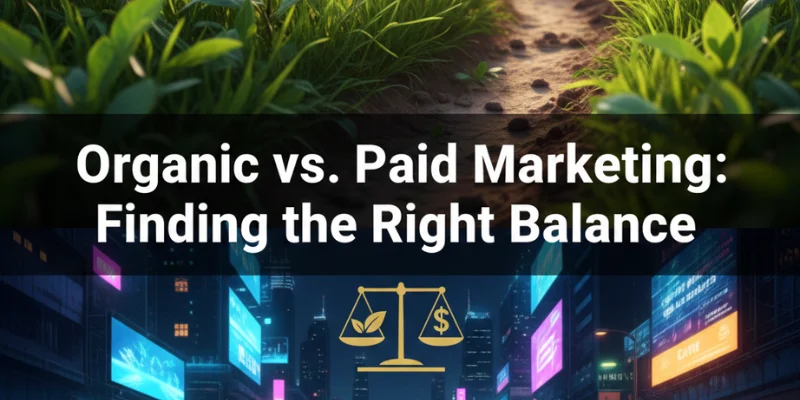
Marketing today feels like a tug of war between patience and speed. Businesses want quick results but also lasting growth. This is where Organic vs Paid Marketing becomes a real decision, not a trend. Choosing the wrong mix can waste money and time. Choosing the right balance can scale your brand faster.
Organic marketing builds trust slowly, while paid marketing delivers instant visibility. Both approaches serve different goals at different stages. Smart brands do not choose one over the other. They combine both with purpose. This guide shows how to do that effectively.
What Is Organic Marketing?
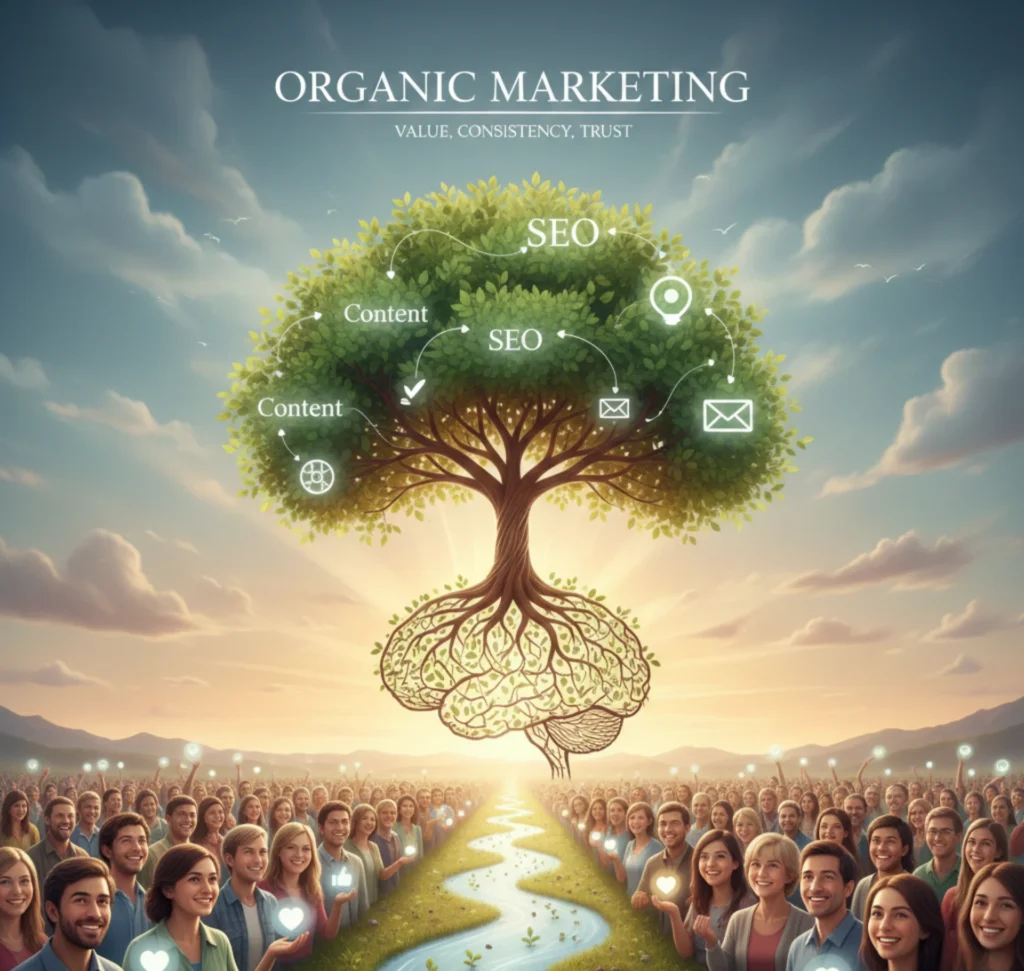
Organic marketing attracts customers without paying for clicks or impressions. It relies on value, consistency, and trust. This approach works best for long-term brand growth. Results take time but last longer. That makes organic marketing powerful.
Organic strategies focus on earning attention naturally. They improve visibility through content and engagement. Search engines reward relevance and quality. Audiences reward authenticity. Together, they create sustainable growth.
Search Engine Optimization (SEO)
Your website will show up in organic search results thanks to SEO. It targets users already searching for solutions. This makes traffic highly relevant. SEO supports long-term visibility. It is a core part of Organic vs Paid Marketing.
SEO includes many moving parts that work together. These improve rankings and user experience. The main SEO areas include:
On-Page Optimization
On-page SEO improves content and structure. It helps search engines understand your pages. Keywords, headings, and internal links matter. User experience also plays a role. Good on-page SEO boosts rankings.
It includes optimizing titles, meta descriptions, and images. Content must answer user intent clearly. Pages should load fast and work on mobile. Clear formatting keeps users engaged. These factors increase organic traffic.
Off-Page Optimization
Off-page SEO builds authority outside your website. It signals trust to search engines. Backlinks are the biggest factor here. Strong links improve domain strength. This supports long-term growth.
Off-page efforts include link building and brand mentions. Social sharing also helps visibility. Guest posting builds credibility. Reviews increase trust signals. All these support organic rankings.
Content Marketing
Content marketing attracts users through helpful information. It builds authority and trust over time. Blogs, videos, and guides are common formats. Content supports SEO and brand awareness. It is central to organic marketing.
Good content solves real problems. It answers questions clearly. It builds relationships with readers. Strong content also supports paid campaigns. This makes it valuable in Organic vs Paid Marketing.
Blogging
Blogs drive consistent organic traffic. They target informational keywords. Each post builds authority. Blogs also support internal linking. This improves SEO strength.
Well-written blogs educate and convert readers. They build trust before selling. Blogs support email and social media. They also rank for long-tail keywords. This increases reach naturally.
Social Media Content
Organic social content builds community. It encourages engagement and sharing. Platforms reward consistency. Reach grows slowly but steadily. This supports brand loyalty.
Content must match platform behavior. Short videos work well today. Visual posts increase engagement. Comments build relationships. Organic reach supports paid amplification.
Email Marketing
Email marketing nurtures existing audiences. It delivers content directly to inboxes. This builds strong relationships. Email has high ROI. It supports organic growth.
Emails work best with segmentation. Personalization improves engagement. Automation saves time. Email supports both organic and paid funnels. It bridges awareness and conversion.
Newsletters
Newsletters keep your audience informed. They build consistent touchpoints. Value-driven emails perform best. Trust grows over time. This supports long-term retention.
Newsletters share blogs, updates, and offers. They increase repeat traffic. Open rates improve with relevance. Strong subject lines matter. Consistency drives results.
Automated Campaigns
Automation sends emails based on behavior. It improves timing and relevance. This increases conversions. Automation saves manual effort. It scales easily.
Examples include welcome emails and follow-ups. Behavior-based triggers work best. Automation supports lead nurturing. It improves customer experience. This strengthens organic growth.
What Is Paid Marketing?
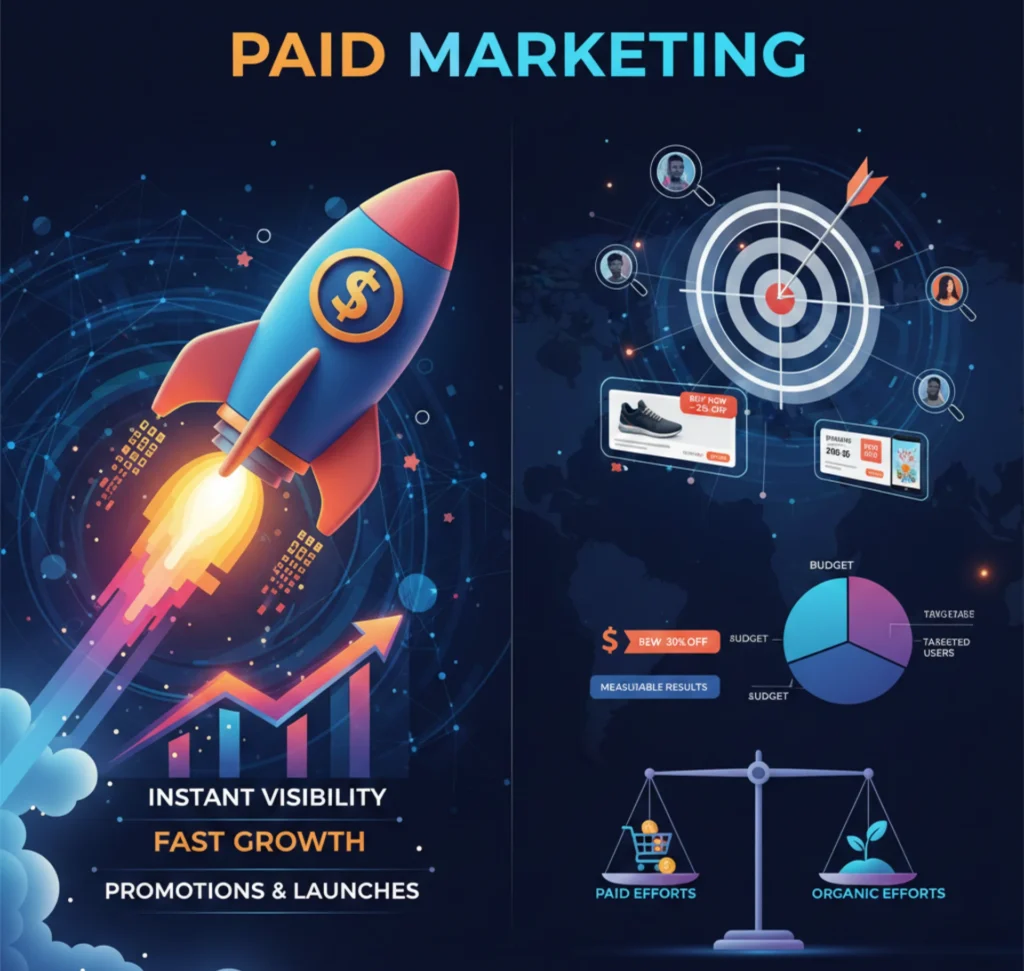
Paid marketing delivers instant visibility. Ads are displayed to users who are specifically targeted. Results appear quickly. Costs depend on competition. Paid marketing drives fast growth.
This approach works well for promotions and launches. It supports short-term goals. Paid campaigns are measurable. Budgets control scale. Paid marketing balances organic efforts.
Pay-Per-Click (PPC) Advertising
PPC ads appear on search engines and platforms. You pay only when users click. Targeting controls visibility. PPC supports transactional intent. It is key in Organic vs Paid Marketing.
PPC includes Google Ads and Bing Ads. Keywords drive ad placement. Landing pages affect conversions. Optimization improves ROI. Data guides decisions.
Paid Social Media Advertising
Paid social ads reach specific audiences. Platforms offer advanced targeting. Ads appear in feeds and stories. Results are fast and measurable. This supports brand growth.
Paid social works well for awareness and leads. Retargeting improves conversions. Visual creatives perform better. Budgets control reach. Paid social complements organic content.
Organic vs. Paid Marketing: Key Differences
Organic marketing builds trust slowly. Paid marketing delivers speed. Both serve different goals. Costs and timelines vary. Understanding differences improves strategy.
Below is a simple comparison:
| Factor | Organic Marketing | Paid Marketing |
| Cost | Time investment | Budget-driven |
| Speed | Slow | Fast |
| Trust | High | Medium |
| Longevity | Long-term | Short-term |
Organic Social Media Marketing
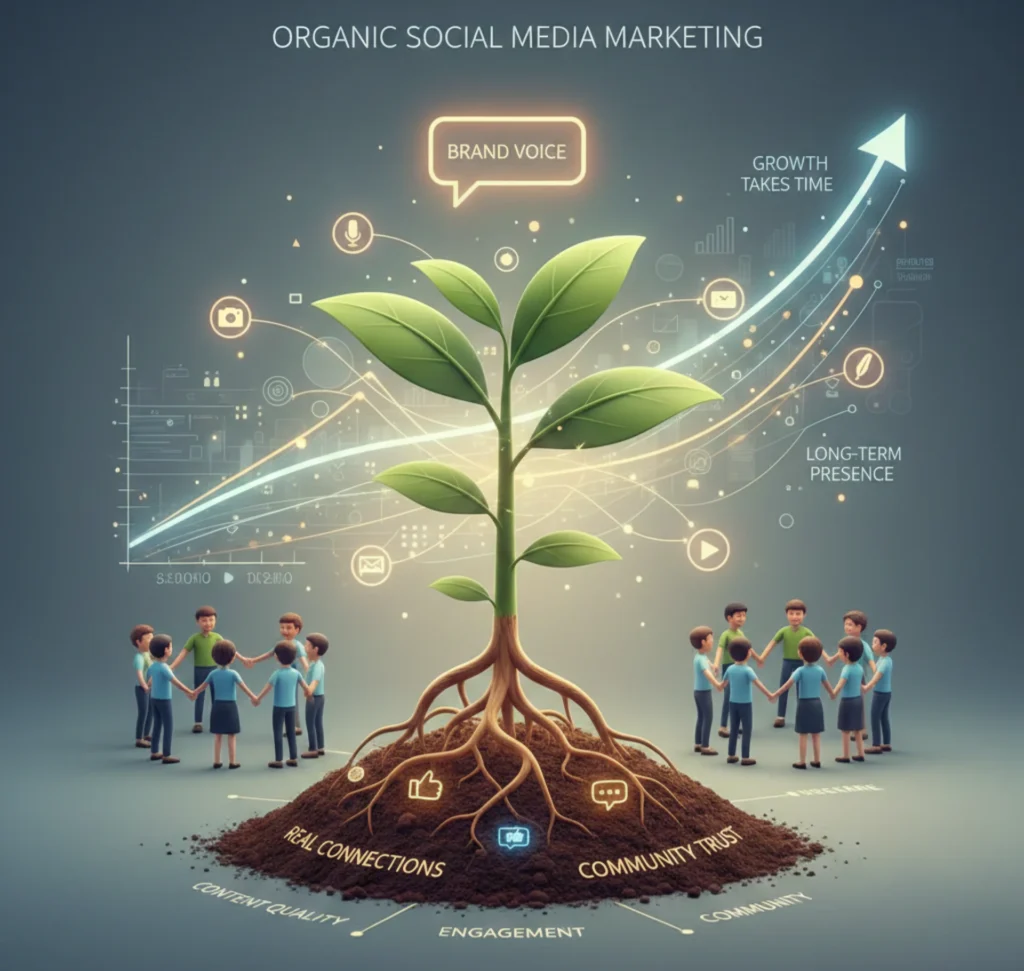
Organic social media builds real connections. It relies on content quality. Engagement drives reach. Algorithms favor interaction. Growth takes time.
This approach builds brand voice. It strengthens community trust. Organic reach is limited today. Consistency improves results. It supports long-term presence.
Benefits of Organic Social Media
Organic content builds credibility. It encourages conversation. Trust grows naturally. Costs remain low. Engagement improves loyalty.
Challenges include declining reach. Algorithms limit visibility. Results take patience. Content must stay consistent. Strategy matters more than ever.
Paid Social Media Marketing
Paid social media boosts visibility fast. It bypasses algorithm limits. Targeting improves relevance. Results appear quickly. This supports campaigns.
Costs depend on competition. Testing improves performance. Creative quality matters. Paid social scales easily. It balances organic reach.
Organic Search vs Paid Search
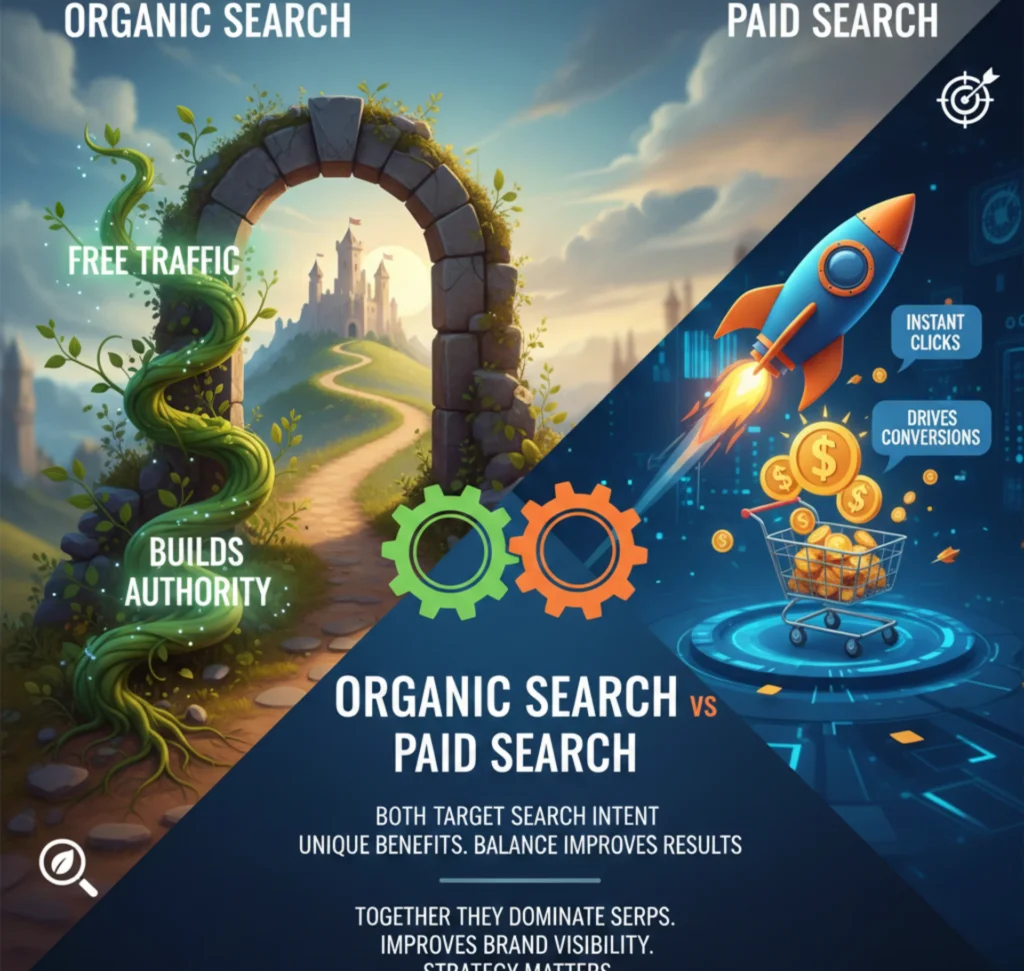
Organic search delivers free traffic. Paid search delivers instant clicks. Both target search intent. Each has unique benefits. Balance improves results.
Organic search builds authority. Paid search drives conversions. Together they dominate SERPs. This improves brand visibility. Strategy matters.
How to Balance Organic and Paid Marketing
Balance starts with audience understanding. Goals guide budget decisions. Data drives optimization. Testing improves results. Balance increases ROI.
Successful brands align both channels. Organic builds trust. Paid drives scale. Together they perform better. This is the heart of Organic vs Paid Marketing.
Emerging Trends in Organic and Paid Marketing
Voice search is growing fast. AI improves targeting. Automation saves time. Data drives decisions. Trends shape strategy.
Brands must adapt quickly. Search behavior is changing. Personalization matters more. Technology supports efficiency. Staying updated is key.
Understanding the Core Difference Between Organic and Paid Marketing
The main difference between organic and paid marketing lies in time and cost. Organic marketing grows slowly and focuses on trust. Paid marketing delivers quick visibility but needs a budget. Both approaches target different stages of the customer journey. Knowing this difference helps businesses plan better.
Organic vs Paid Marketing is not about choosing one side. Using the appropriate approach at the appropriate moment is crucial. Organic builds authority and credibility. Paid supports fast growth and promotions. A smart balance brings sustainable success.
Why Organic Marketing Builds Long-Term Brand Trust
Organic marketing earns attention instead of buying it. Audiences trust brands that provide value consistently. Search engines also reward helpful content. This makes organic growth stable and long-lasting. Trust increases conversions over time.
Content like blogs, SEO pages, and organic social posts feel natural. They educate users before selling. This builds strong relationships. Over time, brands become industry leaders. That is the real power of organic marketing.
How Paid Marketing Drives Instant Traffic and Sales
Paid marketing works fast and delivers immediate results. Ads appear exactly where users are active. This makes it ideal for launches and offers. Paid campaigns target high-intent users. Conversions happen quicker.
Paid strategies include PPC ads and paid social campaigns. Budgets control reach and scale. Performance is easy to track. Businesses can test creatives quickly. This makes paid marketing highly flexible.
Cost Comparison: Organic vs Paid Marketing Investment
Organic marketing costs more time than money. It requires consistency and patience. Results grow slowly but last longer. Maintenance costs remain low. ROI improves over time.
Paid marketing depends on ongoing spend. When ads stop, traffic stops. Costs increase with competition. However, results are predictable. This makes paid useful for short-term goals.
Choosing the Right Strategy Based on Business Goals
Different goals need different strategies. Organic marketing suits long-term brand building. Paid marketing suits fast growth and lead generation. Goals decide the approach. One size does not fit all.
Startups often use paid marketing first. Established brands rely more on organic reach. Combining both gives better control. Strategy should evolve with growth. This ensures better marketing performance.
How to Combine Organic and Paid Marketing Effectively
The best results come from integration. Paid data can improve organic keyword strategy. Organic content can fuel paid ads. This creates synergy. Performance improves across channels.
For example, top-performing blogs can be promoted with ads. Paid search can test keyword intent. Organic SEO then targets winning terms. This reduces risk. It also improves ROI.
Measuring Success in Organic vs Paid Marketing
Tracking performance is essential for growth. Organic success is measured through traffic and rankings. Paid success focuses on clicks and conversions. Both need analytics. Data guides decisions.
Use tools like Google Analytics and ad dashboards. Compare cost, traffic, and ROI. Adjust strategies regularly. Testing improves outcomes. Measurement keeps marketing profitable.
Discover How Mugenz Transforms Marketing with Technology
Ready to maximize your growth with a smarter approach? Mugenz leverages innovative technology to deliver powerful results across healthcare, NGOs, and real estate. Their data-driven strategies ensure every campaign is optimized for impact, whether it’s raising awareness, generating leads, or engaging your audience. By combining insights from both Organic vs Paid Marketing, Mugenz helps brands create the perfect balance between trust, authority, and rapid visibility. Start transforming your marketing strategy today and experience measurable results that truly make a difference.
Conclusion
There is no single formula for marketing success. The key lies in balancing Organic vs Paid Marketing to build trust while driving fast, measurable results. Organic strategies strengthen long-term authority, nurture relationships, and create sustainable growth. Paid marketing delivers immediate visibility, targeted reach, and quick conversions. Together, they form a strategy that is both powerful and adaptable.
The smartest brands, like those leveraging Mugenz’s innovative technology, combine both methods strategically. They analyze data, test campaigns, and refine continuously across channels like healthcare, NGOs, and real estate. Every decision focuses on value, audience impact, and measurable results. By integrating insights from organic and paid efforts, businesses can maximize reach, engagement, and ROI. This thoughtful balance is the ultimate way to succeed in today’s competitive digital landscape.
FAQs
1. What is the difference between organic and paid marketing?
Organic marketing focuses on attracting customers naturally through content, SEO, and engagement. Paid marketing delivers quick visibility through ads and sponsored campaigns. While organic builds trust over time, paid provides instant results. Combining both strategies ensures sustainable growth and faster conversions. This balance is essential in Organic vs Paid Marketing strategies.
2. Which is more cost-effective: organic or paid marketing?
Organic marketing requires more time and effort but has lower ongoing costs. Paid marketing requires a budget for clicks, impressions, or ad placements. While paid gives faster results, organic efforts continue to deliver long-term ROI. The best approach often combines both to balance cost and performance. Smart planning helps maximize the benefits of Organic vs Paid Marketing.
3. How can I use organic and paid marketing together effectively?
Start by using paid campaigns to test keywords and messaging. Then, optimize organic content based on data insights. Repurpose high-performing organic content for paid ads to increase reach. Track performance across channels and refine regularly. Combining strategies ensures better results in Organic vs Paid Marketing.
4. How long does it take to see results from organic marketing?
Organic marketing usually takes weeks or months to show significant results. SEO, content marketing, and social engagement gradually improve visibility and trust. Paid marketing delivers immediate traffic but does not replace organic growth. Using both together accelerates overall performance. Understanding this timeline is crucial in planning Organic vs Paid Marketing strategies.
5. Can paid marketing hurt my organic strategy?
No, paid marketing does not hurt organic efforts if used strategically. In fact, paid campaigns can provide insights for organic content and keyword strategy. They complement each other by combining quick reach with long-term authority. Proper tracking ensures both channels work together. Integrating both methods strengthens overall Organic vs Paid Marketing performance.