Introduction
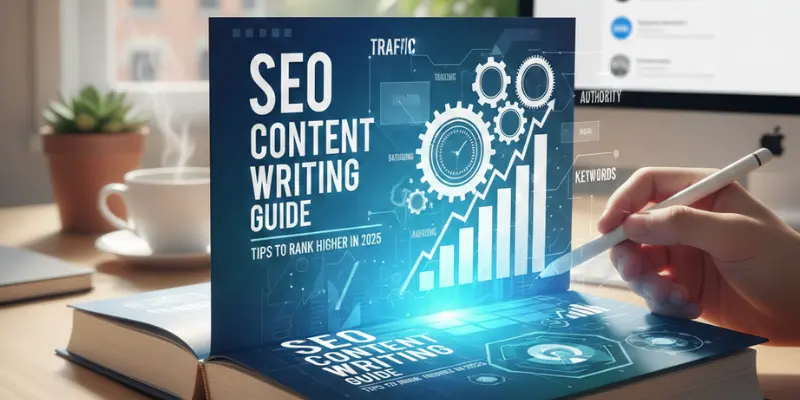
If your content is not ranking on Google, it is missing the audience it was meant to reach and that often leads to missed growth opportunities. In 2025, SEO writing goes far beyond placing keywords into paragraphs. It focuses on creating helpful, engaging, and well-structured content that delivers real value to readers while meeting search engine standards. Brands that invest in strong SEO writing can improve visibility, attract qualified traffic, and build long-term authority in their industry. This guide will walk you through practical strategies that help your content rank higher, keep readers engaged, and turn visits into meaningful results.
Why Mastering SEO Writing Is Essential in 2025
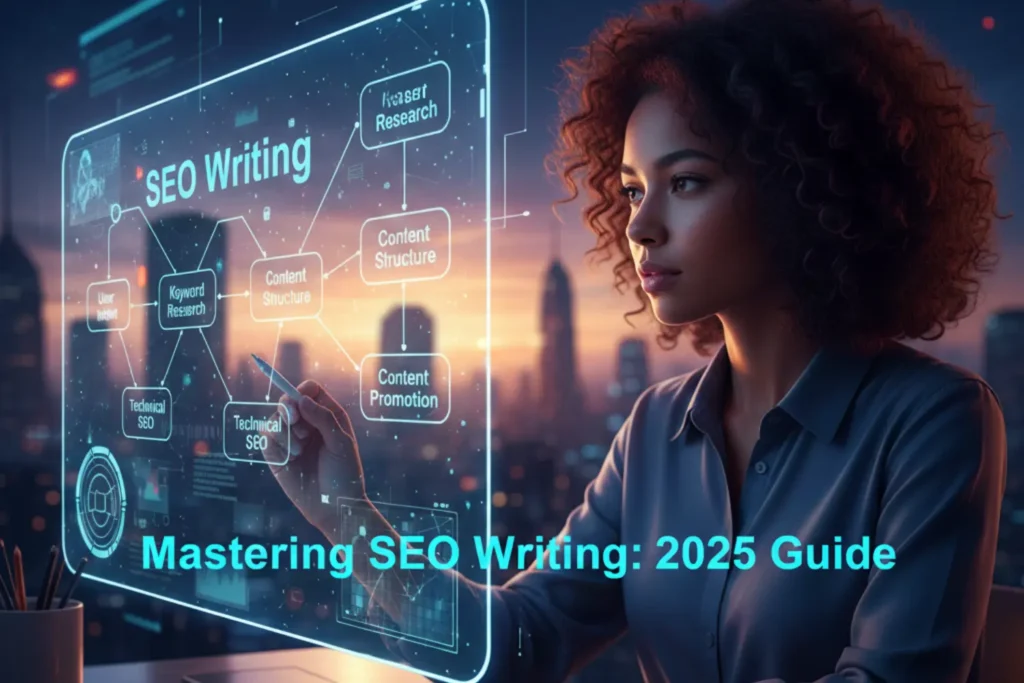
Search engines are evolving quickly, and so are user expectations. Today’s SEO success depends on understanding user intent, writing clearly, and optimizing content for both people and algorithms. Whether you are just starting with SEO or looking to sharpen your skills, mastering SEO writing will help you stay competitive in 2025. In this guide, you will learn how to research keywords, structure content for readability, apply technical SEO best practices, and promote your content effectively. By the end, you will have a clear, step-by-step approach to create content that performs consistently and delivers lasting value.
Understanding SEO Content Writing
What is SEO Content Writing?
SEO writing is the process of creating content that ranks well on search engines while genuinely helping readers. It combines keyword research, user intent, and clear writing to ensure content is easy to find and easy to read. Instead of focusing only on search engines, SEO writing puts equal importance on audience needs and experience. This type of content includes blogs, landing pages, service pages, product descriptions, guides, and FAQs. When done correctly, SEO writing connects businesses with users who are actively searching for solutions.
Good SEO content writing focuses on relevance and clarity. It answers real questions and solves real problems for the audience. Search engines prefer content that is useful, structured, and trustworthy. That is why SEO writing is not just a technical task but a strategic skill. It helps brands build visibility, trust, and authority over time.
Practical Approach to SEO Content Writing
A practical SEO writing approach starts with research. This includes understanding your audience, identifying search intent, and selecting the right keywords. Once the research is done, keywords are placed naturally in headings, body text, URLs, and meta data. The content is then structured using proper headings so search engines can easily understand the topic. This process improves both rankings and user experience.
However, effective SEO writing is not about keyword stuffing or robotic language. It focuses on clarity, flow, and usefulness. Content should feel natural and engaging while still being optimized. Search engines reward pages that answer questions clearly and keep users engaged. This leads to higher rankings, better click-through rates, and more conversions.
Why SEO Content Writing Matters for Online Growth
Without SEO, even high-quality content can go unnoticed. SEO writing ensures your content reaches the right audience at the right time. By ranking higher on search engines, your website gains more visibility and organic traffic. This makes it easier for potential customers to discover your services or products. In competitive industries, visibility can be the difference between growth and stagnation.
SEO content writing is especially important for sectors like healthcare, NGOs, and real estate. These industries rely heavily on trust, credibility, and accurate information. Well-optimized content positions your brand as a reliable source. A single well-written blog or service page can attract qualified leads consistently. Over time, this creates a steady pipeline of organic traffic and opportunities.
The Long-Term Value of SEO Writing
One of the biggest advantages of SEO writing is its long-term impact. Unlike paid ads, SEO content continues to bring traffic even after publication. Once your content ranks, it can generate leads and awareness for months or years. Because of this, SEO writing is an affordable marketing tactic. Businesses gain ongoing value without repeated spending.
SEO writing also builds authority and trust over time. When users repeatedly find helpful content on your site, they are more likely to return. This improves brand loyalty and strengthens your online reputation. Search engines recognize this positive engagement and reward it with better rankings. In the long run, SEO writing supports sustainable growth, not just quick wins.
Key Principles for Effective SEO Content Writing
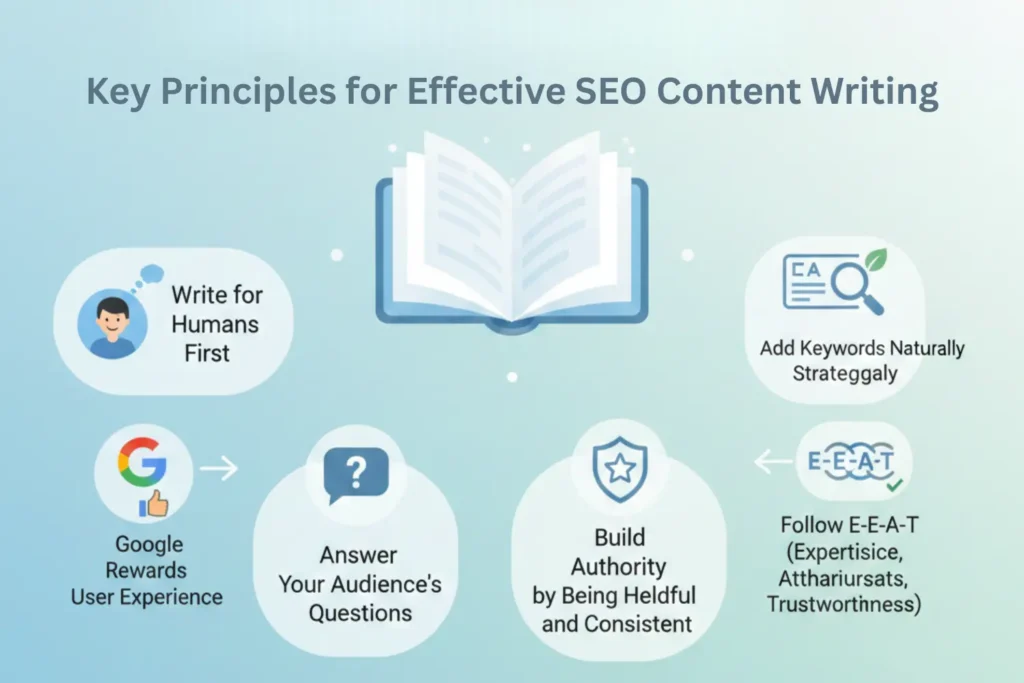
Write for Humans First
If your content does not connect with real people, it will struggle to perform, no matter how well it is optimized. Readers should feel that you are speaking directly to them, not writing for a machine. Use simple words, short sentences, and a friendly tone that feels natural. Examples, real-life scenarios, and practical advice make content easier to understand and more relatable. When readers feel understood, they are more likely to stay, read, and take action.
Human-focused SEO writing also improves engagement metrics. People spend more time on pages that feel helpful and easy to read. They scroll, click internal links, and share content they find valuable. These signals tell search engines that your content deserves attention. Writing for humans first is not just good practice, it is essential for long-term SEO success.
Google Rewards Great User Experience in SEO Writing
Google’s algorithms are built to measure how users interact with content. If readers stay longer on your page, explore other sections, and return to your site, Google sees this as a positive signal. User experience includes page layout, readability, mobile friendliness, and content clarity. Even the best keywords will not help if users leave quickly. This is why experience and engagement matter so much in SEO writing.
The strongest SEO content combines technical optimization with natural communication. Keywords, headings, and internal links support the content, but they should never overpower it. SEO writing works best when it feels effortless to read. This balance of structure and creativity is what turns good content into high-performing content. A human-first mindset creates results that last.
Answer Your Audience’s Questions
Content performs best when it solves real problems. Start by identifying the questions your audience is already asking online. Keyword research tools, Google’s “People Also Ask,” and search suggestions can guide you. Once you know what users want, create content that gives clear and complete answers. Organize answers using headings, bullet points, and short paragraphs.
When answers are easy to find, readers trust your content more. This structure also increases your chances of appearing in featured snippets. Featured snippets place your content above regular search results. This boosts visibility and click-through rates. Answer-focused content helps both users and search engines at the same time.
Build Authority by Being Helpful and Consistent
When people repeatedly find helpful answers on your site, they begin to trust your brand. Over time, this trust turns into authority. Readers are more likely to return, share your content, and recommend it to others. Authority grows when content is accurate, consistent, and genuinely useful. This is a key part of successful SEO writing.
Search engines notice these positive engagement signals. Consistent value leads to better rankings and stronger brand recognition. Authority is not built overnight, but each helpful article adds to it. When your content consistently meets user needs, search engines reward your efforts. This creates a strong foundation for long-term growth.
Add Keywords Naturally and Strategically
Keywords guide search engines, but they must be used carefully. Focus on your main keyword, such as SEO writing, and support it with related terms like content writing, SEO copywriting, and on-page SEO. Place keywords naturally in headings, introductions, and body text. They should fit smoothly into sentences without disrupting the flow. Forced keywords reduce readability and hurt user experience.
Strategic placement helps search engines understand your topic clearly. It also keeps your content reader-friendly. Always prioritize meaning over repetition. When keywords feel natural, both readers and search engines respond positively. This is the safest and most effective way to optimize content.
Keyword placement checklist:
- In the H1 and at least one H2
- Within the first 100 words
- In meta titles and meta descriptions
- In image alt text
- Naturally throughout the content
Follow E-E-A-T (Expertise, Experience, Authoritativeness, Trustworthiness)
Google values content that demonstrates real knowledge and credibility. Show expertise by explaining topics clearly and accurately. Use data, examples, and insights based on experience. Authoritativeness grows when reputable websites link to your content. Trustworthiness comes from transparency, correct information, and a professional online presence.
E-E-A-T is especially important for healthcare, NGOs, and real estate. These industries affect people’s lives and decisions. Users want reliable information from trustworthy sources. Strong E-E-A-T improves both rankings and conversions. When people trust your content, they trust your brand.
Use Clear and Compelling Headlines & Meta Descriptions
The first thing people notice about your content is your headline. It should be clear, engaging, and keyword-focused. A good headline tells readers exactly what they will gain by clicking. Meta descriptions support the headline by explaining the value of the content. Together, they influence click-through rates.
Think of headlines and meta descriptions as mini ads. They compete with many other results on the search page. Keeping headlines under 60 characters and meta descriptions under 160 characters improves visibility. Strong wording can significantly increase clicks. Even small improvements here can lead to big SEO gains.
Structuring Content for Maximum Impact
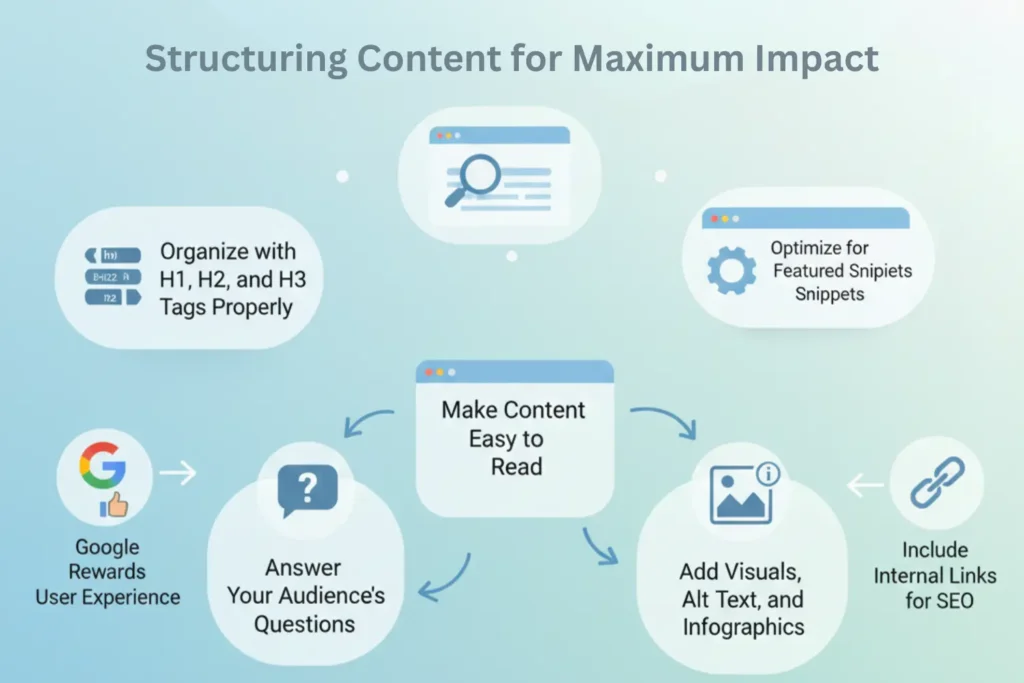
Organize with H1, H2, and H3 Tags Properly
Heading tags play a major role in how both readers and search engines understand your content. The H1 tag should clearly define the main topic of the page and include your primary keyword where possible. H2 tags break the content into main sections, while H3 tags organize supporting points within those sections. This structure helps search engines scan your page and understand the relationship between topics. Using headings correctly improves your chances of ranking for related search terms.
Proper heading structure also improves the user experience. Readers often scan content before deciding to read it fully. Clear headings allow them to find relevant information quickly. This lessens annoyance and prolongs user engagement. Well-organized content also looks more professional and trustworthy. Avoid using multiple H1 tags, as it can confuse search engines and weaken SEO signals.
Optimize for Featured Snippets
Featured snippets appear at the very top of Google search results and can significantly increase visibility. To optimize for them, focus on providing clear and direct answers to common questions. Keep answers short, usually between 40 and 60 words, and place them near relevant headings. Lists, tables, and step-by-step instructions work especially well for snippet optimization. Including your focus keyword naturally strengthens relevance.
Earning a featured snippet helps position your content as an authority. It often attracts more clicks than standard organic results. Even if you rank below competitors, a featured snippet can place your content above them. This makes snippet optimization a powerful SEO writing technique. It is one of the fastest ways to improve traffic and brand recognition.
Make Content Easy to Read
Readability determines whether users stay on your page or leave quickly. Content should be easy to scan and simple to understand, even for first-time readers. Short sentences, clear wording, and logical spacing improve comprehension. Breaking content into sections with headings keeps readers engaged. A conversational tone makes complex topics feel approachable.
Readability also affects SEO performance. Users’ interactions with material are monitored by search engines. If users stay longer and scroll through the page, it sends positive signals. Tools like the Hemingway Editor and Grammarly can help improve clarity. Clean, readable content performs better across all devices. This makes readability a core part of effective SEO writing.
Avoid:
- Overusing technical jargon
- Long, unbroken blocks of text
- Complex sentence structures
Follow:
- Short paragraphs
- Bullet points and lists
- Visual elements like images and charts
Add Visuals, Alt Text, and Infographics
Information is more engaging and easier to understand when it is presented visually. Images, charts, and infographics help explain ideas that are difficult to express with text alone. Visuals also break up long sections and reduce reader fatigue. Including visuals increases the time users spend on your page. This improves both user experience and SEO performance.
Alt text is just as important as the visual itself. It facilitates search engines’ comprehension of the image’s meaning. Additionally, alt text enhances accessibility for screen reader-dependent users. Use clear, descriptive language and include keywords naturally. In modern SEO writing, visuals and alt text work together to strengthen content quality.
Include Internal Links for SEO
Internal linking makes it easier for visitors to find relevant content on your website. This improves navigation and makes it easier for readers to explore additional topics. Internal links also help search engines crawl your site more efficiently. They pass authority from one page to another, improving overall SEO strength. Using descriptive anchor text makes links more meaningful and effective.
Strategic internal linking keeps users engaged longer. When readers move between pages, it reduces bounce rates. This behavior signals to search engines that your site offers valuable information. Internal links also support topic clustering, which strengthens content relevance. When used correctly, internal linking boosts rankings and user experience at the same time.
Technical On-Page SEO Essentials
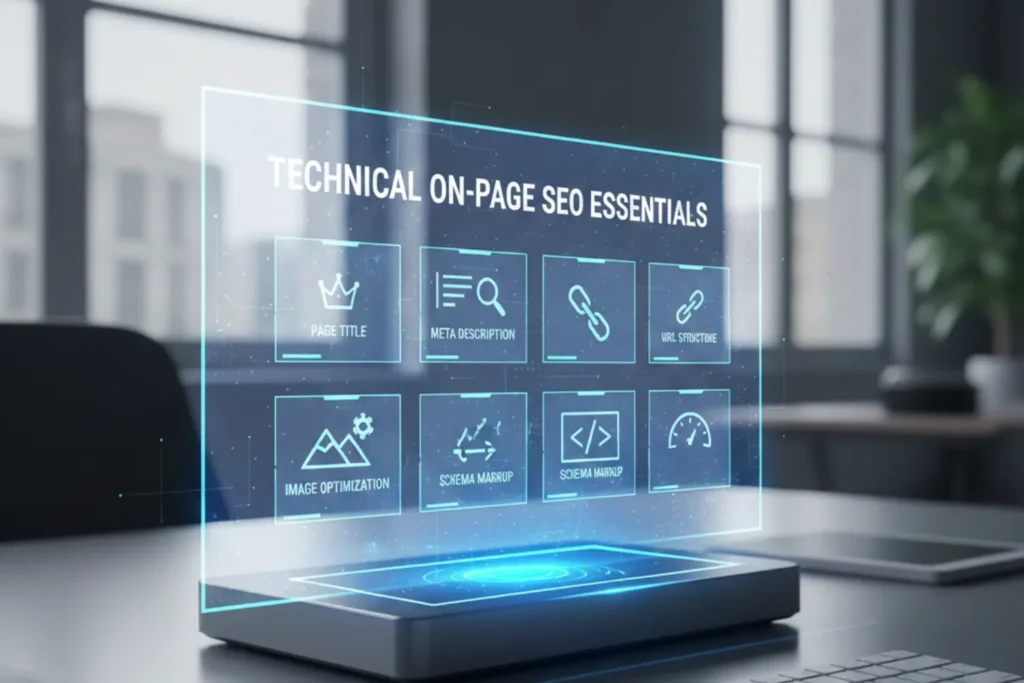
Technical on-page SEO ensures that search engines can easily crawl, understand, and rank your content. Even the best-written content may struggle if technical elements are ignored. These essentials support your SEO writing efforts and improve overall page performance. When implemented correctly, they help increase visibility, click-through rates, and user experience. Below are the most important technical elements to focus on.
Page Title
The page title tells search engines and users what your content is about. In search results, it shows up as the clickable headline. Including your primary keyword in the title improves relevance and ranking potential. Keep it clear, descriptive, and under 60 characters. A strong page title can significantly increase clicks.
Meta Description
Meta descriptions summarize your content in search results. While they do not directly affect rankings, they strongly influence click-through rates. Users are encouraged to click on your link by a well-written meta description. Keep it under 160 characters and include your main keyword naturally. Treat it as a short advertisement for your content.
URL Structure
URLs should be simple, readable, and keyword-focused. Short URLs perform better because they are easier to understand and share. Steer clear of superfluous symbols, digits, or lengthy word strings. Both visitors and search engines benefit from a clear URL. It also improves trust and usability.
Schema Markup
Schema markup improves the comprehension of your material by search engines. It allows your pages to appear with rich results, such as FAQs, reviews, and ratings. Using JSON-LD format is recommended by Google. Schema improves visibility and can increase click-through rates. It is especially useful for service-based and informational content.
Image Optimization
Images affect both page speed and user experience. Large image files can slow down your site, which hurts rankings. Compress images without reducing quality. Always add descriptive alt text with relevant keywords. This improves accessibility and helps images appear in search results.
Technical SEO Essentials Table
| Element | Purpose | Best Practice |
| Page Title | Defines page topic | Include primary keyword |
| Meta Description | Improves CTR | Keep under 160 characters |
| URL | Enhances SEO | Short and keyword-rich |
| Schema Markup | Improves SERP display | Use JSON-LD format |
| Image Optimization | Improves speed | Compress and add alt text |
Measuring & Improving Performance
Measuring performance is essential to understand what is working and what needs improvement. Tools like Google Analytics and Google Search Console help track important metrics. These include keyword rankings, organic traffic, bounce rate, and click-through rates. You can make wise selections by keeping an eye on this data. It also helps identify content gaps and optimization opportunities.
Improving performance is an ongoing process. Update older content with fresh information, better keywords, and improved structure. Refresh headlines, add internal links, and improve readability. Regular analysis ensures your SEO writing strategy stays effective. Continuous improvement leads to better rankings and long-term growth.
Common Mistakes to Avoid
Even small SEO mistakes can affect performance. Avoid keyword stuffing, as it harms readability and can trigger penalties. Ignoring mobile optimization can reduce traffic and rankings. Meta descriptions should never be skipped, as they improve click-through rates. Using outdated SEO tactics can hold your content back.
Avoid these common mistakes:
- Keyword stuffing
- Ignoring mobile optimization
- Neglecting meta descriptions
- Using outdated SEO techniques
- Failing to update existing content
Resolving these problems enhances search visibility and user experience.
Boost Your Content Performance with MUGENZ
At MUGENZ, we help brands turn content into measurable growth. Our SEO writing strategies are designed specifically for healthcare organizations, NGOs, and real estate businesses. We create content that ranks well, builds trust, and drives qualified traffic. From keyword research to full content optimization, we handle every step.
If you want content that delivers real results, MUGENZ is your partner.
Contact us today to build an SEO content strategy that works for both search engines and your audience.
Conclusion
SEO writing in 2025 is no longer just about ranking on search engines. It is about creating meaningful content that genuinely helps users while following SEO best practices. When you write for humans first, use keywords naturally, and focus on structure and readability, your content performs better across all platforms. Consistent tracking and updates ensure your content stays relevant as search algorithms and user behavior change. By applying the strategies shared in this guide, you can create content that attracts traffic, builds trust, and turns readers into loyal customers.
Strong SEO writing supports long-term growth rather than short-term wins. It helps establish authority, improve brand visibility, and drive consistent organic traffic. Businesses that invest in quality SEO content gain a competitive advantage in their industry. Whether you are creating blogs, service pages, or guides, the right SEO approach delivers lasting results. With the right balance of strategy and creativity, SEO writing becomes a powerful tool for success.
FAQs
Q: What is the main purpose of SEO writing?
A: The main purpose of SEO writing is to create content that ranks well on search engines while offering clear, useful, and relevant information to readers.
Q: How do I choose the right keywords for my content?
A: Use keyword research tools, analyze competitor content, and focus on keywords with strong search volume and low competition that match user intent.
Q: How often should SEO content be updated?
A: SEO content should be reviewed and updated every 6 to 12 months to keep information accurate, improve rankings, and stay competitive.
Q: Is schema markup necessary for SEO writing?
A: Yes, schema markup helps search engines better understand your content and can improve visibility through rich search results.
Q: Can SEO writing help increase conversions?
A: Yes, well-optimized and user-focused SEO writing attracts the right audience and encourages them to take action, improving conversion rates.