How to Define Smart Marketing Objectives for Digital Success
In a digital world flooded with strategies, buzzwords, and trends, setting clear goals often gets lost in the noise. But if you want real success in digital marketing, you need more than a vision you need structure. This is where smart goals for digital marketing come in. These goals bring clarity, focus, and results. Let’s dive into how smart goals can guide your marketing journey.
Why Smart Goals Are Essential for Digital Marketing Growth
Smart goals give your digital marketing efforts a roadmap. Instead of vague ambitions like “grow our brand” or “get more leads,” smart goals help you set clear benchmarks. For example, “Increase organic website traffic by 20% in 3 months through SEO” is far more actionable. You know what you’re aiming for, how to measure it, and when it should happen. This structured approach reduces wasted effort and ensures your team is aligned. Whether you’re a small business, agency, or e-commerce brand, smart goals help you focus on what truly drives growth. They replace guesswork with data-driven direction.
Why Smart Goals Are the Cure for Reactive Marketing
Reactive marketing is an easy pitfall to slip into if you don’t have Smart goals. You chase every new trend, post content without a purpose, and run campaigns without clear outcomes. Burnout, financial waste, and lost opportunities result from this. Your mentality changes from busy to productive when you create smart objectives. They help you prioritize high-impact activities, track progress with precision, and pivot when needed. In today’s fast-paced digital environment, that kind of clarity is gold. If your team struggles to stay focused or measure ROI, smart goals are the missing piece that can transform your entire strategy.
Understanding Smart and Smarter Marketing Goals
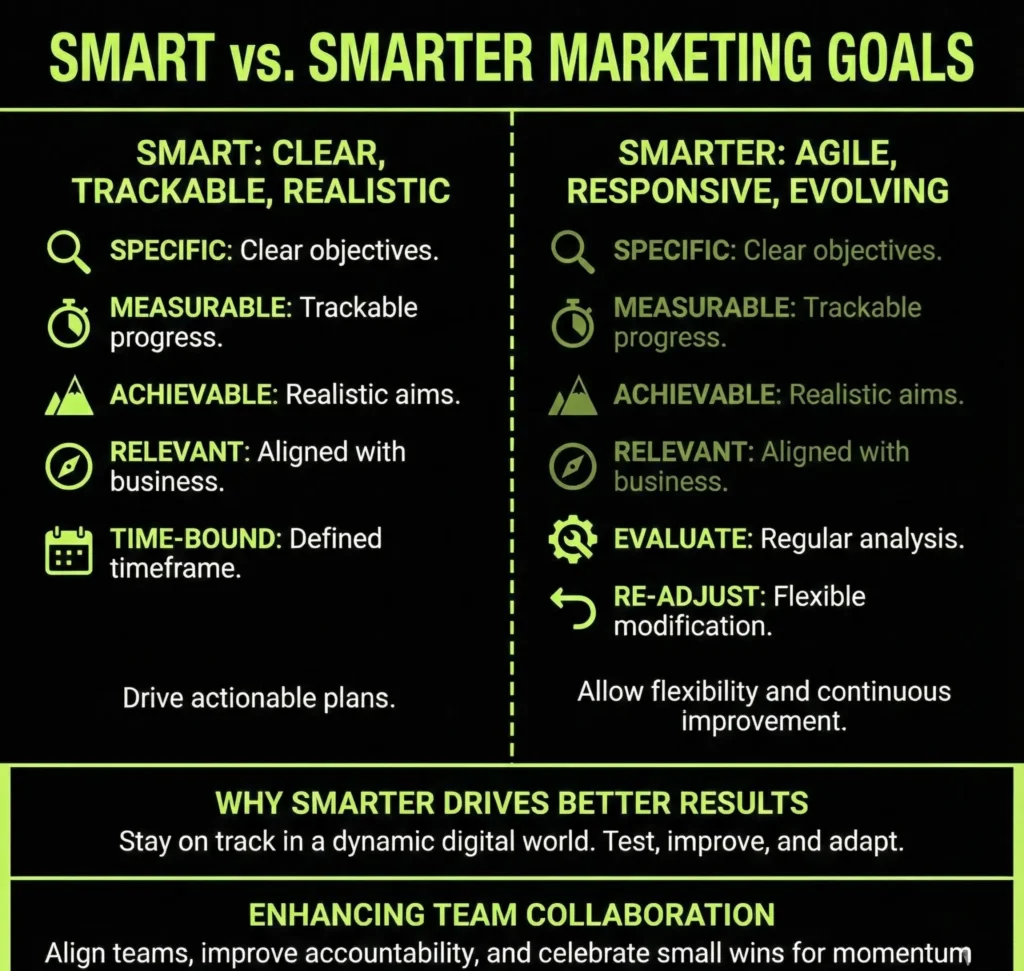
You may have heard of smart goals before, but how do they apply to digital marketing? Smart stands for creating goals that are clear, trackable, realistic, aligned with your objectives, and set within a defined timeframe. These five pillars help marketers define objectives that are not just dreams but actionable plans. Smarter takes it a step further by adding Evaluate and Re-adjust. This makes your goals more flexible and responsive to changes.
Why Smarter Goals Drive Better Results in a Dynamic Digital World
The difference can be the key to long-term success. Smarter goals allow room for analysis and continuous improvement. In the fast-changing digital space, that’s essential. You can test what works, improve what doesn’t, and stay on track. Smarter means you’re not just working hard; you’re working smart.
Why SMARTER Goals Keep Your Digital Strategy Agile and Effective
Smart goals give digital marketers a clear path to follow, while smarter goals ensure that path evolves with your business needs. For instance, after running a paid ad campaign, you might find that your original goal like generating 500 leads is either too ambitious or too easy. You remain successful and relevant by assessing your performance and modifying your approach. This flexibility is especially important in digital marketing, where algorithms, trends, and customer behavior can shift rapidly. Smarter goals keep your efforts grounded while allowing room for innovation and optimization.
Enhancing Team Collaboration Through SMARTER Marketing Goals
Another benefit of Smarter marketing goals is team alignment. When goals are clearly defined and evaluated regularly, every team member from content creators to PPC managers knows what they’re working toward. This improves collaboration, accountability, and performance across the board. It also boosts motivation because teams can celebrate small wins along the way. When your objectives are smarter, your team isn’t just busy they’re purpose-driven and results-focused. That’s how modern marketing teams build momentum and scale sustainably.
Breaking Down Smart Objectives in Digital Marketing
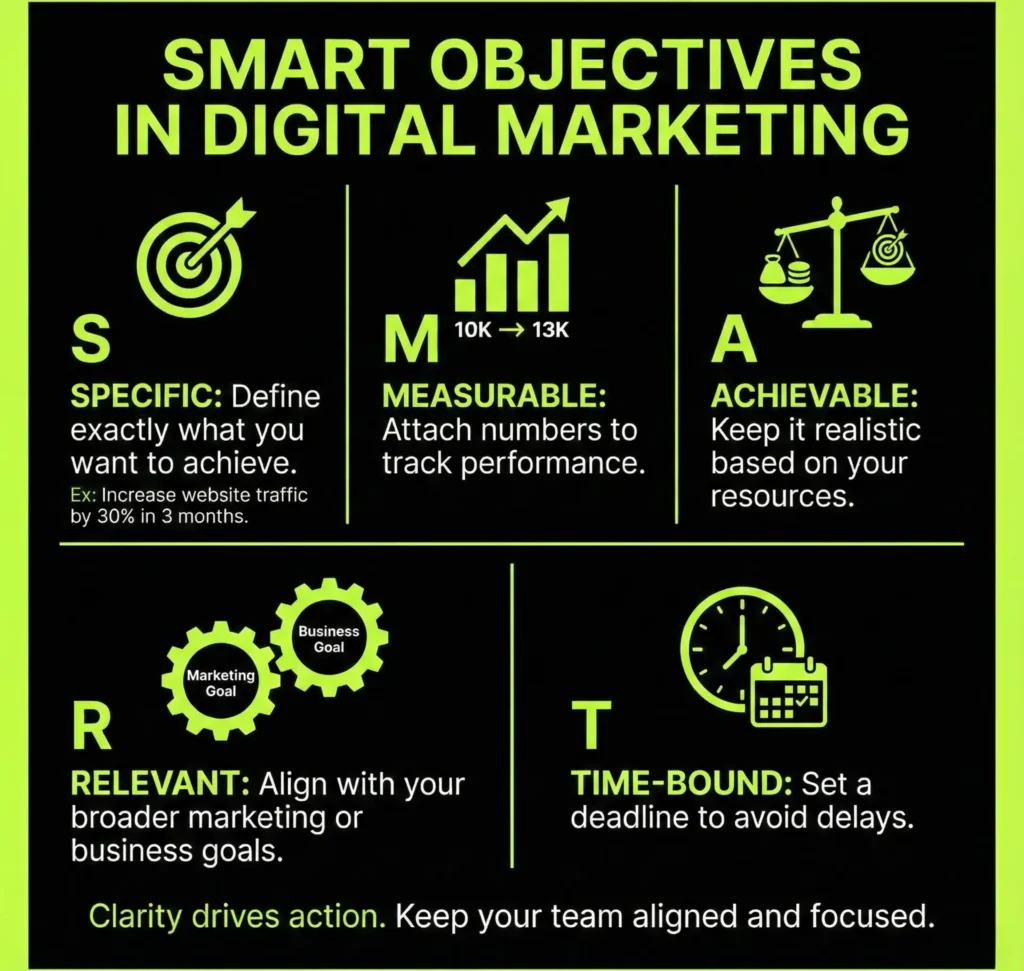
Clear goals make it easier to measure progress. Let’s break down the five smart pillars:
- Specific: Define exactly what you want to achieve
- Measurable: Attach numbers to track performance
- Achievable: Keep it realistic based on your resources
- Relevant: Align with your broader marketing or business goals
- Time-Bound: Set a deadline to avoid delays
Using these elements helps you avoid vague objectives. For example, “increase website traffic” is too general. A smart version would be, “increase website traffic by 30% in 3 months through SEO and content marketing.” This kind of clarity drives action. It keeps your team aligned and focused.
Turning SMART Goals into Actionable Marketing Plans
When you break your goals into smart components, you give your marketing team a blueprint they can act on. It guarantees that everyone is traveling in the same direction and clears up any doubt. For example, instead of saying “grow on social media,” a smart goal would be: “Increase Instagram followers by 15% in 60 days by posting three times a week and running one monthly giveaway.” This goal is specific, measurable, and time-bound and it’s realistic based on your team’s capacity. Smart goals also make it easier to report progress to stakeholders and justify your budget.
Stay Focused on What Matters: Measuring Real Results Over Vanity Metrics
Moreover, smart goals allow you to track ROI and adjust your efforts before it’s too late. If you’re not seeing results halfway through your timeframe, you can reallocate resources or tweak the strategy. This proactive approach improves efficiency and boosts overall campaign success. It also helps avoid the trap of “vanity metrics” numbers that look good but don’t actually drive business results. By staying focused on meaningful, smart objectives, you ensure your marketing activities support your business growth not just your online presence.
Applying the Race Framework to smart Goals
To make your smart goals even more effective, apply them within the race framework. Your client journey is represented by each stage. This framework helps you set goals tied to customer behavior and business outcomes. It bridges strategy with execution.
Here’s how you can use race with smart goals:
| Race Stage | Smart Goal Example |
| Reach | Increase website visitors by 20% in 60 days via social media ads |
| Act | Improve email signups by 15% in 45 days using lead magnets |
| Convert | Boost sales by 25% in 90 days through retargeting campaigns |
| Engage | Raise repeat purchase rate by 10% in 6 months with loyalty programs |
This method aligns your efforts with what really matters: your audience. You’re not just setting goals; you’re guiding users through a journey. That creates better engagement and stronger ROI.
9 Powerful Smarter Goal Examples for Digital Marketing
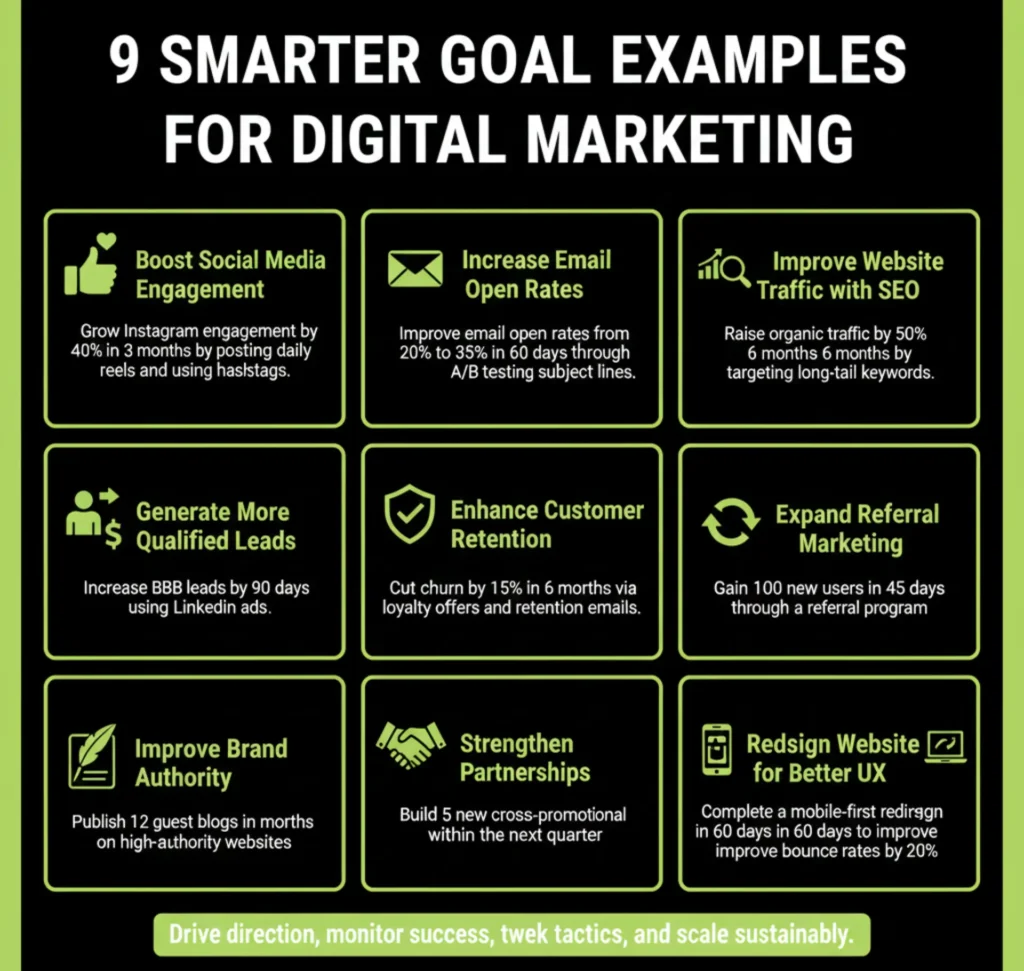
Need some inspiration? Here are nine smart goal examples you can use or adapt for your brand:
- Boost Social Media Engagement: Grow Instagram engagement by 40% in 3 months by posting daily reels and using hashtags.
- Increase Email Open Rates: Improve email open rates from 20% to 35% in 60 days through A/B testing subject lines.
- Improve Website Traffic with SEO: Raise organic traffic by 50% in 6 months by targeting long-tail keywords.
- Generate More Qualified Leads: Increase B2B leads by 30% in 90 days using LinkedIn ads.
- Enhance Customer Retention: Cut churn by 15% in 3 months via loyalty offers and retention emails.
- Expand Referral Marketing: Gain 100 new users in 45 days through a referral program.
- Improve Brand Authority: Publish 12 guest blogs in 4 months on high-authority websites.
- Strengthen Partnerships: Build 5 new cross-promotional partnerships within the next quarter.
- Redesign Website for Better UX: Complete a mobile-first redesign in 60 days to improve bounce rates by 20%.
Use these examples to build your own tailored goals. Smart goals bring direction to your strategy. You can monitor success, tweak your tactics, and keep scaling.
Design Tests and Alternative Smart Goal Frameworks
To ensure your smart goals are truly effective, use design tests. One popular method is the Ten Measures Test. Ask yourself:
- Is the goal clear to a team member?
- Can success be measured objectively?
- Will it affect key business metrics?
- Is the timeframe reasonable?
- Can we identify what needs to change?
There are also variations of smart. Some assign Action-Oriented to the A or substitute Agreed for Achievable. By making these adjustments, you may better match your objectives with the culture of your company. Choose a version that suits your style, but don’t lose focus on clarity and purpose.
Overcoming Common Goal-Setting Challenges
Even smart goals can face real-world hurdles. These include lack of resources, unclear KPIs, or poor execution. Sometimes, short-term pressure can cloud long-term thinking. To overcome these, break large goals into small tasks. Assign clear owners and deadlines.
To monitor progress, use programs like Google Sheets, Asana, or Trello. Weekly check-ins help you stay accountable. Always keep an eye on what’s working and what’s not. Be ready to shift gears if needed. Flexibility is a strength, not a weakness.
Aligning Smart Goals with Business Strategy
Your larger business plan must be reflected in your digital marketing objectives. If your business wants to enter new markets, your smart goals should support that. This could mean setting goals around brand visibility or lead generation. Sync marketing KPIs with core business outcomes. That’s how you show real ROI.
Consider these connections:
- Marketing Goal: Get 1,000 downloads of your app
- Business Goal: Increase monthly active users by 15%
When both align, your efforts drive value across departments. This creates a shared vision and reduces internal friction. Everyone works toward the same endgame. That leads to smarter, faster growth.
Expert Tips, Tools & Templates
Want to build smart goals faster? Use free tools like Google Analytics, HubSpot templates, or even Notion dashboards. These help you create, track, and refine goals. Don’t reinvent the wheel use what’s already working.
Here are a few resources:
- Smart Goal Planner Template
- Race Planning Framework (PDF)
- Smart Goal Generator Tool
For sector-specific advice:
- Healthcare: Focus on patient engagement metrics
- Real Estate: Set goals around lead conversions
- NGOs: Use donor retention and outreach KPIs
Explore guides tailored to your industry to get more focused outcomes.
How to Track and Measure Smart Goals Effectively
Once you’ve set your smart goals, the next step is tracking progress with precision. To keep an eye on performance, use analytics programs like SEMrush, HubSpot, or Google Analytics. Assign clear KPIs to each goal and review them weekly or monthly. Reports and dashboards make it simpler to understand what is effective and what requires improvement. Consistent tracking not only helps measure success but also builds a strong case for future campaigns and budget requests.
Track Performance with Data: The Key to SMART Goal Success
Monitoring metrics ensures your marketing strategy stays data-driven. If your goal was to increase conversions by 20% in three months, use heatmaps, funnel tracking, and A/B testing to assess progress. Visual tools like progress bars or charts can be shared with your team for motivation and alignment. Keep your metrics visible and accessible to boost accountability. Most importantly, celebrate milestones along the way they keep morale high and encourage continuous improvement. Smart goals lose power without proper measurement, so don’t skip this step.
Common Pitfalls to Avoid When Creating Smart Goals in Marketing
One major mistake marketers make is setting goals that are too broad or vague. For example, “get more engagement” is not actionable. Another common issue is being overly ambitious without the resources to execute the plan. While it’s good to aim high, unrealistic goals often lead to frustration and burnout. Start with achievable targets and build momentum over time.
Avoid Outdated Strategies: Keep Your SMART Goals Flexible and Impactful
Another pitfall is forgetting to evaluate and adjust. Digital marketing trends shift fast, and a goal set three months ago may no longer be relevant. Without flexibility, you risk wasting time and money on outdated strategies. Also, avoid focusing solely on vanity metrics like likes or impressions. Instead, prioritize KPIs tied to your business goals, like conversion rates or customer retention. By steering clear of these mistakes, your smart goals become a powerful tool for growth not just a checklist.
Tailoring Smart Goals to Your Industry: Healthcare, Real Estate & NGOs
Different industries have different challenges, so your smart goals should reflect that. In healthcare, goals might focus on patient engagement, appointment bookings, or health education awareness. For instance, a smart goal could be: “Increase online appointment bookings by 20% in 90 days via social media ads.” This is clear, measurable, and aligned with healthcare service delivery. Digital tools like automated scheduling and email campaigns can help achieve it.
Industry-Specific SMART Goals: Real Estate, NGOs, and Beyond
In real estate, Smart goals often revolve around lead generation or property views. A goal like “Generate 50 qualified leads in 30 days through PPC campaigns” keeps the focus sharp. Campaigns to raise awareness or retain donors may be NGOs’ top priorities. “Grow email subscriber list by 25% in 2 months through a cause-driven content campaign” is a fitting example. Tailoring smart goals to your niche ensures relevance, better ROI, and long-term digital marketing success. Industry context matters don’t overlook it.
Ready to Accelerate Your Growth?
At Mugenz, we partner with healthcare brands, real estate professionals, and NGOs to create clear, data-driven SMART goals that produce measurable results. Whether you want more leads, higher visibility, or stronger engagement, our tailored digital strategies help you grow with confidence.
Explore our full range of digital marketing solutions or book a free strategy consultation to get personalized guidance for your brand.
[Start Building Smarter Success with Mugenz]
Conclusion:
You can’t manage what you don’t measure—and that’s exactly why SMART goals are essential in digital marketing. They give your strategy direction, structure, and purpose, ensuring that every effort contributes to meaningful outcomes. With clear objectives, your team stays aligned, your decisions become data-driven, and your campaigns gain momentum. Whether your aim is to boost engagement, increase leads, or drive revenue, SMART goals help you track progress and refine your approach along the way. When your goals are specific, measurable, achievable, relevant, and time-bound, you set yourself up for consistent, predictable, and sustainable digital success.
FAQs
Q: What are smart goals in digital marketing?
They are clear, trackable goals that guide your strategy and measure success.
Q: How do I write a smart marketing objective?
Make sure it is time-bound, relevant, quantifiable, feasible, and detailed.
Q: Can I use smart goals for social media or SEO?
Yes, smart goals work well for any digital marketing channel.
Q: What is the race framework?
Reach, Act, Convert, and Engage are the main objectives of this planning tool.
Q: How often should I review and update smart goals?
Review them monthly or quarterly to stay aligned with your strategy.