Introduction: Why Brands Miss What Customers Are Already Saying
Your customers are already telling you what they want through social media, forums, reviews, and comment sections every single day. Social listening tools help brands capture and analyze these conversations to understand real customer needs, emotions, and intent. Most brands miss these insights because they are not listening in the right way.
Think about the last time you launched content that did not perform well. In most cases, it failed because it did not align with what customers actually cared about. Social listening tools close this gap by revealing what people want to see, read, and talk about before content is created. When brands listen first, their content feels relevant, natural, and valuable instead of forced.
What Are Social Listening Tools and Why They Matter
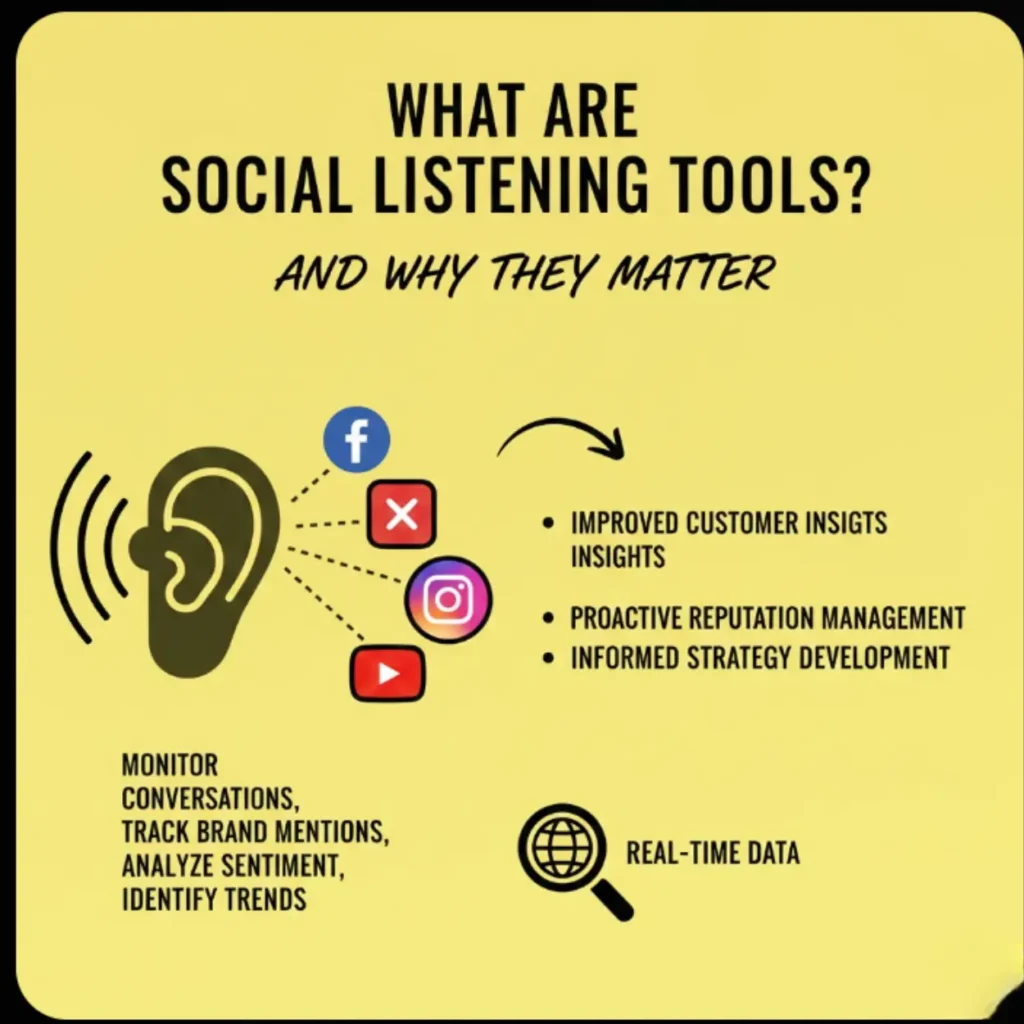
Social listening is the process of tracking online conversations about your brand, competitors, and industry. It goes beyond likes and comments to analyze sentiment, trends, and intent. You learn not just what people say, but why they say it. This insight helps you create better content, products, and campaigns.
Unlike basic monitoring, social listening tools analyze patterns over time. They help you identify pain points, emerging topics, and unmet needs. Brands that use social listening make smarter decisions faster. This leads to higher engagement and stronger customer trust.
Social Listening Tools vs Social Media Monitoring
- Monitoring tracks mentions
- Listening analyzes meaning
- Listening drives strategy
How Social Listening Tools Work Behind the Scenes
Social listening tools scan millions of public data points across platforms. They collect posts, comments, reviews, and discussions in real time. These tools then organize data into themes and sentiment categories. You get dashboards that show trends instead of raw noise.
Advanced platforms use keyword tracking and context analysis. This allows brands to understand emotions and intent. You can see what content formats perform best. You also spot gaps competitors are missing.
Why US-Based Brands Need Social Listening Tools More Than Ever
The US market is crowded and highly competitive. Customers have more choices and louder voices. If you ignore conversations, your competitors will not. Social listening tools help US brands stay culturally relevant.
Consumer expectations change fast in the US. Trends can rise and fall within weeks. Social listening lets brands adapt content and messaging quickly. This keeps campaigns aligned with real demand.
Finding Content Ideas Using Social Listening Tools
Social listening tools reveal what people ask repeatedly. These repeated questions are content opportunities. You can build blogs, videos, and posts around them. This reduces guesswork and improves performance.
Instead of guessing keywords, you see real language customers use. This helps with SEO and conversions. Your content feels natural and helpful. Audiences respond better to that.
Content Ideas You Can Extract
- FAQs people repeat
- Common complaints
- Feature requests
- Trending topics
How Social Listening Tools Help You Understand Customer Intent
Customer intent explains why people take action online. Social listening tools reveal intent by analyzing the language, tone, and context of conversations. You can see whether users are researching, comparing, or ready to buy. This insight helps you tailor content and offers more accurately. Intent-based content performs better across all channels.
Understanding intent also improves personalization. You can create content that matches different customer journey stages. Awareness content educates, while decision-stage content converts. Social listening removes assumptions from intent analysis. This leads to higher engagement and stronger conversions.
Using Social Listening Tools to Improve Customer Experience
Customer experience extends beyond your website or app. Many customers share experiences publicly after interactions with your brand. Social listening tools help capture this feedback in real time. You learn where customers feel frustrated or delighted. These insights help improve experiences quickly.
Brands can identify service gaps before they escalate. Quick responses show customers you care. This builds trust and loyalty over time. Improved experience leads to better reviews and referrals. Listening becomes part of customer care.
How Social Listening Tools Help Different Teams
| Team | How Social Listening Helps |
| Content Marketing | Finds trending topics and content ideas |
| SEO Team | Discovers low-competition keywords |
| Product Team | Identifies feature requests and issues |
| Customer Support | Detects recurring complaints early |
| Brand Management | Tracks brand sentiment in real time |
How Social Listening Tools Support Campaign Planning
Campaign planning works best when based on real audience interest. Social listening tools show which topics trend before campaigns launch. You can test messaging ideas by monitoring reactions to similar content. This reduces campaign risk. Planning becomes smarter and more strategic.
Listening also helps refine campaign timing. You learn when conversations peak. Launching campaigns during high-interest periods improves reach. Results become more predictable. Campaign ROI improves consistently.
Social Listening Tools Across Multiple Platforms
Customers talk about brands on many platforms. Social listening tools track conversations across social media, forums, blogs, and review sites. This gives a complete view of audience sentiment. No single platform tells the full story. Cross-platform listening ensures accuracy.
Different platforms reveal different insights. Twitter shows real-time reactions. Reddit and forums reveal deeper opinions. Reviews highlight product experiences. Combining these sources strengthens decision-making.
Using Social Listening Tools to Build Trust and Transparency
Trust is built through listening and responding. Social listening tools show customers that brands care. Responding publicly to feedback increases transparency. This strengthens brand credibility. Customers appreciate honest engagement.
Brands that listen openly appear more human. They acknowledge mistakes and improve publicly. This builds long-term trust. Transparency becomes a competitive advantage. Listening supports authentic relationships.
Social Listening Tools for Crisis Prevention and Management
Brand crises often start as small signals. Social listening tools detect negative trends early. You can identify rising complaints or sentiment shifts. Early action prevents escalation. This protects brand reputation.
During crises, listening guides response strategy. You understand public concerns clearly. Messaging becomes more accurate and empathetic. Post-crisis analysis improves future preparedness. Listening strengthens resilience.
How Social Listening Tools Drive Long-Term Brand Growth
Sustainable growth depends on relevance. Social listening keeps brands aligned with customer needs. It helps adapt strategies as markets change. Growth becomes steady instead of reactive. Listening supports long-term planning.
Brands that listen evolve faster. They innovate based on real demand. This builds stronger market positioning. Growth becomes customer-driven. Listening becomes a core business asset.
Social Listening Tools Best Practices for Maximum Impact
Effective social listening requires structure. Start with clear goals and focused keywords. Avoid tracking everything at once. Prioritize quality insights over volume. This improves clarity.
Review insights regularly and act consistently. Share findings across teams. Measure outcomes over time. Continuous improvement drives results. Best practices turn listening into success.
Understanding Customer Pain Points Through Conversations
Customers often express frustration publicly through social media posts, comments, reviews, and forum discussions. These moments reveal unmet needs that customers may never share through surveys or direct feedback. Social listening tools help you capture, organize, and analyze this unfiltered feedback at scale. Instead of seeing isolated complaints, patterns start to emerge across platforms and time. These patterns clearly highlight what is broken, confusing, or missing in your product or content.
When you address customer pain points directly in your content, trust increases naturally. Customers feel heard when they see their exact problems acknowledged and explained. This builds emotional connection and long-term brand loyalty. It also helps position your product or service as a solution, not just a promotion. Brands that solve real pain points consistently outperform those that only talk about features.
Example pain points you can uncover through social listening:
- Confusing pricing or plans
- Missing features customers expect
- Poor onboarding experiences
- Slow customer support responses
How Social Listening Tools Improves Your Content Strategy
A strong content strategy always starts with deep audience insight. Social listening tools provide that insight continuously, not just once or twice a year. You learn which topics spark discussion, which formats get shared, and which messages fall flat. This removes guesswork from content planning and replaces it with real data. As a result, your content becomes more accurate and more relevant.
Instead of chasing trends blindly, you follow proven audience signals. Your content calendar becomes data-driven rather than assumption-based. You can prioritize topics people already care about and search for. Engagement improves because relevance improves across every platform. Over time, this creates sustainable growth instead of short-term spikes.
Ways social listening strengthens content strategy:
- Identifies high-interest topics before competitors
- Reveals audience language for better SEO
- Shows preferred content formats
- Helps refine tone and messaging
Using Social Listening for Product and Feature Validation
Customers often suggest new features without realizing it. They talk about frustrations, workarounds, and things they wish existed. Social listening tools collect these insights across thousands of conversations. Product teams can then validate ideas using real customer demand instead of internal assumptions. This makes decision-making faster and more confident.
This approach reduces risk before development begins. You invest time and resources only into features customers actually want. Feedback loops become shorter and more effective. Launches perform better because demand already exists. Over time, this leads to stronger products and happier customers.
Common product insights found through social listening:
- Feature requests mentioned repeatedly
- Bugs discussed publicly
- Competitor features customers admire
- Usability issues users struggle with
Competitor Analysis Using Social Listening Tools
Social listening tools track competitor mentions across social media, forums, review sites, and online communities. This allows you to see what customers like, dislike, and expect from competing brands. By analyzing these conversations, you uncover gaps where your brand can stand out. It also highlights weaknesses competitors fail to address consistently. These insights help you position your content, products, and messaging more effectively.
You can monitor competitor campaigns in real time and observe how audiences react to them. This shows what messaging resonates and what triggers negative responses. When a competitor launches a new feature or promotion, you see feedback instantly. Brands that listen adapt faster than brands that guess. Competitive intelligence becomes practical and actionable instead of theoretical.
What You Can Analyze
- Sentiment around competitors
- Common customer complaints
- Frequently praised features
- Campaign reactions and engagement patterns
Social Listening for Brand Sentiment Analysis
Brand sentiment shows how customers feel about your brand over time. Social listening tools measure emotional tone across thousands of conversations. You can track positive, neutral, and negative sentiment trends in one dashboard. This gives a clearer picture than surveys or ratings alone. Sentiment data helps protect and strengthen your brand reputation.
When sentiment starts to drop, you can respond before issues escalate. Early action might include clarifying messaging or addressing service problems. When sentiment rises, you can identify what caused it and repeat those efforts. This proactive approach reduces crisis risk. It also builds long-term brand equity through consistent trust.
Choosing the Right Social Listening Tools for Your Brand
Not all social listening tools serve the same purpose. Some focus heavily on analytics, while others emphasize engagement and response. Your ideal choice depends on business goals, team size, and budget. US brands should prioritize scalability, reliability, and integrations with existing systems. The right tool grows with your business.
Look for tools with broad data coverage and accurate sentiment analysis. Dashboards should be simple and easy to interpret for non-technical teams. Alerts must be customizable so you focus on what matters most. Integration with CRM and marketing platforms adds value. A good tool saves time and improves decision-making.
Key Features to Look For
- Real-time alerts
- Sentiment analysis
- Keyword and topic tracking
- Platform and CRM integrations
Social Listening for Small Businesses and Startups
Small businesses gain a strong advantage from social listening. It helps them compete with larger brands by understanding customers better. You do not need an expensive enterprise tool to start listening. Even basic platforms deliver actionable insights. Listening early prevents wasted effort.
Startups use social listening to validate ideas quickly. They learn what users want before investing heavily. This reduces costly mistakes and improves product-market fit. Growth becomes more focused and efficient. Listening becomes a competitive edge.
Turning Social Listening Data Into Action
Data alone does not create results. Action does. Social listening tools surface insights, but teams must respond strategically. This requires defined workflows and ownership. Without action, insights lose value.
Assign insights to content, product, or customer support teams. Prioritize based on business impact and urgency. Track results over time to measure improvement. This transforms listening into measurable growth.
Integrating Social Listening with SEO Strategy
Social listening and SEO work best together. Conversations reveal keywords people naturally use. These keywords often have lower competition and higher intent. This helps you rank faster with relevant content. Listening improves keyword research accuracy.
You can align blog topics with real search intent. Content feels more natural and helpful. This increases dwell time and engagement. Search engines reward relevance and usefulness.
Measuring ROI from Social Listening Tools
ROI from social listening comes from better decisions. Listening improves content relevance and campaign performance. This leads to higher engagement and conversions. Measuring ROI requires clear benchmarks.
Track content performance before and after applying insights. Monitor changes in brand sentiment. Measure improvements in lead quality and conversion rates. Over time, the impact becomes measurable and clear.
Common Mistakes Brands Make with Social Listening
Many brands collect data without a clear strategy. They track conversations but fail to act on insights. Others monitor too many keywords at once. This creates confusion instead of clarity.
Another common mistake is ignoring negative feedback. Complaints often highlight improvement opportunities. Brands that respond build trust faster. Social listening must be continuous, not occasional.
Future Trends in Social Listening
Social listening tools are becoming more intelligent and predictive. Sentiment analysis accuracy continues to improve. Cross-platform insights are now expected, not optional. Real-time decision support is becoming standard.
Privacy and data ethics are evolving alongside technology. Brands must balance insight collection with transparency. Trust will play a bigger role in future strategies. Responsible listening will define successful brand.
Turn Insights Into Impact with Mugenz
Whether you’re improving patient care, closing smarter property deals, or scaling social impact, Mugenz delivers tailored digital solutions that move your mission forward.
- Healthcare — Smart digital tools that streamline operations, enhance patient engagement, and support data-driven care.
- Real Estate — High-performance digital solutions to generate quality leads, showcase properties, and boost conversions.
- NGOs — Cost-effective digital strategies to amplify reach, drive donations, and grow community trust.
Explore Mugenz Solutions | Talk to Our Team | Get Updates & Insights
One platform. Three sectors. Real results.
Conclusion:
Customers are already telling you what they want. Social listening tools help you hear them clearly. When you listen, your content becomes relevant. Your strategy becomes smarter.
Brands that listen grow faster and stronger. They waste less time guessing. They build trust through relevance. Start listening today and turn conversations into results.
FAQs
What are social listening tools?
Social listening tools track and analyze online conversations. They help brands understand customer sentiment and trends.
How do social listening tools help content marketing?
They reveal real audience interests and pain points. This helps create relevant, high-performing content.
Are social listening tools expensive?
Prices vary by features and scale. Many tools offer affordable plans for small businesses.
Can social listening improve SEO?
Yes, it uncovers natural keywords and search intent. This helps create SEO-friendly content.
Is social listening only for social media?
No, it includes forums, reviews, blogs, and more. It covers the wider digital conversation.